

























































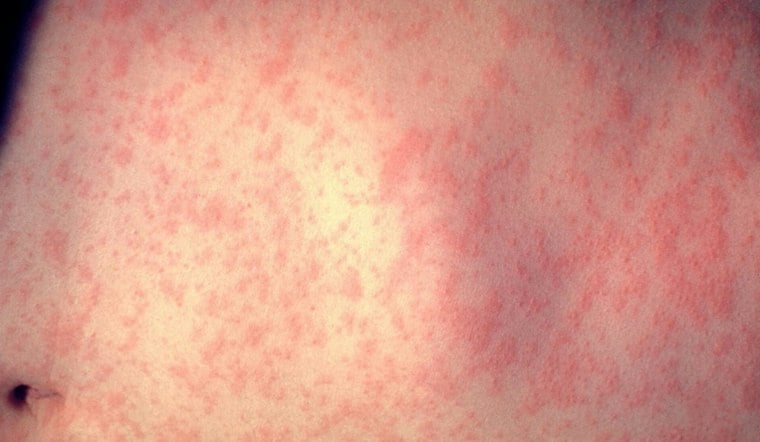
St. Louis County has confirmed its first measles case in 20 years, and health officials say the patient was fully vaccinated against the disease — a rare breakthrough infection that arrives as Missouri grapples with a broader statewide surge. The St. Louis County Department of Public Health is now working to identify anyone who may have crossed paths with the infected resident before the diagnosis was confirmed.
According to FOX 2, county public health leaders are providing guidance on quarantine and isolation requirements while coordinating with the Missouri Department of Health and Senior Services and other health partners to trace potential exposures. Dr. Kanika Cunningham, director of the Saint Louis County Department of Public Health, said her team is actively investigating the case and working with state and local partners to identify anyone who may have been exposed. She encouraged residents not to panic but to be aware of measles symptoms, and urged people to review their vaccination status and contact a health care provider if they develop symptoms consistent with the disease.
Measles is a highly contagious airborne disease that spreads through coughing, sneezing, or simply breathing near an infected person, the station's report notes. The virus can linger in the air of a room for up to two hours after an infected person has left. Early symptoms — high fever, cough, runny nose, and red or watery eyes — typically begin seven to 14 days after exposure, with a rash often following three to five days after that. Tiny white spots known as Koplik spots may appear inside the mouth two to three days after symptoms start, and in some cases signs don't surface until as late as 21 days post-exposure.
A Statewide Surge Behind the Local Case
The St. Louis County case does not stand alone. The city of St. Louis issued its own measles warning back in February, after an out-of-state resident with a confirmed infection passed through Terminal 2, baggage claim, and Parking Spot shuttle No. 3 at St. Louis Lambert International Airport on February 7 — a sign that measles has already touched regional transit hubs multiple times this year.
More recently, Jackson County health officials reported this week that an infected resident had ridden the same August 27 Chicago-bound Amtrak train departing from Sedalia, ultimately exposing more than 250 people across multiple visits to a public health facility in Lee's Summit, according to The Beacon. The Missouri Department of Health and Senior Services had already identified that exposure route in a September 9 advisory, naming it specifically as Amtrak Train 318 and instructing exposed travelers to monitor for symptoms for a full 21 days. Hoodline previously reported on that Sedalia Amtrak exposure warning and its ties to Missouri's climbing vaccine exemption rate.
Nationally, the Centers for Disease Control and Prevention reported more than 2,900 confirmed measles cases in 2026 as of September, already surpassing the 2,144 cases recorded during all of 2025. In September, the CDC also shifted its measles mortality tracking methodology to draw from the National Center for Health Statistics rather than direct state notifications, a change that drew criticism from public health experts amid the ongoing outbreaks, per Kaiser Health News.
Vaccination Rates Falling Below Herd Immunity
The backdrop to St. Louis County's new case is a state vaccination rate that has slipped below the threshold needed to prevent outbreaks from spreading widely. Missouri's statewide kindergarten MMR vaccination rate fell to 89.5% for the 2025–2026 school year, according to the Missouri Department of Health and Senior Services, well under the 95% threshold considered necessary to maintain herd immunity.
Nonmedical religious vaccine exemptions among Missouri kindergarteners climbed to 5.7% during that same school year, up from under 3% in 2021, as reported by St. Louis Public Radio. The picture varies across the metro area: state health department data show St. Charles County's religious exemption rate at 5.1%, St. Louis County at 3.4%, and St. Louis City at 2.2% — though St. Louis City's overall kindergarten MMR rate dropped to 75.4% due to administrative compliance issues rather than exemptions alone.
Under Missouri Revised Statutes Section 167.181 and state regulation 19 CSR 20-28.010, parents can exempt their children from required school immunizations by filing a religious objection form, but state rules still require excluding unimmunized students from school during active disease outbreaks, according to the Revised Statutes of Missouri. Missouri health officials note that measles is so transmissible it will infect nine out of ten unvaccinated or non-immune people in close contact with an infected person, underscoring why contact tracing after cases like St. Louis County's is treated with urgency.
What Residents Should Watch For
Two doses of the MMR vaccine remain about 97% effective at preventing measles, and health officials continue to describe it as the best available protection against the disease. Residents who are unsure of their vaccination status, or who believe they may have been exposed, are advised to contact their health care provider for guidance.
St. Louis County's public health department says it is continuing to investigate the case and identify anyone who may have had contact with the infected resident before the diagnosis was confirmed. It remains the county's first locally confirmed measles case in two decades, arriving as Missouri communities from Sedalia to Jackson County track their own exposure chains from the same virus moving through the state's transit corridors.





