

























































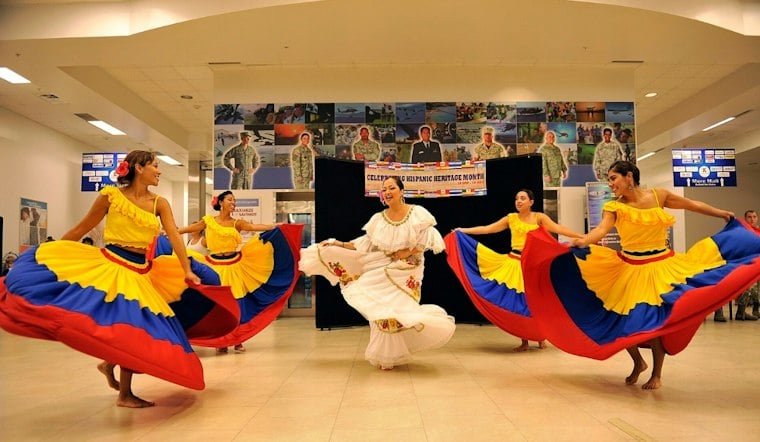
St. Louis County marked the start of Hispanic Heritage Month on Monday, with flags representing Latin American nations installed Tuesday at Memorial Park behind the Lawrence K. Roos Administration Building in Clayton, where they are on display. The observance, which runs from September 15 to October 15, commemorates the independence days of several Latin American nations and comes as officials say the region's Hispanic community keeps growing year after year.
The timing of the county's flag-raising is more than symbolic. According to First Alert 4, county officials tied the ceremony to a community that continues to expand across the St. Louis area. That growth shows up clearly in Census Bureau population estimates: the St. Louis metropolitan area's Latino population grew 14.4%, from 96,470 residents in 2022 to 110,391 in 2023, according to analysis reported by St. Louis Public Radio, ranking fourth highest in percentage growth among the 30 largest U.S. metro areas.
The same analysis found the metro area's foreign-born population grew even faster, jumping 23.2% from 129,604 in 2022 to 159,710 in 2023 — the highest percentage growth of foreign-born residents among the nation's 30 largest metro areas. Within St. Louis County itself, available data puts the Hispanic or Latino population at about 38,300; the county profile is available through Census Reporter. In the city proper, the Census counts 15,405 Hispanic or Latino residents.
A Festival Grown From $500 Into a Regional Draw
Residents looking to join the celebration can head to the Greater St. Louis Hispanic Festival, which the region's largest celebration of Hispanic culture, running Friday at 10 a.m. through Sunday at Soulard Park south of downtown. Elisa Bender, director of the festival, said the Hispanic community in St. Louis continues to grow, per First Alert 4's report. The three-day event features music, dancing, food and family activities.
The festival's roots trace back three decades, when it began in 1996 as a single-day gathering at Faust Park with just $500 in funding, founded by Haniny Hillberg. It has since grown into a volunteer-led nonprofit initiative that now draws approximately 100,000 attendees annually, according to Hispanic Festival, Inc.
Why Mid-September, and Why Now
The month-long observance traces back to a 1968 congressional act establishing National Hispanic Heritage Week under President Lyndon B. Johnson, according to the National Archives. President Ronald Reagan expanded it into a full 30-day period in 1988, according to the National Archives. The observance begins in mid-September and commemorates the independence days of several Latin American nations.
Local economic development leaders have connected the demographic surge to intentional outreach and relative housing affordability compared with other major metros. The St. Louis Mosaic Project has leaned into that momentum with STL Para Ti, a bilingual digital marketing campaign aimed at young Hispanic professionals and families living in higher-cost metro areas such as Chicago, Dallas-Fort Worth and Houston, according to the St. Louis Economic Development Partnership. The campaign provides access to job openings and information about activities and culture.
The same analysis discusses population growth and out-migration.





