

























































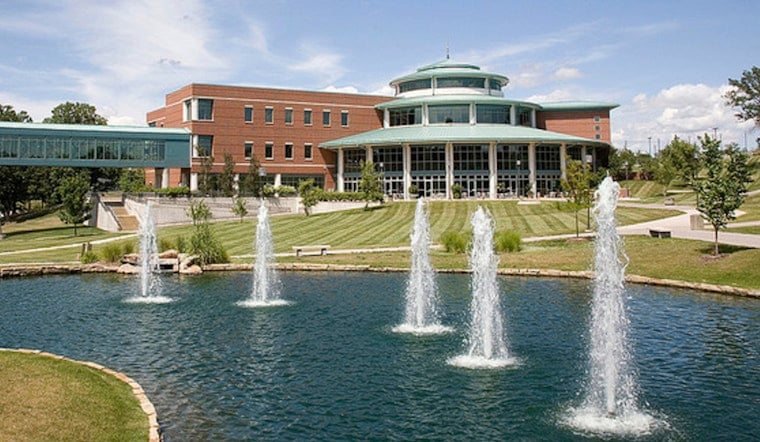
St. Louis's entrepreneurial calendar has a new fixture this fall: Innovation Week, a paid, multi-day series of events launching in mid-October to fill the gap left by STL Startup Week, which is sitting out 2026 after seven straight years as a fall mainstay. The new event is organized by Mike Seper, director of innovation and intellectual property at the University of Missouri-St. Louis, who said he wants the region to keep pace with peer cities rather than lose ground while planners regroup.
According to St. Louis Magazine, Seper said St. Louis should maintain momentum while other regions advance, framing Innovation Week as both a stopgap and a reinvention of the fall entrepreneurship calendar. The event is aimed at people curious about the local innovation ecosystem and is designed to convene a broader swath of the Midwest, not just St. Louis's own startup community. Tickets start at $99, making Innovation Week a paid event in contrast to the free programming STL Startup Week had offered for most of its run.
Why Startup Week Went Quiet This Year
STL Startup Week, facilitated by the TechArtista Foundation, had been a fall staple for seven years before organizers made what they describe as an intentional pause in 2026 to assess other event opportunities. Matt Menietti, executive director of the TechArtista Foundation, said the startup ecosystem changes rapidly, which requires organizers to rethink how programming gets delivered rather than simply repeating past formats. He offered Seper perspective and ideas as Innovation Week planning got underway, and the two describe the process as collaborative even though TechArtista itself is not running the new event.
Menietti also pointed to other long-running local gatherings, including Grove Fest, as examples of community events reconsidering or reformulating their offerings — a sign that St. Louis event organizers broadly are becoming more strategic and intentional rather than defaulting to the way things have always been done. He advised producers to balance quality and quantity, since events like this demand substantial energy from organizers and attendees alike. Menietti even suggested tactics as simple as keynotes or yoga sessions to keep attendees energized, particularly early in the day.
What Innovation Week Will Actually Include
Innovation Week's schedule includes a hackathon, an innovation symposium, and the day-long Innovate USA Summit, alongside a showcase of student innovators. That student showcase will be free and open to the public at the St. Louis Science Center, a notable exception to the event's otherwise paid structure. The programming is built to prepare early-stage ventures for larger pitching opportunities down the road while also helping participants bring products to market and launch new ventures outright.
Seper described the local response to Innovation Week so far as outstanding, and said the event creates opportunities to gather, celebrate, and recognize the people driving the community forward. The week's focus stretches beyond pitch competitions and networking mixers to workforce development through upskilling, plus education tracks centered on emerging technologies including AI. Organizers say the event is relevant even to small businesses that aren't chasing high-growth trajectories, not just venture-backed startups aiming for rapid scale.
Leaning Into St. Louis's Industry Strengths
A central piece of Innovation Week's pitch is showcasing St. Louis's existing strengths in geospatial technology, agtech, and biosciences — three sectors where the region has built real institutional infrastructure in recent years. On the geospatial side, Greater St. Louis Inc. launched the nonprofit GeoSTL in February 2026 to coordinate workforce development and business recruitment for a regional geospatial economy estimated at $5 billion, as Hoodline previously reported. That effort builds on groundwork laid by the Taylor Geospatial Institute, formed in April 2022 at Saint Louis University to unite eight Midwestern research institutions alongside the federal government's $1.75 billion NGA West campus in the city.
Agtech has also seen tangible commercial movement, with Pivot Bio announcing a $7 million expansion into Hazelwood in April to open a manufacturing and distribution center tied to its research hub in Creve Coeur, a project supported by the state's Missouri Works incentive program. Bioscience, meanwhile, faces a tighter capital environment: BioSTL, the nonprofit long championing the sector locally, has dealt with budget constraints in 2026 after Washington University phased out its seven-figure annual allocation and BJC Health System cut its annual support by $1.5 million. That squeeze on discretionary capital forms part of the backdrop against which Innovation Week is trying to connect early-stage founders to non-dilutive funding and financing know-how.
A Broader Ecosystem Still Filling In Gaps
Innovation Week isn't emerging in a vacuum. Arch Grants, the nonprofit startup accelerator, awarded $1.6 million in $75,000 non-dilutive grants to 19 startups in its 2025 cohort, pushing its total grant funding since 2012 past $20 million across 291 companies, and in February 2026 it launched a Founder Lending Program with the James S. McDonnell Foundation and St. Louis Community Credit Union to give alumni startups low-cost debt capital without giving up equity. Physical infrastructure has grown too: the redevelopment of the historic Post-Dispatch building into 900 N. Tucker created a 160,000-square-foot tech campus downtown with an 800-person event space, home to AI startup Scale AI and cybersecurity training nonprofit CyberUp.
Seper's own event-organizing track record at UMSL includes a February AI “vibe coding” workshop and a March defense-tech robotics showcase held with Scott Air Force Base's Elevate team, according to UMSL Daily. St. Louis has traditionally skipped local programming tied to Global Entrepreneurship Week, an international observance held every November with events held across the country, leaving another calendar gap that Innovation Week's October timing does not directly address but that adds to the broader picture of a local events landscape in flux. For now, organizers are betting that a leaner, paid, industry-focused format can do what a free, volunteer-driven week once did — keep St. Louis's entrepreneurs, students, and investors talking to each other every fall.




