

























































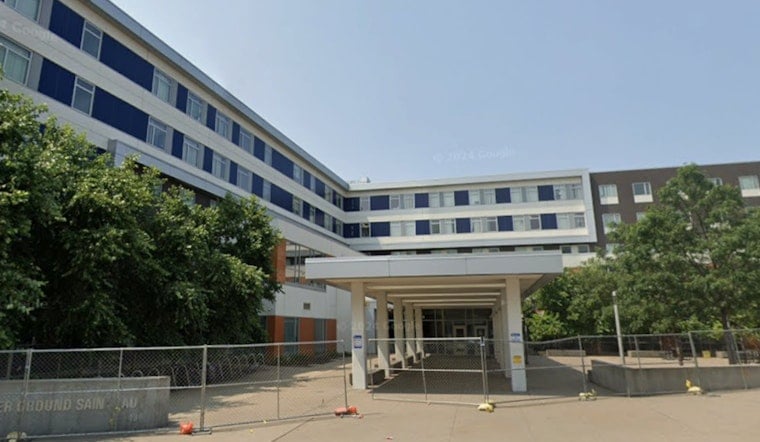
Minnesota Community Care shut down its Downtown Clinic and St. Paul Wellness Hub in early July, eliminating the only walk-in medical care inside the Dorothy Day Place campus and forcing patients, many of them unhoused, to travel roughly two miles south to the organization's West Side flagship, La Clinica. The closures came as the state's largest Federally Qualified Health Center braces for a wave of anticipated Medicaid losses tied to federal policy changes, and as its own finances have grown increasingly shaky.
The Downtown Clinic operated inside Catholic Charities' Dorothy Day Residence at 422 Dorothy Day Place, a campus that also houses the St. Paul Opportunity Center, according to MPR News. Both closed sites offered routine exams, urgent care, immunizations, preventive screenings, lab draws, X-rays, simple procedures and chronic disease management, and the Wellness Hub also housed a pharmacy. Minnesota Community Care has served the community for more than six decades and provides affordable healthcare regardless of a patient's insurance status or ability to pay.
A Familiar Face, A Longer Commute
Cristina Flores worked as a medical case manager at La Clinica for nine years before leaving the organization in 2025, and for much of that time she traveled two miles from La Clinica to the downtown clinic each week to help patients there. She helped people resolve insurance issues, get tested for sexually transmitted infections and HIV, and obtain medications and contraceptives. Flores said the downtown presence was something that was very beneficial to the homeless community, according to the same MPR News report.
Jennifer Vickers, a nurse practitioner and director of healthcare for the homeless and substance use disorder clinic at La Clinica, said patients value the West Side site because they know its staff. But she also acknowledged the harder reality behind the consolidation: patients delay care because rising medical costs leave them without the funds to seek treatment, per the same account. After the closures were announced, the organization received about 500 MyChart messages from patients asking where staff would be after the move.
Financial Pressure Behind the Consolidation
Renee Leinbach, interim president and executive officer at Minnesota Community Care, said the organization is under increasing financial pressure as patient revenue becomes less reliable and expenses rise. Consolidating downtown services to La Clinica was intended to reduce overhead by eliminating rent for the two closed sites, the article notes. Personnel account for roughly 75 percent of the organization's expenses, while federal subsidies make up only about 14 percent of total revenue — and state and county support is minimal, with Minnesota contributing less than 2 percent of Minnesota Community Care's revenue and Ramsey County less than 1 percent.
The strain is not unique to Minnesota Community Care. All 19 of Minnesota's community health centers recorded double-digit negative operating margins in both 2023 and 2024, a crisis Johnathan Watson, CEO of the Minnesota Association of Community Health Centers, has tied to declining patient visits, incoming Medicaid work requirements, expired tax credits, and a chilling effect on immigrant communities seeking care. Community health centers are designed to combine medical, behavioral health and dental services in one location specifically to keep patients out of costlier emergency rooms.
Medicaid Cuts Loom on the Horizon
The financial outlook is expected to worsen. Federal Medicaid cuts tied to H.R. 1, signed into law last July, are expected to begin in October and accelerate further in January. Minnesota health officials project that up to 140,000 Minnesotans could become uninsured under the law, and Leinbach estimates that roughly 6,000 of Minnesota Community Care's patients could lose coverage as a result.
About one-third of the organization's patients were already uninsured in 2025, even as it recorded more than 80,000 visits and served about 30,000 unique patients across its health centers that year. Roughly 85 percent of its patient population are people of color, and its patients' incomes largely fall below 200 percent of the federal poverty guidelines. Watson and other advocates warn that clinic closures or reduced service could lead to more avoidable emergency room visits and expensive inpatient care as patients lose easy access to preventive and routine treatment.
What Remains Downtown
Minnesota Community Care has not abandoned downtown entirely. The organization continues to send mobile health teams to people living outside or in shelters, and it maintains a satellite clinic in the basement of Union Gospel Mission's Men's Campus on University Avenue East, though that site operates only on Tuesday and Friday mornings. For the roughly 1,000 unhoused individuals who rely daily on the Dorothy Day Place campus's shelter beds, daytime drop-in support and housing navigation services — a vulnerable population Hoodline has covered before in the context of safety concerns near the campus — the loss of a walk-in medical option in the same building marks a significant gap.
Minnesota Community Care's history runs deep in the West Side neighborhood where La Clinica now sits. The organization traces its roots to 1969, when it began as a free clinic for Spanish-speaking residents run out of a church basement, seeing just six or seven patients a day before growing into the state's largest Federally Qualified Health Center, according to background compiled on Wikipedia. Six years after Fairview closed St. Joseph's Hospital — once Minnesota's oldest hospital — and converted the site into a community wellness hub, that same building has now lost its Minnesota Community Care clinic as well, leaving downtown St. Paul with even fewer walk-in healthcare options than before.





