

























































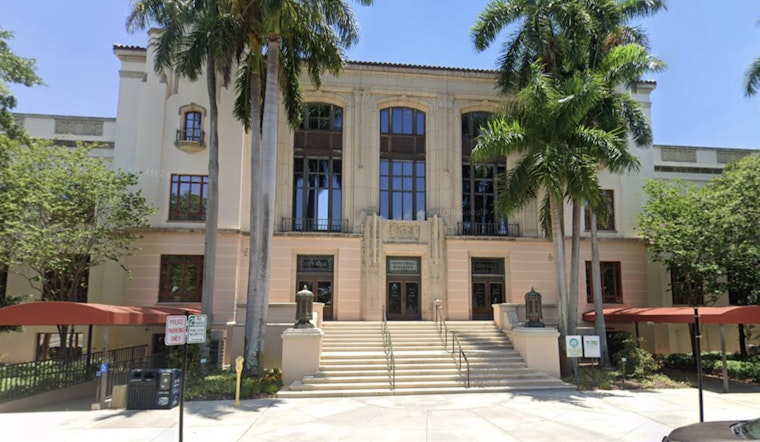
St. Petersburg's proposed $1 billion operating budget survived its first public hearing Thursday night, but not everyone at city hall was satisfied. Council members Corey Givens Jr. and Gina Driscoll both voted against the tentative Fiscal Year 2027 spending plan, pointing to unmet needs around traffic safety and youth violence prevention even as the city moves toward locking in a final version in two weeks.
According to WFLA, the St. Petersburg City Council passed the tentative budget Thursday, setting up a final vote on September 17. The roughly $1 billion plan, WFLA reports, does not include enough money to fund everything at its full potential, a gap that fueled hours of testimony and debate over what should come first: safer streets or violence prevention for young people.
Complete Streets funding emerged as an early flashpoint. Council members argued the Complete Streets program needs more funding even though it did receive an increase in the proposed budget, per the same WFLA report. One speaker on the program told the council that more than twice as many people are killed in St. Petersburg car crashes as in homicides, a statistic that framed much of the safety debate. Council Member Gina Driscoll said the city should prioritize safe transportation, according to WFLA's account of the hearing.
MLK South Residents Add Urgency to the Debate
The Complete Streets discussion landed just a day after residents petitioned the council for immediate traffic safety funding along MLK Street South, citing five traffic fatalities along that corridor over five years under the city's 2015 Complete Streets policy, as Hoodline previously reported. That local pressure fed directly into council members' calls this week to be proactive rather than waiting for the next fatal crash, with several members also discussing quick operational fixes that could be implemented sooner than full-scale infrastructure projects.
Youth violence prevention drew equally emotional testimony. Jerry Funt said community members reported that existing programs cannot be utilized, and argued that intentional funding could make those programs work as intended, per WFLA. Jay James told the council he is tired of teenagers being killed, according to the same report. The Bay Area Dream Defenders have pushed for the city to lean more heavily on existing youth programs to curb gun violence, part of a broader Save Our Streets campaign that has previously highlighted a stark funding gap: St. Petersburg allocated over $173 million to police compared to roughly $3 million for youth initiatives in recent budgets, according to St. Pete Catalyst.
Two No Votes and a Warning About November
Corey Givens Jr. voted against the tentative budget Thursday and said taxpayer dollars should not be treated as personal slush funds, WFLA reported. Driscoll's no vote echoed her push for transportation safety spending. Both dissents came even as the council held the operating millage rate steady at 6.4525 mills for FY 2027, according to St. Pete Catalyst, which reported that citywide taxable property values grew to $39.3 billion, pushing projected ad valorem revenue up $14.8 million to $243.7 million.
Council Member Lisset Hanewicz warned that funding levels for future budgets could depend on the outcome of a statewide property tax vote in November, cautioning that the results could have catastrophic consequences for the city. She also noted that organizations lacking other funding sources are increasingly turning to the city itself, per WFLA. Hanewicz's warning refers to Florida Amendment 3, a constitutional measure on the November 3 ballot that would expand homestead exemptions up to $250,000 and cap annual non-homestead assessment increases at 5%, according to WUSF. City administrators estimate the measure could cut St. Petersburg's General Fund revenues by tens of millions of dollars.
Why Property Taxes Carry So Much Weight
The stakes are especially high for public safety budgets. City data show that 97.5% of property tax revenue goes directly to police and fire rescue operations, covering 91.6% of the city's total public safety costs, according to FOX 13 Tampa Bay. That dependency helps explain why a potential state-mandated revenue hit looms so large over local budget planning, even as this year's rising property values delivered the city a cushion.
That cushion didn't come without belt-tightening elsewhere. Mayor Ken Welch's administration had ordered city departments to identify 3% to 5% operational spending cuts to close an initial $18 million budget deficit, resulting in the elimination of 19 vacant city positions and trimming the preliminary General Fund request from $444.5 million to $433.4 million, according to Powerbroker Magazine. Ahead of the tentative vote, the council also approved utility rate increases for water, sewer, and stormwater services effective October 1, drawing opposition from members worried about the cumulative strain on residents already facing higher bills, per Florida Politics.
Separately, city leaders have also had to grapple with $59.7 million in total repair costs for storm damage at Tropicana Field following Hurricane Milton, with debate continuing over spending city funds without guaranteed FEMA reimbursement, the outlet reported. The competing demands on the budget arrive as St. Petersburg heads into its 2026 municipal elections, with council members including Brandi Gabbard campaigning for mayor against incumbent Ken Welch, according to Florida Politics.
The council will hold its second and final public hearing on September 17, when members are set to adopt the final FY 2027 budget and Capital Improvement Program before the fiscal year begins October 1, per city budget procedures. Whether Complete Streets funding, youth violence prevention dollars, or the looming Amendment 3 fight shape that final vote remains to be seen.





