

























































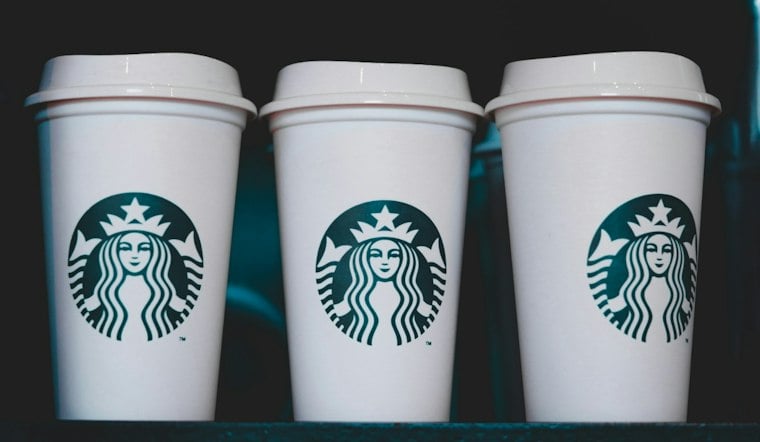
Beyond Plastics says its tracking of cups placed in Starbucks store recycling bins raises questions about what happens to them after collection. The group placed 69 Bluetooth-enabled trackers inside cups; 47 returned usable data. Among those, the trackers were last detected at landfills in 23 cases and at incinerator facilities in 11. The group said it could not confirm that any tracked cup was recycled.
Beyond Plastics’ account, first reported by the New York Post, said ten other trackers were last detected at waste transfer stations and three at material recovery facilities. Those facilities sort and bale recyclable materials; they do not themselves recycle the plastic, the group noted. Judith Enck, president of Beyond Plastics and a former regional administrator for the U.S. Environmental Protection Agency, said Starbucks has not told the public where its plastic goes after customers put it in a recycling bin. Beyond Plastics said it focused on Starbucks because the company labels its store bins for landfill, recycling and compost.
Starbucks challenged the methodology, saying electronic trackers placed inside cups are not accepted in real-world recycling streams and can contaminate them. The company argued that studies using planted trackers do not show how recycling systems actually operate. Starbucks maintains that its cups are designed to be recyclable.
Company Points to Its Own Recycling Milestones
Starbucks and waste-management company WM announced in February 2026 that Starbucks’ cold beverage cups, made from polypropylene, or No. 5 plastic, are now designated “widely recyclable.” Starbucks has also acknowledged that recycling is difficult to execute at scale: one wrong item in a bin can render its contents unrecyclable, and commercial recyclers accept different materials depending on location. The company says it cannot implement one universal recycling program across its footprint. It has also noted that shopping-mall landlords often oversee waste collection for Starbucks locations inside malls, adding a layer it does not fully control.
What “Widely Recyclable” Means in New York
Starbucks says How2Recycle’s Widely Recyclable designation for its polypropylene beverage cups reflects curbside or drop-off access for more than 60% of U.S. households. That measures access to a recycling program, not whether a particular cup put in a particular store bin is collected and recycled, according to Starbucks. For residential recycling, the New York City Department of Sanitation accepts most rigid plastics, including cups and bowls, in the city’s metal, glass, plastic and cartons stream. Businesses such as stores and restaurants follow separate rules: DSNY says private carters must collect recyclables separately and take them to appropriate facilities. Those requirements describe the collection system, not the ultimate fate of an individual cup.
Those claims trace back to a 2020 pledge in which Starbucks promised to make 100% of its customer packaging reusable, recyclable or compostable by the end of the decade. In 2024, the chain began letting U.S. customers bring personal reusable cups through mobile and drive-through orders, and it has since brought back sharpies, condiment bars and reusable ceramic mugs for customers dining in. Beyond Plastics is now urging Starbucks to stop what it calls misleading recycling claims, remove recycling imagery from store bins, switch to fiber-based cups, and actually enforce its own ceramic-mug policy.
One Cup's Trail Ended at a Westchester Waste Site
Beyond Plastics said a tracker associated with one Starbucks cup was last detected at a waste facility in Peekskill, New York, which the group describes as the largest source of air pollution in Westchester County. Courtney Williams, a cancer researcher who founded the Westchester Alliance for Sustainable Solutions, has spoken about the facility’s local impact. The group also reported trackers last detected at a landfill in Roosevelt, Washington, for two of five cups in Olympia; at the Bee Canyon Landfill in Irvine for six of eight cups in Orange County, California; and at an incinerator in Conshohocken, Pennsylvania, for four cups placed in Starbucks-branded bins in Philadelphia. These last detections do not, on their own, establish the final disposition of each cup.
New York City faces substantial costs for waste it cannot process locally: the city’s Department of Sanitation has put waste-exporting expenses at nearly half a billion dollars a year. Recycled cups collected in the city sometimes end up in landfills in Pennsylvania, Ohio and Alabama. Susan Keefe, Beyond Plastics’ Southern California director, said she visited roughly 50 Starbucks stores during the investigation.
Demonstrations Planned, Legislation Pushed
Environmentalists say they're planning nine demonstrations across New York state this week, including events in Brooklyn, Queens and Manhattan, where protesters intend to press state lawmakers to pass the Packaging Reduction and Recycling Infrastructure Act. According to the bill's text on file with the New York State Senate, the measure would require companies that sell, offer for sale, or distribute packaging materials to cut their plastic packaging use and reimburse municipalities for waste-management costs; it has not been established that the bill has been enacted.
Beyond Plastics says the tracker findings call into question Starbucks’ claim that its plastic cups are widely recyclable. The company disputes the study’s methodology and says the cups are designed to be recycled. The debate comes as Starbucks CEO Brian Niccol, who took the helm in September 2024, leads a broader turnaround plan focused on customer service and making stores feel more welcoming. The effort has included spending $1 billion to retrofit stores with armchairs, plants and hardcover books. Starbucks reported $1.8 billion in profit in North America last year and did not respond to a request for comment from the New York Post for its original report.





