

























































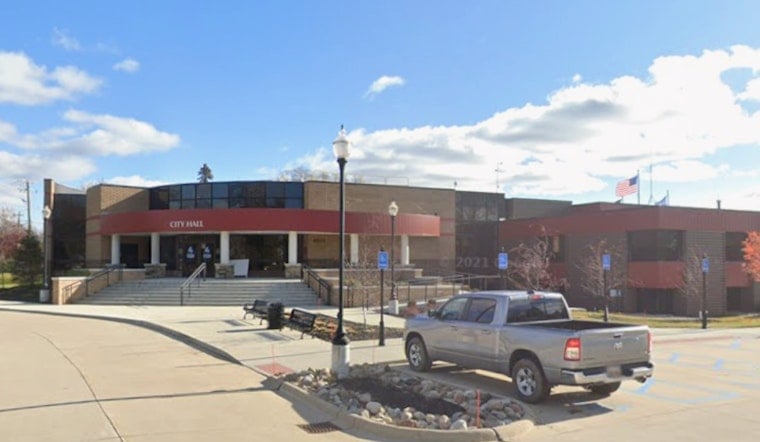
Sterling Heights City Council has approved a $2.03 million contract with Harvest Solar to install rooftop solar arrays on four municipal buildings, a move city officials project will save more than $5.4 million over the systems' 30-year lifespan. The arrays are headed for City Hall, the police department, the public library and the community center, with construction expected to wrap up by the end of 2027.
According to MLive, the Jackson-based solar company has a 15-year history and has completed more than 2,000 installations across the Midwest. Harvest Solar will handle engineering, permitting, utility coordination, construction, testing, and system monitoring, and plans to use low-profile mounting systems designed to minimize roof penetrations and preserve existing roof warranties. City Hall, the police department and the library make up what the city calls its city campus, while the community center sits as a separate site with its own projected savings.
The city expects the combined solar arrays to offset about 30% of electricity consumption at the city campus, with the campus system alone generating around 613,000 kilowatt-hours annually. At the community center, the new system is projected to cover approximately 46% of power usage. City officials anticipate the installations will reduce electricity costs by $107,500 in the first year of operation, with a payback period of about 10 years.
Why the City Is Moving Now
The push toward solar comes as Sterling Heights has watched its utility bills climb sharply even as energy use barely budged. During an April 2026 municipal budget presentation, Sustainability Planner Alexis Weinberg reported that electricity costs for the targeted city buildings rose nearly 10.5% between 2022 and 2024 — jumping from roughly $121,000 to $191,000 — even though actual energy consumption grew by only 4.6%, according to C & G Newspapers. Weinberg said the project will deliver environmental and financial benefits while also educating residents about renewable energy.
That rate exposure to DTE Energy, which supplies electricity to municipal facilities in Macomb County, is widely seen as the practical driver behind council approval, even as the project is framed around climate goals. Mayor Michael Taylor said, per MLive, that the project will reduce long-term operating costs and protect the city against rising electricity rates.
Council Approval and the Push to Add a Fifth Building
The city council approved the Harvest Solar proposal on September 1, authorizing a $1,016,800 budget amendment from municipal capital reserves to cover Sterling Heights' net project investment of approximately $1.02 million, according to Citizen Portal. Council members also instructed city staff to study adding the Department of Public Works building as a separate solar installation before federal tax credit deadlines expire. It remains an open question whether staff will be able to move quickly enough to secure that additional site under the current federal incentive timeline.
The math behind the city's relatively small upfront outlay traces back to federal policy. Federal clean-energy incentives are expected to cover roughly half of the project cost, relying on the Inflation Reduction Act's Section 6417 “elective pay” mechanism enacted in 2022, which allows tax-exempt municipal governments like Sterling Heights to receive direct cash payments from the IRS equal to 30% or more of qualifying project costs, per the Internal Revenue Service. Before that provision took effect, local governments could not directly claim federal clean energy tax credits.
Part of a Larger Climate Roadmap
The solar project directly supports the city's Climate Action Plan, which the city council adopted in February 2025 and which sets a target of net-zero greenhouse gas emissions by 2050. Hoodline previously reported on that initial approval, and the plan itself calls for installing solar energy systems at city facilities as one of its central strategies. By adopting the plan, Sterling Heights became the first municipality in Macomb County — the state's third-most populous county — to establish a comprehensive climate action roadmap.
A baseline greenhouse gas inventory completed for the plan found that Sterling Heights emitted approximately 2 million metric tons of CO2 equivalent in 2022, with building energy use and transportation identified as the primary drivers of local emissions, according to Fresh Coast Climate Solutions. The city's broader 2025 Master Plan was also selected this month to receive the Michigan Association of Planning's Outstanding Daniel Burnham Award for a Comprehensive Plan, following a public engagement campaign that gathered nearly 6,000 resident and business participants, the City of Sterling Heights announced.
Tracking Progress and Educating Residents
Once installed, the systems will include public-facing displays at City Hall and the community center, giving visitors information about the solar arrays and their environmental impact. Online monitoring will also allow city staff to track energy production and savings in real time.
The project fits into a wider statewide push toward renewable energy. Under Michigan's Clean Energy and Jobs Act, signed in November 2023, electric utilities must meet interim renewable portfolio standards of 50% by 2030 and achieve a 100% clean energy standard statewide by 2040, according to the State of Michigan. Michigan is one of 17 states with a statutory 100% clean energy standard, and the state's Public Service Commission approved 1,269 megawatts of new solar power purchase agreements for Consumers Energy in June, valued at more than $3.6 billion — a sign of how utility-scale solar buildouts are accelerating across the state even as cities like Sterling Heights pursue their own smaller-scale projects.





