

























































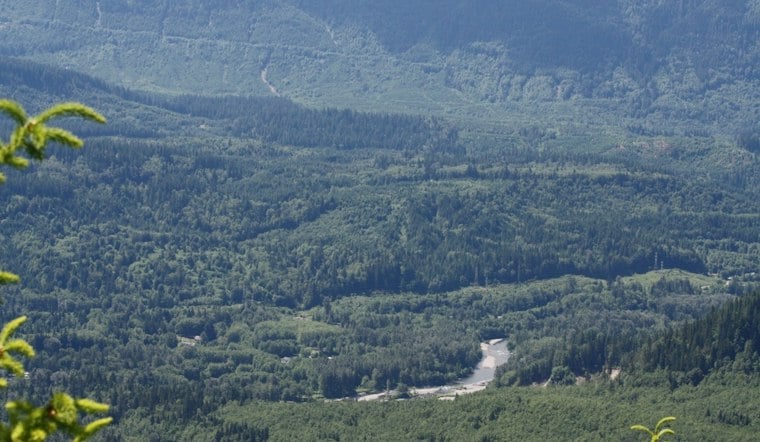
A stretch of the North Fork Stillaguamish River near Trafton is at the center of a floodplain restoration effort meant to give salmon more room to spawn and give floodwaters somewhere to go besides people's backyards. The Stillaguamish Tribe of Indians and Snohomish County have partnered on the project. The tribe acquired a 158-acre parcel for permanent conservation, while design work targets restoration of instream and floodplain habitat along a roughly two-mile reach of the river.
A River Reach Built for Salmon and Storms
According to Snohomish County Government, project partners include Surface Water Management and Snohomish County Parks & Recreation.
The underlying design work traces back to a grant-funded acquisition described by psc.org: the Stillaguamish Tribe acquired the 158-acre Trafton Floodplain parcel for permanent conservation, with the goal of completing a design for restoring instream and floodplain habitat along a roughly two-mile reach of the river. Planned actions described in that same project record include removing bank armoring, reconnecting the channel, installing log jams and planting riparian vegetation.
What Restoration Could Mean for Local Salmon Runs
Per the county's account, the project is meant to allow natural processes to occur, with those natural processes providing habitat for Chinook salmon. The same post states the project will slow flood waters by giving the river room to move during high-flow events, and that it protects the nearby Whitehorse Trail from future erosion and flood impacts.
The psc.org project record adds more detail on the ecological stakes: the effort is expected to benefit both juvenile and adult ESA-listed species, including Chinook, Steelhead and Bull Trout, along with Coho, Chum and Pink salmon. As bank armoring is removed, the source notes, flood energy is expected to be reduced, improving egg-to-migrant survival for salmonids. More frequent log jams are also expected to increase holding habitat, cooler water and protection from poachers for adult fish waiting to spawn.
The Trafton effort fits into a broader, and often slow-moving, regional push to reverse decades of floodplain loss. Roughly 98 percent of the freshwater wetlands and floodplain forest between Skagit Bay and the foothills of the Cascades have been lost to logging, agriculture and development, according to eopugetsound.org. The same source notes that the Puget Sound Partnership's 2015 State of the Sound report found the region was not making progress toward its 2020 Chinook salmon recovery target.
Other projects nearby show the same tribe working on multiple fronts. The Stillaguamish Tribe has separately proposed restoring 230 acres of tidal wetlands between Hatt Slough and the Old Stillaguamish River to help support young salmon, especially Chinook, according to a report from wdfw.medium.com. A second phase of the Port Susan Bay Restoration for Resiliency project, described in that same report, would add 115 acres of estuarine tidal marsh in the Stillaguamish Delta on top of 35 acres restored in an earlier phase. Since its founding in 2006, Washington's Estuary and Salmon Restoration Program has implemented 106 projects and protected or restored more than 4,500 acres of habitat statewide, the outlet reports.
The Trafton effort joins a patchwork of Puget Sound restoration efforts aimed at giving salmon, and the rivers they depend on, a bit more room to breathe.




