

























































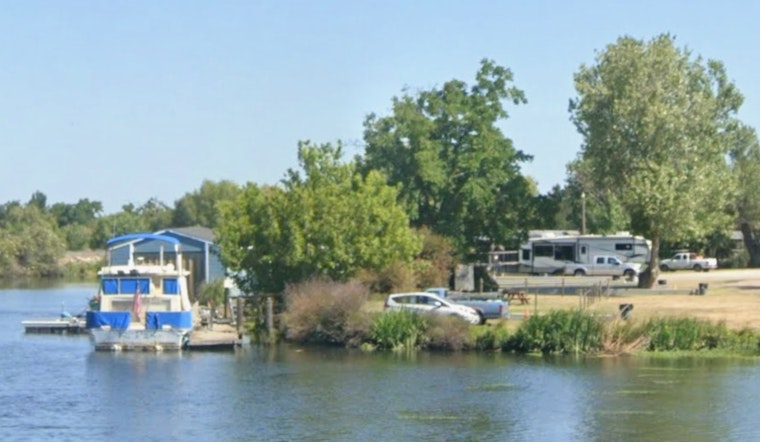
More than 60 people who have spent years—some, decades—living along the San Joaquin River at Windmill Cove RV Park in Stockton have been told they need to leave. State officials say the long-term arrangements that let residents settle into RV spaces and mobile home sites there were never supposed to happen in the first place.
Windmill Cove sits on sovereign land owned by the state of California and held for public purposes, according to CBS News Sacramento. California authorized the site as an RV park back in 1994, and it now includes 55 RV spaces and two mobile home sites along the Stockton Deep Water Channel. A representative for the California State Lands Commission told the station the property may only be used as an RV park for short-term stays, describing legitimate use as something like 30 or 60 days followed by moving the RV out.
That description clashes hard with how residents say they have actually lived there. Windmill Cove residents told the outlet the property has functioned as a long-term home for decades, and that state officials periodically inspected their spaces along the way. One resident said the state even sent a letter at one point stating they were in compliance—hardly the kind of paperwork that suggests an unauthorized, temporary arrangement.
A Disabled Resident Fears Homelessness on a Levee
Ronald Plaga is one of the residents caught in the middle. He is disabled and lives at the park on a limited income, and he said alternative locations are too expensive for him. Plaga told the station he cannot find another location that will accept his trailer, and he now faces the possibility of becoming homeless on a levee.
The State Lands Commission representative acknowledged that officials do not know whether residents must leave in five months or two months, and state officials could not provide the station with a specific deadline. The commission has not promised financial assistance, and the representative said the state will not promise relocation assistance, even though residents have asked the state to help cover relocation costs.
Lisa Harrian, another resident, offered a blunter read on how the situation got here. She said the state told residents to vacate because it made a mistake—suggesting the years of inspections and code compliance letters amounted to the state tacitly allowing something it was never authorized to permit. The State Lands Commission, for its part, has said residents were never supposed to live at Windmill Cove permanently, and the commission representative said the long-standing arrangements were never approved. Commission records reportedly do not state that residents may live at the park full-time.
The Legal Tangle Behind the Eviction Notices
The dispute traces back to California's Public Trust Doctrine, which governs how sovereign lands like navigable riverbeds are used. Under that doctrine, land such as the riverfront parcel at Windmill Cove is held in trust for all state residents and can only be used for public trust purposes—navigation, fishing, public recreation, and ecological preservation—according to the California State Lands Commission. That legal framework is precisely what prevents state officials from sanctioning long-term private residential housing on the site, no matter how long residents have actually lived there.
Complicating matters further is California's Recreational Vehicle Park Occupancy Law, which generally grants RV occupants statutory tenant protections after nine consecutive months of residency. State lawmakers passed Assembly Bill 1472 in 2024 specifically to close loopholes—like the so-called RV shuffle—that parks have used to dodge granting occupants tenant status. That statute sits in direct tension with the Public Trust Doctrine when extended stays happen on land where residential use was never permitted to begin with.
Adding another wrinkle, the property's current lease reportedly runs through 2034, according to CBS News Sacramento, though notably that arrangement predates the current wave of enforcement. San Joaquin County's own land-use records show the site was historically approved as a commercial recreational venue rather than a residential park; the county signed off on an Entertainment Permit for weddings, live music, and corporate gatherings there back in 2010, per San Joaquin County's CEQAnet filings. Nothing in that review established residential zoning for the parcel.
State Inspections and Enforcement Continue
State officials have also required residents to modify decks at Windmill Cove to comply with state standards, even as the broader question of whether anyone can legally live there long-term remains unresolved. The State Lands Commission has kept up direct oversight of the site more broadly; commission records show it approved action in August 2024 to take title to and dispose of an abandoned dredger near the marina. Last October, the commission also authorized $100,000 to clean up unpermitted encampments and hazardous sites along Stockton's state-owned waterways, according to reporting shared in a Restore the Delta Facebook post.
Water quality has been its own concern at the site. Environmental testing by the nonprofit Restore the Delta detected harmful algal blooms exceeding public health warning thresholds at Windmill Cove during summer monitoring in both 2024 and 2025, adding another layer of risk for people living right along the water.
The park's ownership has also shifted recently. Longtime operators Dave and Marsha Theis, who managed the waterfront marina and RV park for nearly a decade, sold the business in 2025—a leadership change that immediately preceded the state's tightened enforcement of short-term occupancy rules.
Residents Plan to Keep Fighting
Windmill Cove residents are not giving up quietly. They plan to hold another meeting in October to organize their response, even as the state has offered no firm timeline and no commitment to help pay for anyone's move. CBS News Sacramento reported that the state had not responded to the outlet as of publication, despite the station reaching out for additional information.
The standoff unfolds against a backdrop of a still-tight local housing market. San Joaquin County's Continuum of Care recorded 1,838 unsheltered homeless individuals and 1,468 sheltered individuals in its January 2026 Point-in-Time Count—a 47% drop in unsheltered homelessness from 2024 that county officials attributed to roughly 1,300 new permanent and emergency housing options. Even with that progress, affordable options remain scarce, leaving residents like Plaga with few realistic places to turn if Windmill Cove closes its gates to long-term stays for good.





