

























































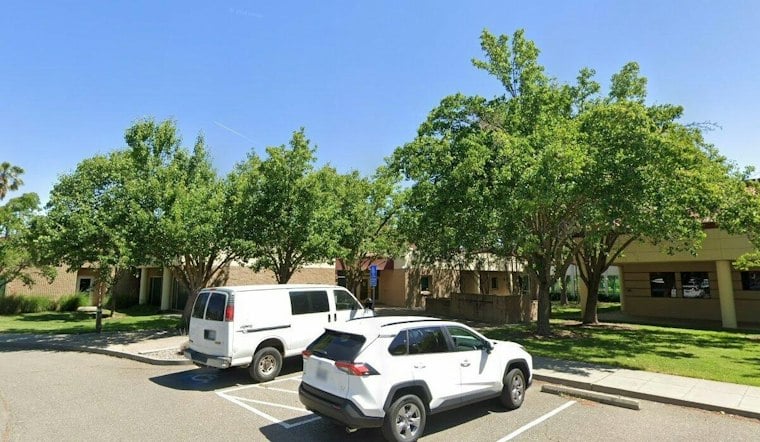
Ranchers across California’s northern Central Valley have long faced a frustrating choice when their livestock needed advanced diagnostic testing: drive hours to Davis or Tulare, or wait. Now state officials say a dramatically larger Turlock laboratory is positioned to change that, adding large-animal necropsy and testing services that were previously unavailable on site.
A Small Facility Gets a Major Upgrade
The Turlock laboratory replaced what the California Department of Food and Agriculture described as an antiquated facility of about 5,000 square feet, according to reporting by The Sacramento Bee. California began funding the project in 2021, and work on the renovation and expansion got underway in 2023. The Department of General Services led the effort, working alongside the CDFA and the California Animal Health and Food Safety Laboratory System, per the same report.
The scale of the change is notable. Where the former site housed fewer than 20 employees, according to the state agriculture department, the renovated lab is now expected to house 50 CDFA and laboratory-system employees, the Bee reported. The lab sits in the northern region of California’s Central Valley, according to California Animal Health & Food Safety Lab System, which notes the site already provides on-site avian necropsy, histopathology, bacteriology, biotechnology, parasitology and serology testing, and holds National Poultry Improvement Plan approval for specified Salmonella, Mycoplasma and avian influenza testing.
What the Expanded Lab Adds
Beyond its existing poultry-focused work, the Turlock lab now adds necropsy and testing services for large animals — a capability previously concentrated at the Davis, Tulare and San Bernardino labs, all of which have the capacity to handle large animals, the Bee reported. The expansion also broadens poultry services in the area. Turlock is one of four California labs operated by the UC Davis Weill School of Veterinary Medicine, and the labs collectively focus on livestock and poultry health, public health and the food supply — testing for animal diseases such as bird flu and conducting food safety inspections, per the same account.
A separate project description from GCC & Associates outlines a replacement laboratory of approximately 41,000 square feet on a roughly 7.5-acre site, which also includes office space meant to relocate and consolidate two CDFA Animal Health and Food Safety Services Division branch offices. That project’s period of performance was listed as beginning in August 2023 and ongoing, with planned services spanning mammalian and avian necropsy and pathology, bacteriology, histology, immunology, molecular biology and parasitology testing.
Why the Location Matters to Ranchers
The regional livestock and poultry industries are worth an estimated $3.5 billion, according to the state agriculture agency, underscoring why officials have framed this project as a priority. Simone Stoute said limited space at the old facility led ranchers to drive several hours to Davis or Tulare for services, the Bee reported. State officials have said the new Turlock lab is intended to eliminate that need for travel and reduce diagnostic testing turnaround time, though the practical, post-opening effects on turnaround times and ranchers’ travel have not yet been independently documented.
California Secretary of Food and Agriculture Karen Ross framed the project in terms of disease preparedness, saying the new lab will strengthen rapid detection, response and containment of animal diseases, protecting livestock and public health. She added that California must remain at the forefront of innovation in animal health and disease detection, and said the facility significantly expands capacity to meet current and future challenges, according to the Bee’s reporting.
Part of a Broader Pattern of Lab Investment
Turlock’s overhaul follows a similar renovation at the Tulare branch laboratory, which completed its own renovations in 2016. California Animal Health & Food Safety Lab System had described that as a $47.5 million state-funded project at the time. Years earlier, as the Turlock project was still being proposed, The Modesto Bee reported that the existing lab had opened in 1958 at just 5,100 square feet, and that an earlier version of the replacement plan called for a roughly 41,000-square-foot facility and sought $88.6 million in funding — figures that shifted as the project moved from proposal to construction.
A ribbon-cutting and dedication for the Turlock lab is set for Friday, according to the Bee’s reporting. The event marks a formal milestone for a project that has been years in the making, from its 2021 state funding commitment through construction beginning in 2023 to this week’s dedication.



