

























































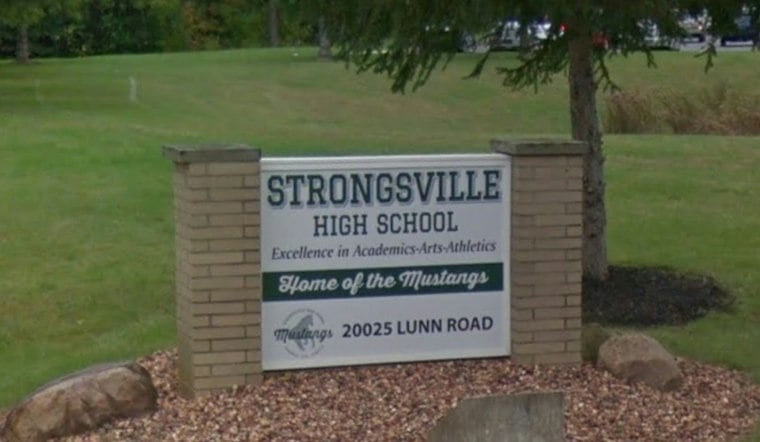
Strongsville City Schools is entering its third year of student drug testing, but the program looks different this fall. The district has eliminated mandatory testing at Strongsville Middle School while keeping random screens in place for athletes, club members, and young drivers at Strongsville High School.
The changes for the 2026-2027 school year mark the latest revision to a policy the district first rolled out in August 2024, when it began requiring drug tests for students in grades 6 through 12 who played sports, joined extracurricular activities, or held school parking permits, according to WKYC. Under that original policy, a positive drug screen triggered an optional substance abuse diversion program or an activity suspension rather than academic discipline, expulsion, or a mark on a student's permanent record, per the same report. As Cleveland.com reports, the Strongsville Board of Education has now scrapped mandatory scheduled testing entirely at both the middle school and the high school, though random testing continues for high schoolers.
A Split Board Vote on Cost and Continuation
The board voted 3-2 on June 30 to approve a new rate of $19.75 per test paid to Great Lakes Biomedical LLC, the Perrysburg-based firm that runs the district's testing program, according to Cleveland.com's report by Bob Sandrick. Linda Wolfe Housum, Richard Micko, and Timothy Helms voted in favor of the rate, while Michelle Bissell and Eric Wahl voted against both the rate and continuing drug testing altogether, per the same report. Great Lakes Biomedical, which handles on-site urine collections and laboratory Medical Review Officer evaluations, serves roughly 160 school districts across Ohio and Michigan, according to The Village Reporter.
Bissell said during a July 9 discussion that parents and community members had complained about the drug-testing program, and she argued that testing athletes, club members, and young drivers failed to reveal the true scope of the schools' drug problem, the outlet reported. She also said children involved in school activities such as sports are less likely to use drugs in the first place. Wahl echoed that concern, saying the district was not catching students who use drugs because nonathletes and students who skip clubs are excluded from testing, and that the program was not uncovering the drug problems people discuss around the community.
Comparing the Program to an Incarceration Experience
Wahl went further, describing the drug-testing program as similar to an incarceration experience for students and arguing it should instead function as an early-warning system to help at-risk kids. Both Bissell and Wahl recommended making drug testing an opt-in program entirely for grades 7 through 12, leaving parents to decide when their children should be tested. Wahl said schools should not take over parental rights regarding drug testing, according to the report.
Helms agreed that testing decisions for middle schoolers should be left to parents, but he pushed to keep testing at the high school, calling it character-building and saying some experiences are important for building future leaders. Still, Helms and Wolfe Housum both recommended dropping mandatory scheduled testing at the high school, with Helms describing the scheduled approach as too prescriptive or imposing.
A One-Year Trial for Random-Only Testing
Under the new arrangement, Strongsville High School will continue random testing for at least one school year without the mandatory scheduled tests that previously applied to all athletes, club members, and young drivers. Wolfe Housum said the district can use that year to collect data on the random-testing-only approach and evaluate it at the end of the school year. The district can also redirect money saved from eliminating scheduled testing toward other school programs, per the report.
Micko said the testing program should not feel punitive and that student issues could be handled with more sensitivity and nuance. He also said the district would find a different drug-testing company if the current vendor could not handle cases appropriately, according to Cleveland.com's account of the board's deliberations.
Legal Backing and Medical Pushback
The board's authority to run suspicionless drug screens rests on U.S. Supreme Court precedent: Vernonia School District 47J v. Acton in 1995 extended that authority to student athletes, and Board of Education v. Earls in 2002 broadened it to all competitive extracurricular participants, according to the Legal Information Institute. That constitutional green light, however, sits alongside pointed medical skepticism. The American Academy of Pediatrics has stated in its policy recommendations that scientific evidence does not support random student drug testing as effective at reducing adolescent drug use, and it has warned the practice can erode trust between students and educators, according to research published in Pediatrics.
Adolescent health researchers have also flagged practical limits to the testing tools themselves, noting that they can produce false positives from common over-the-counter medications and often fail to screen effectively for alcohol, which remains the most widely used substance among high school students, per HealthyChildren.org. Strongsville's approach mirrors a broader pattern across Ohio, where districts including Warren City, Howland Local, and Wauseon Exempted Village have implemented or evaluated similar mandatory testing policies for extracurricular participants through private vendor contracts, according to the Tribune Chronicle.
Enrollment and the District's Broader Picture
Strongsville High School serves roughly 1,842 students in grades 9 through 12 within the broader 5,441-student Strongsville City School District, according to Ohio Department of Education data. The high school carries an overall 5-star rating on the state's report card, with a 98.9% four-year graduation rate, while about 25.5% of its students qualify for free or reduced-price meals. The policy debate also unfolded against a backdrop of scrutiny on district leadership: Strongsville Board of Education Vice President Megan Haffner was arrested on an OVI charge in Strongsville in March, months before the board took up the drug-testing revisions.





