

























































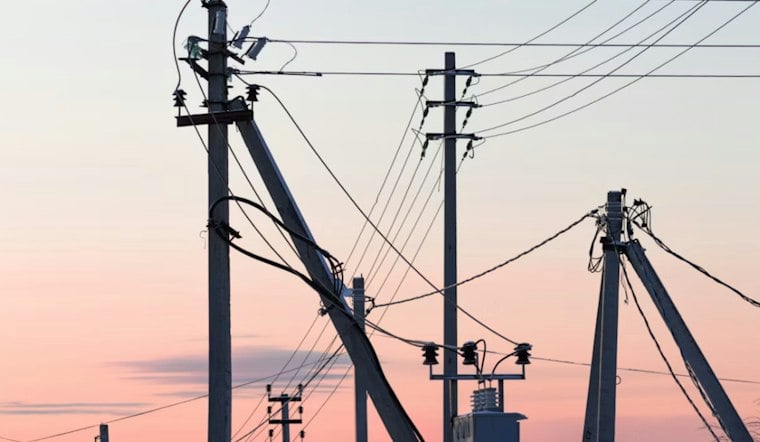
Roughly 1,700 Tahoe Donner customers lost power just before 8:30 p.m. Saturday, the third time in six weeks that a blackout of similar scale has struck the Truckee neighborhood. Crews were dispatched to respond, but no estimated restoration time was immediately available.
The outage alert, first shared on X, was retweeted by Placer County's official account, which relayed word from the Truckee Donner Public Utility District that crews were already working the problem and that updates would follow as more information became available. The timing stood out: just two days earlier, on September 10, TDPUD had publicly said it did not anticipate needing preemptive wildfire safety shutoffs over the weekend, citing diminished local wind forecasts and stating that NV Energy did not plan to de-energize the transmission lines feeding the district.
That assurance came even as neighboring utility PG&E was warning of a very different picture across the wider region. Just a day before the Tahoe Donner outage, PG&E cautioned that up to 14,000 Northern California customers across 12 counties — including Placer and Nevada counties — could face Public Safety Power Shutoffs over the weekend of September 12–13 due to high winds and low humidity, according to Hoodline's earlier report.
A Third Outage in Six Weeks
Saturday's blackout wasn't an isolated event. The neighborhood also lost power to roughly 1,700 customers on August 26 and to about 1,690 customers on August 3, the district's outage records show. During that early August incident, TDPUD crews reported finding line damage before restoring service, underscoring a pattern of recurring disruptions in Tahoe Donner through late summer.
Part of the vulnerability traces back to how Truckee gets its power in the first place. TDPUD does not generate electricity locally; the district relies entirely on NV Energy transmission lines running through the Verdi, Nevada corridor to import power into its service territory, according to the district and the Tahoe Donner Association. Because that transmission originates across the state line, extreme weather or a preventive shutoff in Nevada can cut power to California customers even when local fire risk in Truckee itself is low.
A Utility Built in 1927, Serving a Sprawling Community
Formed in 1927, TDPUD provides electric service to more than 14,000 customers across a 45.5-square-mile territory that stretches from Donner Lake eastward to Boca Dam and south to the Placer County line. Tahoe Donner itself is one of the largest homeowners associations in the country, spanning more than 7,300 acres with roughly 6,500 residential lots and about 1,476 permanent, year-round households mixed among seasonal vacation properties.
The grid serving that community carries real environmental risk on paper. In October 2025, S&P Global Ratings downgraded TDPUD's electric system revenue bond rating from A+ to A specifically over wildfire exposure, noting that 86% of the district's customers and 134 miles of overhead lines sit in CPUC-designated elevated or extreme wildfire risk zones. S&P still assigned a stable outlook, pointing to the district's strong liquidity and ongoing capital investment in wildfire mitigation.
Hardening Efforts Already Underway
TDPUD has not stood still on infrastructure. In August, the district launched an accelerated overhead hardening project in Tahoe Donner, replacing wooden poles and uninsulated lines with metal poles and insulated conductors along Northwoods Boulevard and Ski Slope Way, bringing in contracted crews from VIP Powerline Corp. to speed the work before fall. Earlier in the year, in March, TDPUD began installing real-time Gridscope line sensors on neighborhood circuits designed to detect physical line strikes and help crews pinpoint outage causes faster.
Those upgrades are being paid for in part by ratepayers. Late last year, the TDPUD Board of Directors scheduled a 5% electric rate increase for 2026 and an additional 5% increase for 2027 to fund aging infrastructure replacements and multi-year wildfire hardening projects, following independent cost-of-service studies. Whether Saturday's outage traces back to the same line-strike issues the district has been racing to fix remains unclear, but the repeated blackouts arrive even as that hardening work is actively underway in the same neighborhood.




