

























































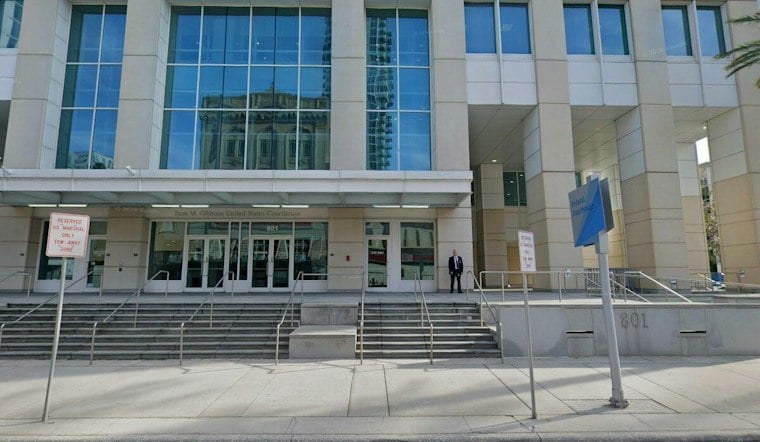
Federal prosecutors in Tampa have charged two Indian nationals with smuggling counterfeit Ozempic into the United States from unauthorized sources in China, unsealing an indictment that accuses the pair of running a scheme designed to trick American buyers into thinking they were getting the real, manufacturer-approved weight-loss drug. Swapnadip Roy, 33, and Vicky Ramancha, 37, both residing in Dubai, are named in the federal case, with Roy making his initial appearance in U.S. District Court in Tampa after being extradited from Italy.
According to CNBC, Roy faces one count of conspiracy to commit smuggling and to defraud the United States, three counts of smuggling, and two counts of selling and holding counterfeit drugs for sale. Ramancha faces the same conspiracy charge, along with three counts of smuggling and two counts of selling counterfeit drugs, though he remains at large. If convicted, the two men face a maximum sentence of 71 years in prison, per the same report. The indictment, filed in the U.S. District Court for the Middle District of Florida under docket No. 25-CR-438, shows both men operated international trading businesses out of Dubai, according to the U.S. Department of Justice.
A Scheme That Ran for Nearly a Year
Prosecutors allege the counterfeit Ozempic distribution operation continued from July 2023 through April 2024, with the fake products including counterfeit packaging, package inserts, pen labels, and needles meant to deceive downstream customers into believing they were purchasing authentic, manufacturer-authorized Ozempic made by Novo. Assistant U.S. Attorney Christopher Murray is prosecuting the case alongside DOJ Criminal Division leadership, according to the Department of Justice.
A. Tysen Duva said counterfeit prescription drugs threaten the health and safety of Americans who depend on the integrity of the pharmaceutical supply chain, adding that the defendants allegedly exploited people's health to pay themselves. Duva said the department will pursue people who deceive American consumers with counterfeit drugs.
How the Fakes Slipped Past Detection
The FDA seized counterfeit weight-loss pens in December 2023, including pens associated with authentic Novo Nordisk lot number PAR1229 and lot number NAR0074, which the FDA flagged as counterfeit when paired with serial number 430834149057 on the box and pen label, according to a report from Forbes. Forbes also described counterfeit components and visual clues that could distinguish fake products from genuine ones. The FDA warned the public about counterfeit Ozempic and adverse events.
The indictment describes documentation and product-identifier requirements under the Drug Supply Chain Security Act of 2013, while The National Law Review discusses DSCSA verification obligations.
A Parallel Fraud Case Unfolds in Delhi
The Tampa indictment is only one piece of a sprawling, multi-jurisdictional investigation that stretches across China, Dubai, India, and the United States. Indian law enforcement opened its own criminal probe in June 2025 when the Economic Offences Wing of the Delhi Police registered FIR No. 75/2025 after a complaint alleging an $18.8 million (Rs 157 crore) fraud tied to 125,000 counterfeit Ozempic doses shipped from China, according to The Pioneer. Delhi Police later issued a Lookout Circular against Roy in May 2026 after he evaded investigative notices, the outlet reported.
Indian police filings identified the U.S. buyer of the counterfeit product as New York-based Assure Global LLC, operating under the name WeShield. The National Law Review says WeShield's public-facing website indicates it principally distributes personal protective equipment and COVID-19 tests, and notes that WeShield filed its own cheating complaint in Delhi, claiming it had been deceived by overseas suppliers. That parallel filing leaves open questions about how the counterfeit inventory penetrated regulated U.S. supply chains and whether domestic buyers conducted adequate due diligence.
A Global Problem Fueled by GLP-1 Demand
The surge in counterfeit semaglutide tracks a broader explosion in demand for GLP-1 weight-loss drugs. Gallup reported that use of GLP-1 medications for weight loss rose to 11% of U.S. adults in 2026, up from just 3% in 2024, while 15% of U.S. adults say they have used a GLP-1 drug for weight loss at some point, per CNBC's reporting. That surging demand has created high-margin opportunities for illicit supply chains, making counterfeit semaglutide an urgent focus for federal prosecutors, international police agencies, and public health regulators alike, the Department of Justice has said.
The World Health Organization issued a global medical-product alert in June 2024 about falsified semaglutide products found in supply chains in Brazil, the UK, and the US; the alert said undeclared insulin may be present, according to The National Law Review. Global safety analyses tracking counterfeit weight-loss drugs have identified more than 230 reported cases of suspected counterfeit semaglutide, with nearly 90% classified as serious adverse events, including hospitalizations in Austria and the UK, as Hoodline has reported.
The Tampa case also arrives amid heightened legal scrutiny of the GLP-1 drug market in Florida more broadly. On September 23, 2026, the State of Florida filed a separate, broad lawsuit against pharmaceutical manufacturers including Novo Nordisk and Eli Lilly, alleging deceptive pricing practices tied to insulin and GLP-1 medications like Ozempic, Hoodline reported in its coverage of the pricing suit. Taken together, the criminal counterfeiting case and the civil pricing lawsuit reflect a market under mounting pressure from all sides, as regulators, prosecutors, and state attorneys general scrutinize how one of the country's most in-demand drug categories is priced, sold, and protected from fraud.



