

























































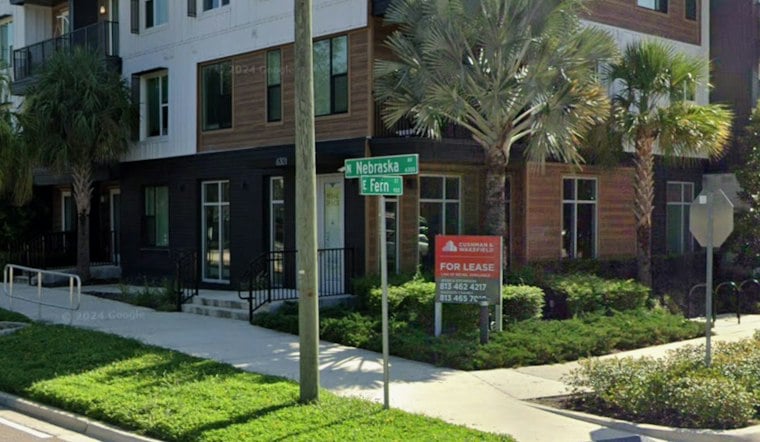
A daytime resource center on Nebraska Avenue in Seminole Heights is opening its doors to free medical and dental care starting today, giving Tampa's unhoused and underserved residents a new place to see a doctor without an appointment or an insurance card. The Drop, which already offers showers, laundry, mail service, internet access, and job-search help, has partnered with a local healthcare nonprofit to add exam rooms staffed by a dentist and a doctor or nurse practitioner.
The expansion comes less than a year after the facility's predecessor shut its doors entirely. As reported by FOX 13 Tampa Bay, The Drop temporarily closed after federal funding cuts forced it to shut down last year, before reopening under new leadership. For three decades before that, the same building at 6220 N. Nebraska Ave. operated as “The Shop” under Gracepoint Wellness, a fixture that served roughly 50 unhoused visitors a day until federal grant cuts forced its closure in July 2025, according to the Tampa Bay Times.
To bring the site back to life, Tampa nonprofit WellBuilt Cities ran a grassroots fundraising push that pulled in more than $130,000 from local churches, businesses, and individual donors to cover the lease and launch The Drop in January 2026, according to Florida Politics. The organization had set an overall target of $240,000 to cover a full year of operations and facility upgrades. WellBuilt Cities now operates The Drop, which stands for Dignity and Resilience Operations Partnership, with an onsite staff of 10 workers.
A Steady Stream of Visitors Since January
Since reopening in January, per FOX 13 Tampa Bay's report, The Drop has served more than 1,000 individual people and recorded at least 6,000 total visits. The center operates every Monday, Wednesday, and Friday from 9 a.m. to 1 p.m., and it's meant to address basic needs, mental health, and physical care all in one stop, the outlet's reporting notes.
The new healthcare partnership is with Pioneer Medical Foundation, whose Assistant Vice President Ano Kashumba told FOX 13 that the community needs the partnership because healthcare costs are being cut. Kashumba also said the Nebraska Avenue location's spot on a bus line helps bridge access to medical services for people who might otherwise struggle to reach care. The site's own transit connections back that up: Hillsborough Area Regional Transit's Route 400 MetroRapid runs frequent daily service along the Nebraska Avenue corridor, linking downtown Tampa directly with the University Area Transit Center, per Hillsborough Area Regional Transit.
Filling a Gap Left by Florida's Insurance Numbers
Pioneer Medical Foundation brings some institutional weight to the effort. The organization earned a 2026 Gold Rating from the National Association of Free and Charitable Clinics Quality Standards Program and, according to Pioneer Medical Foundation, already runs an average of 16 free clinic sites each week across Tampa Bay for uninsured and unhoused residents. The new exam rooms at The Drop will provide basic healthcare, dental exams, and mental health services, and the clinic may add additional medical specialties in the future.
The need is significant statewide. Census Bureau survey data analyzed in 2026 shows 13.9% of Floridians under 65 — roughly 2.3 million people — lack health insurance, giving Florida the fourth-highest uninsured rate in the country, according to America's Health Rankings. Florida remains among the states that have not expanded Medicaid eligibility under the Affordable Care Act, a gap that free clinics like Pioneer Medical Foundation's are designed to help close.
Dental care in particular addresses a documented blind spot in care for unhoused adults. A national study published in the American Journal of Public Health found that 73% of unhoused adults reported unmet health needs, with dental care and vision care each cited by 41% as the most prominent unaddressed gaps. Researchers pointed to lack of insurance and the daily pressure of prioritizing food and shelter as major drivers of that unmet need, according to findings published on the National Institutes of Health's PMC repository.
More Than a Day Center
The Drop's mission extends beyond daily walk-in services. WellBuilt Cities designed the facility as a dual-purpose “resilience hub,” meant to provide basic services during normal, or “blue sky,” conditions while also coordinating volunteer disaster relief through the Respond Together church network during hurricane emergencies, or “gray sky” periods, according to 83 Degrees Media. The organization has said it eventually hopes to explore acquiring the property outright for long-term expansion.
Medical readiness at the site has also been building for months ahead of the clinic's formal opening. In July, AdventHealth Tampa's Pepin Heart Institute donated an Automated External Defibrillator to be permanently stationed at The Drop for cardiac emergencies, a notable addition given that unhoused individuals experience disproportionately high rates of chronic cardiovascular conditions and face steep barriers to emergency health services, according to AdventHealth Tampa.
Florida's broader legal landscape has also shaped demand for places like The Drop. House Bill 1365, which took effect in October 2024, bars municipalities and counties from allowing public sleeping or camping on public property and lets business owners, residents, or the state attorney general sue local governments that permit it, according to The Florida Senate. That restriction has pushed more unhoused residents toward daytime hubs offering legal places to rest, wash up, and now, get medical care. Local officials also track the scale of the need directly: the Tampa/Hillsborough County Continuum of Care runs an annual Homeless Point-in-Time Count every February, surveying people in emergency shelters, cars, parks, and unsheltered locations, timed to avoid conflicting with Tampa's Gasparilla celebration, according to the Tampa Hillsborough Homeless Initiative.





