

























































A religious painting that vanished from Tarpon Springs more than a century ago has finally been found — hanging on the back wall of a small parish church in Greece. Mayor John Koulianos located the missing St. Nicholas icon while on a personal vacation in Aegina, ending a mystery that has lingered over the Sponge Capital of the World since 1923.
A Vacation Trip Solves a Century-Old Puzzle
According to FOX 13 Tampa Bay, Koulianos tracked down the icon after meeting with Aegina's mayor during his trip, who then called a local priest that located the artwork hanging on the back wall of Panagitsa Church. The reporting, first detailed by journalist Briona Arradondo, describes a lost century-old religious painting from Tarpon Springs turning up in a small town in Greece — a discovery that appears to have taken city officials by surprise even as it closes a chapter that began generations ago.
Residents of Aegina originally gave the St. Nicholas icon to Tarpon Springs' Greek Orthodox parish back in 1910, the station's report notes. Damage from a 1923 fire forced the painting to be sent back to its original artist in Aegina for restoration, and it was never returned to Florida — leaving the cathedral without the piece for 103 years.
Fragile Artwork Won't Travel in a Suitcase
The recovered Byzantine painting is roughly the size of a movie poster and still shows historic burn damage from the fire that separated it from Tarpon Springs in the first place, per the same account. Officials have confirmed the fragile artwork will remain safely inside the church rather than being carried home in personal luggage, with Koulianos noting the piece is simply too large and delicate for that kind of transport.
Getting the icon back to Florida is not just a matter of packing it carefully, however. Repatriating the painting requires formal authorization from Greek Orthodox bishops in both Greece and the United States, and the Greek Orthodox Metropolis of Atlanta had not issued an official decision as of September 2026, the outlet reports. That ecclesiastical review stands as the key unresolved step between the discovery and the icon's actual return.
A Sister City Bond Rooted in the Sponge Trade
Despite that pending approval, the mayors of Tarpon Springs and Aegina are already looking ahead. They plan to formalize a sister city relationship in January 2027 during Epiphany celebrations in Florida, when local leaders hope to officially welcome the icon home if the necessary approvals come through, according to FOX 13 Tampa Bay.
The bond between the two communities runs deep. Tarpon Springs' cultural ties to Aegina date back to 1905, when sponge divers from Aegina and Hydra were among the first Greek maritime workers recruited to build Florida's commercial sponging industry, according to background compiled on Wikipedia. Those Greek immigrants introduced deep-sea diving technology to Gulf Coast waters, laying the groundwork for the very parish that later received the 1910 gift from Aegina.
A Cathedral Built on Greek Heritage
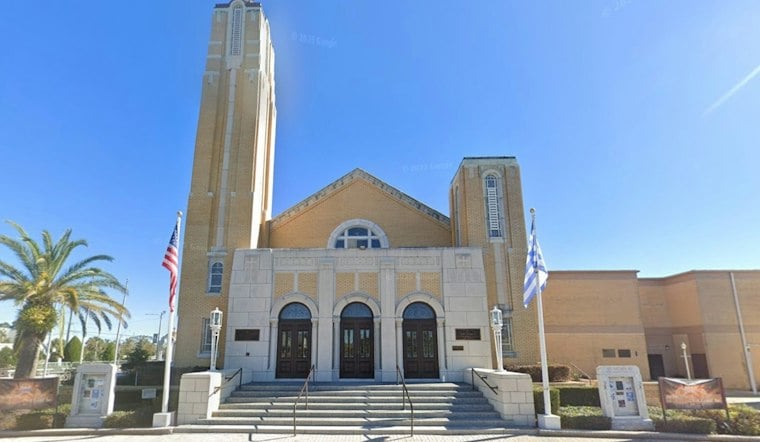
The church where the icon once hung, St. Nicholas Greek Orthodox Cathedral, is built in a Neo-Byzantine style loosely modeled after Hagia Sophia, according to Florida Stories Walking Tours. The current cathedral remains the spiritual center of the city's Greek community and incorporates Pentelic marble from Greece, per Wikipedia.
Those architectural details help explain why a single parish painting still carries such weight in Tarpon Springs. The city historically had the highest percentage of Greek Americans in the country, with census data showing 12.5 percent of residents claiming Greek ancestry in 2010 before that share declined to 5.8 percent in 2024, when Tarpon Springs ranked third among U.S. communities behind Saddle River and Campbell, according to Greek American Demographics figures drawn from the U.S. Census Bureau. Even as that share has shifted, the city retains strong Greek cultural ties.
Timing Points Toward Epiphany
That cultural identity is on fullest display every January 6, when Tarpon Springs hosts the largest Greek Orthodox Epiphany celebration in the Western Hemisphere, drawing thousands of spectators to watch young men dive into Spring Bayou to retrieve a wooden cross for a year of blessings. The tradition has continued every year since 1906, making the January 2027 target date for the sister city announcement — and the hoped-for icon homecoming — a fitting bookend to the community's history with Aegina.
For now, the painting stays put in Panagitsa Church while bishops on both sides of the Atlantic weigh in. Whether it returns for the 2027 Epiphany festivities remains an open question, hinging on decisions within the church hierarchy.





