

























































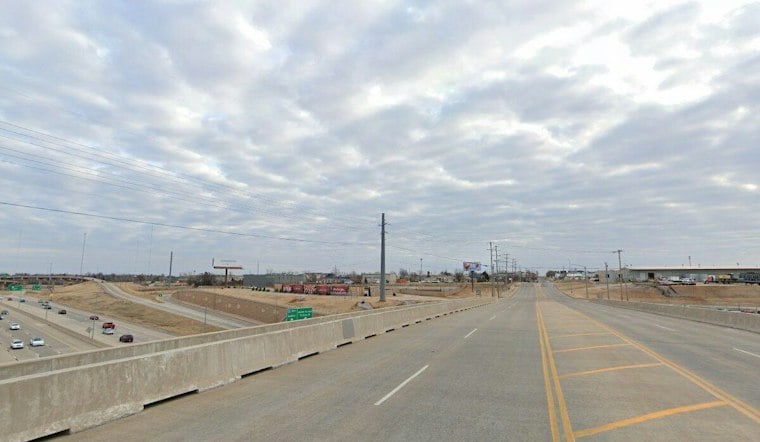
A driver walked away unhurt early Thursday morning after their Tesla's battery pack ignited on northbound Interstate 235 near NW 50th Street in Oklahoma City, following an undercarriage impact that firefighters believed punctured the vehicle's battery. Oklahoma City firefighters found individual cells burning underneath the car, the result of a chain of events that started when the driver missed their exit.
Missed Exit Led to Median Crossing
According to KOKH, the driver missed the exit they intended to take and instead drove over the median in northwest Oklahoma City. While crossing, the Tesla struck something underneath the vehicle, which deployed the airbags. The driver managed to pull onto the shoulder as the car began emitting smoke.
Firefighters who responded to the scene believe the impact punctured the vehicle's battery, according to the same report, triggering thermal runaway — a self-sustaining chemical reaction inside damaged lithium-ion cells. The car involved has been described as a Tesla Model 5 experiencing this exact process, with individual battery cells igniting beneath the vehicle. The driver was not injured.
A High-Traffic Corridor Through the Metro
The crash unfolded on the Centennial Expressway, a 5.4-mile stretch. I-235 carries roughly 115,000 vehicles daily between downtown OKC and Interstate 44, according to Hoodline; its earlier coverage was of a separate crash on southbound I-35 and mentions I-235 in background information. That volume of traffic means any incident on the highway, especially one involving a stubborn battery fire, has the potential to snarl the morning commute for thousands of drivers.
The Oklahoma City Fire Department covers 621 square miles across 38 fire stations, per the City of Oklahoma City. A separate lithium-ion-battery fire at a southeast Oklahoma City plant on a Tuesday morning prompted a brief evacuation, as reported by KOCO 5 News.
The Underbody Problem Isn't New
Punctured battery packs from road hazards are a known vulnerability that stretches back over a decade. After 2013 highway debris strikes pierced Model S undercarriages and sparked fires, Tesla began outfitting new Model S vehicles with a triple-layer underbody shield made of titanium and aluminum deflectors and offered older-car retrofits. NHTSA closed its safety investigation in March 2014 after Tesla had taken or announced protective measures, according to Automotive Fleet.
Even after flames appear out, damaged EV batteries can pose a lingering threat. A formal NTSB safety report identified reignition and stranded energy as risks for damaged traction batteries.
More EVs, More Calls for Local Crews
Incidents like Thursday's underscore the challenges Oklahoma first responders can face when responding to electric-vehicle fires.
Crashes and punctures are among possible causes of electric-vehicle fires. Thursday's I-235 incident followed a mistaken exit, a median crossing and an impact.



