

























































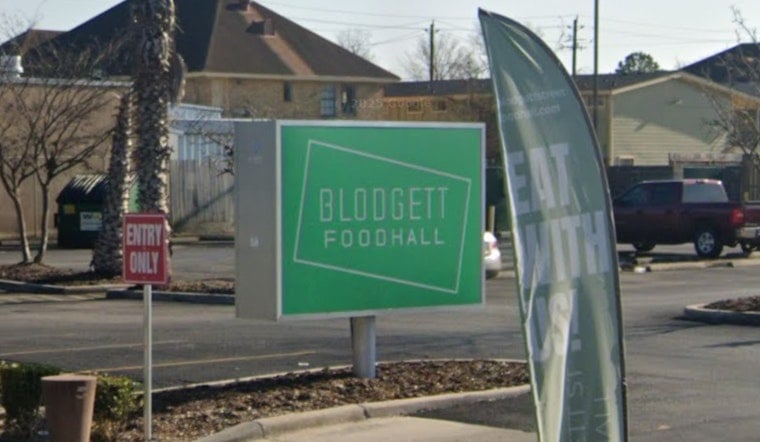
Kaisen Sushi is serving its final weekend out of Blodgett Food Hall in Houston's Third Ward, closing out just over a year in business as chef Sunny Bertsch admits the high-end, delivery-only sushi model never found solid financial footing. In its place, Bertsch is launching two new virtual concepts, Chefs Bowls and Three Fish Bowls, aimed at a much cheaper price point than the $60-or-more-per-person tickets Kaisen commanded.
Bertsch announced the closure in an August 20th Facebook statement, saying Kaisen's final service dates would be August 29th and 30th, and that the brand is on pause rather than gone for good while he works to raise capital for a dedicated brick-and-mortar storefront. Speaking to CultureMap Houston, Bertsch acknowledged that his own inexperience in the restaurant business contributed to Kaisen's closure and said the ghost kitchen never generated the revenue a brick-and-mortar restaurant could, in part because it lacked alcohol sales entirely.
A Sushi Chef Who Learned the Trade Fast
Bertsch's path to running a sushi program was unconventional. Before Kaisen, he had only two years of professional culinary experience and had previously worked in aerospace and dog walking, taking a $13-per-hour job at Seiwa Market in Houston specifically to sharpen his knife skills, according to CultureMap Houston. That fast rise still earned Kaisen a Best New Restaurant nomination in the 2026 CultureMap Tastemaker Awards, even as the underlying business struggled.
The economics were brutal well before the closure announcement. A September 2025 investigation into rising food costs found that 15% U.S. tariffs on imports from Japan drove up Bertsch's cost for Japanese sea bream from $9.89 to $13.80 per pound in just seven months, the Houston Chronicle reported. Two months later, Bertsch posted a viral video breaking down Kaisen's weekly finances, showing that after paying $8,321 in payroll and $3,500 in operating bills, his business account was left with just $3,451, with looming costs like a $400 wasabi order still to come, according to the Mary Sue.
Splitting Into Two Brands to Beat the Algorithm
Bertsch, according to CultureMap Houston's report, said ghost kitchens are really designed for lower-ticket-average quick-service food, not the premium sushi experience he was trying to deliver. His fix is to replace Kaisen with two separate concepts, Chefs Bowls and Three Fish Bowls, both operating out of the same kitchen at Blodgett Food Hall and both targeting roughly $15 to $25 per person.
The split isn't just branding. Delivery platforms enforce algorithmic radius limits and different menu categorizations depending on whether a virtual brand serves raw seafood or cooked dishes, per the same CultureMap report, which forces ghost kitchen operators to list raw and cooked items under distinct storefronts to maximize their reach on apps. Chefs Bowls will serve rice bowls topped with sous vide and seared proteins like chicken teriyaki, salmon teriyaki, and steak, while Three Fish Bowls will use the same fish Kaisen sourced, prepared differently, and is named for its salmon, yellowtail, and bluefin tuna. Bertsch has tested bluefin in the kitchen and said he prefers it to yellowfin tuna, noting that the pricier fish will set Three Fish Bowls apart from concepts that rely on cheaper yellowfin.
Renovations, Uploads, and a Week-of-September Launch
Both new concepts are planned to launch during the week of September 7th, though Bertsch still needs to finish renovations to his space at Blodgett Food Hall and upload new menus to third-party delivery services before either brand goes live. He said his focus right now is making Chefs Bowls and Three Fish Bowls successful, and that he continues to pay his staff more than is typical at traditional restaurants.
Ghost kitchens have long been pitched as a cheap way into the restaurant business, but the reality is more complicated. Setup costs for a single location typically run between $20,000 and $60,000, and while the model can cut labor costs by as much as 80%, steep third-party delivery app commissions eat into margins, especially for premium concepts, according to industry data from Toast. Blodgett Food Hall itself is operated by CloudKitchens, a ghost kitchen company founded by former Uber CEO Travis Kalanick that converts commercial buildings into facilities housing up to 30 delivery-only concepts, according to Houstonia Magazine.
Not the First High-End Concept to Struggle There
Bertsch isn't the first ambitious chef to hit a wall inside Blodgett Food Hall. Back in December 2020, James Beard Award nominee Alex Au-Yeung closed his Malaysian delivery concept Phat Kitchen after less than two months in the space, citing operational limitations, as Houston Food Finder reported at the time. The closure adds to a pattern of turnover along the surrounding stretch of Blodgett Street, where 66-year-old soul food staple This Is It closed last fall and was replaced by Mikki's Café.
Not every Houston ghost kitchen story ends in retreat. Saigon Hustle started as a delivery-only pandemic-era concept before using that model to prove out its idea and attract outside investment, including a $1 million grant from Savory Fund, which ultimately funded its expansion into brick-and-mortar fast-casual locations. Bertsch has said he wants a future Kaisen Sushi to serve both dine-in and to-go customers, and hopes the leaner Chefs Bowls and Three Fish Bowls concepts can eventually generate enough capital to make that storefront a reality. Whether the lower price point can pull in enough volume to cover Blodgett Food Hall's overhead and Bertsch's above-market staff wages remains to be seen.





