

























































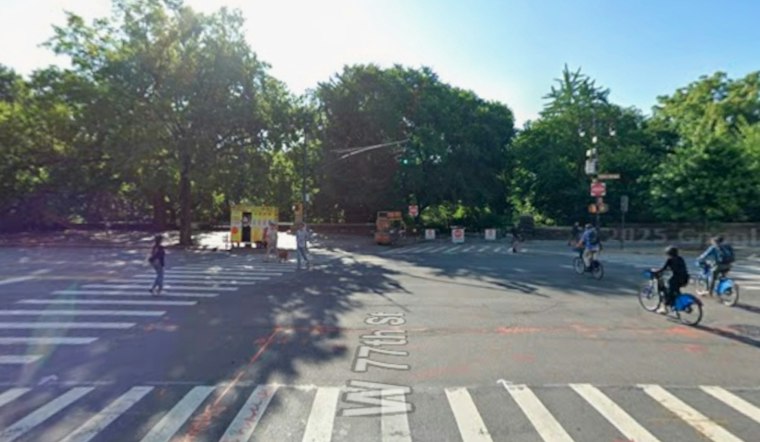
A pin oak limb fell onto a Nathan's hot dog cart vendor near the American Museum of Natural History shortly after noon on September 11, at West 77th Street and Central Park West, according to the New York Post. The unidentified vendor was injured, and the city said the tree had been inspected days earlier without apparent problems.
The tree stands in Theodore Roosevelt Park near the museum. The Parks Department told the New York Post that an early-September inspection found no indication that the tree needed further review and no visible defects before the limb broke. FDNY took the vendor to Lenox Hill Hospital, and fellow vendors said he was later recovering at home.
A Parks Department spokesperson told the Post that routine pruning is generally performed by forestry crews or a contractor. The tree was last pruned in October 2017, according to the newspaper.
A Citywide Drop in Tree Inspections
The incident lands amid a steep decline in how often the city checks its street and park trees. Citywide tree inspections fell 33 percent from fiscal year 2025 to fiscal year 2026, dropping from roughly 88,000 to about 59,000 trees checked, as noted by the New York Post; fiscal year 2026 ended June 30. Budget data reviewed during the city's fiscal year 2026-2027 review show NYC Parks received roughly 0.56 percent of the overall city budget — below the 1 percent target sought by environmental coalitions — while City Limits has reported staffing reductions and a hiring freeze at the agency.
Why Heat Matters for the Urban Forest
The Office of the New York City Comptroller says intensifying extreme heat and accelerating climate risks are making tree canopy an increasingly important part of the city's infrastructure, rather than simply an amenity, according to the Comptroller's office. New York City's Climate Resiliency Design Guidelines project that by the 2050s, the number of days at or above 90 degrees Fahrenheit will double and heat waves will triple to an average of six annually, according to the Mayor's Office of Climate and Environmental Justice. Those projections help explain why heat and climate stress are increasingly part of the city's discussion about maintaining its trees.
NYC Parks maintains a policy target of pruning street trees on a seven-year cycle, but independent arborist tracking data show that flat funding and staffing constraints have stretched that functional cycle to nearly 25 years in practice, per an analysis published by the Better Block Project. NYC Parks oversees more than 675,000 street trees citywide.
What the Law Requires to Prove Negligence
Pin oaks and other mature urban hardwoods are prone to what arborists call summer branch drop, a phenomenon in which heavy lateral limbs can snap suddenly during warm weather or light winds due to internal moisture stress, according to research published in Arboriculture & Urban Forestry. New York premises liability law includes notice requirements for dangerous conditions, according to CityLand.
Any injured vendor seeking damages from the city faces a strict clock. Under New York General Municipal Law § 50-e, someone hurt by city property or a fallen tree must serve a sworn Notice of Claim on the Office of the New York City Comptroller within 90 days of the incident before filing suit. Tree Work Permits and Trees New York Citizen Pruner certification are part of the framework for pruning city-owned trees.
A Pattern of Falling Limbs Across the City
Other recent incidents have put attention on the risks posed by falling limbs. Hoodline reported in July that a tree collapse in a Brooklyn public park injured four people and prompted responses from FDNY and forestry officials.
A prior New York City case illustrates the potential severity of such incidents. Michael Ricciutti and Karla Del Gallo reached a $13.75 million settlement with the city and other defendants in 2020 after an 18-inch-diameter honey locust branch fell about 25 feet and struck Del Gallo and her six-month-old daughter, Gianna Ricciutti, in 2010, according to the New York Post. Del Gallo spent weeks in a medically induced coma, and Gianna later died at the hospital.
The vendor's recovery and any potential claim will turn on medical evidence, the city's records and whether an arboricultural review identifies a defect that should have been visible before the limb fell.



