

























































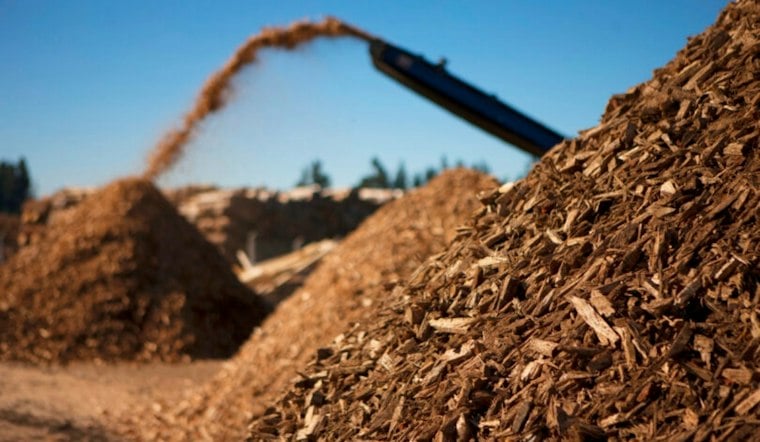
Placer County's Planning Commission approved a use permit last week for the Cabin Creek Biomass Facility, clearing the way for a 2.7-acre plant near Truckee that will convert forest brush and woody debris into biochar. The site sits on a 148-acre county-owned property within the Eastern Regional Landfill complex at 900 Cabin Creek Road, about two miles south of Interstate 80 and west of State Route 89.
The facility is designed to convert locally sourced forest vegetation, woody biomass and other eligible organic waste materials into biochar and other renewable or beneficial-use products, according to Placer County
. The project is being developed as a public-private partnership between the county and Biochar Now, LLC, a commercial biochar producer, per
Placer County
. That same account of the approval notes the permit updates a 2013 plan by swapping out an earlier gasification electricity system for Biochar Now's patented kiln-based, non-combustion thermal conversion technology, which was designed specifically to cut emissions.
Two Decades in the Making
The road to approval has been long. The original Cabin Creek proposal traces back to a 2008 feasibility study and received a conditional use permit in 2012, but county supervisors put it on hold in 2017 before reviving it in 2022, the county's project history shows. Initially conceived as a 2-megawatt gasification power plant in the late 2000s, the project ran into legal appeals from environmental groups that helped stall it for years.
Among those objections, the Center for Biological Diversity legally appealed the facility's original 2012 Environmental Impact Report in January 2013, citing concerns over air pollution and forest habitat impacts near residential neighborhoods, according to the Energy Justice Network. By shifting the technical framework to a non-combustion thermal conversion process, the county says it addressed those historic air quality concerns while preserving the facility's core mission of removing hazardous brush and small trees generated through forest thinning in the Lake Tahoe Basin.
Science Behind the Switch to Biochar
The technology swap has research behind it. An independent Health Impact Assessment by the Sequoia Foundation concluded that converting forest slash to biochar via an enclosed facility would yield a net reduction in health risks compared to open pile field burning in the Tahoe Basin, per findings compiled by UC Agriculture and Natural Resources. Open burns of forest slash have long released uncontrolled particulates into the mountain air basin, a problem the enclosed kiln system is meant to avoid.
Once operational, the facility is expected to process a significant volume of material. Regional biomass task force tracking from October 2023 estimated the plant will process up to 18,000 bone dry tons of forest waste debris annually, producing roughly 2,000 tons of biochar, according to the Tahoe Truckee Community Foundation. Project planning documents released in April outlined a multi-phased deployment, starting with initial biochar production before a second phase captures waste heat and energy for local electricity generation, as reported by the Placer Sentinel.
Part of a Bigger Wildfire Strategy
Cabin Creek doesn't exist in isolation. Placer County received a $2 million grant from CAL FIRE in December 2022 to support development and planning of the facility in the North Lake Tahoe region, the county has said. The project also fits within the county's broader Wildfire Protection and Biomass Utilization Program, established in 2006, and its $2 billion, 10-year forest health action plan adopted in July 2024 to treat nearly 650,000 acres of fire-prone timberland — an initiative Hoodline previously reported on.
Forest thinning under that plan generates vast amounts of non-merchantable wood debris, which facilities like Cabin Creek are meant to absorb rather than send to open burn piles. Placer County isn't alone in turning to this approach; other California land managers have pursued similar carbonizer and biochar strategies to handle forest thinning debris and reduce wildfire risk. Still unresolved are the exact timeline for Phase 1 construction and the final commercial off-take agreements for the biochar the plant will produce.




