

























































The Trump administration is canceling nearly $1 billion in spending that Congress already approved, using a rare and legally contested budget maneuver to freeze funding for immigrant services and diversity-focused initiatives. The move was announced with just five days remaining in the federal fiscal year, leaving little time for the usual congressional review before the money would otherwise expire.
According to WKMG/ClickOrlando, the Office of Management and Budget described the cuts as targeting “the most harmful government spending.” The announcement came out of Washington and represents the latest instance of the administration wielding what's known as a pocket rescission — a tool that lets the White House propose canceling funds so close to their expiration date that Congress effectively runs out the clock before it can act.
Collins Says She Was Blindsided
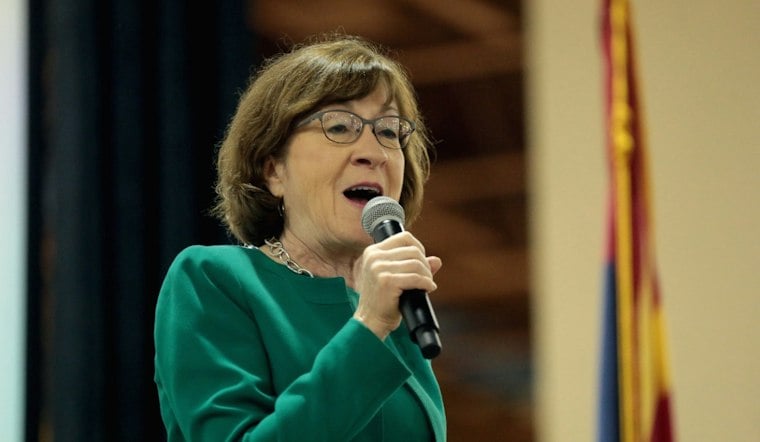
Senate Appropriations Committee Chair Susan Collins, a Republican senator facing a tough reelection campaign, condemned the cancellation and said it came without warning or consultation. She called it the latest attempt by the Office of Management and Budget to undermine Congress's constitutional power of the purse, per the same report.
Collins argued the delay itself amounts to an impoundment that was never reported to Congress, and she said the maneuver usurps lawmakers' appropriations powers. She added that OMB cannot unilaterally decide which programs are worth funding, and said she plans to work with colleagues to address what she described as illegal actions.
How a Pocket Rescission Works
Under the Impoundment Control Act of 1974, a president can formally ask Congress to rescind previously approved funding, and lawmakers then have 45 consecutive session days to act, according to the Bipartisan Policy Center. If Congress does neither, the paused funds are supposed to be released. A pocket rescission exploits a loophole in that timeline: the administration proposes canceling money that is set to expire during or just after that 45-day window, then simply holds onto the funds until they lapse on their own, regardless of what Congress decides.
The nonprofit's explainer notes that Congress can still review the president's proposed cuts before they take effect, but the timing built into a pocket rescission is designed to make that review largely moot. The Bipartisan Policy Center also states plainly that the legality of the tactic remains unresolved, since no court has yet ruled on the merits of whether the Impoundment Control Act actually permits it.
GAO Has Already Weighed In
That legal uncertainty hasn't stopped the federal government's own watchdog from taking a position. The Government Accountability Office has found that pocket rescissions are illegal, arguing that the power of the purse belongs to Congress under the Constitution. That finding sits in tension with the Bipartisan Policy Center's point that the courts haven't formally settled the question — a conflict the dossier of evidence doesn't resolve either way.
This isn't the administration's first run at the tactic. The Trump administration previously moved to rescind $4.9 billion in foreign aid without congressional approval, according to The Wall Street Journal, with Trump saying at the time that he wanted to claw back funds from the State Department, international-assistance programs, and the U.S. Agency for International Development. The paper reported the administration invoked its authority under the Impoundment Control Act, which gives the White House power to pause spending only in limited circumstances.
A Broader Pattern of Rescission Fights
Rescission requests had grown rare over the early 21st century before this recent resurgence, according to the Tax Policy Center. Trump requested, and Congress approved, roughly $9 billion in rescissions for fiscal year 2025, the group notes. More recently, the administration asked Congress to rescind $9.4 billion in enacted appropriations focused on foreign aid and public media funding, and lawmakers signed off on $9.0 billion of that request, according to the Bipartisan Policy Center.
Historical context shows how unusual it is for a White House to lean this heavily on rescissions. From the Ford through Clinton administrations, presidents requested cancellations totaling $77.1 billion, and Congress approved only about a third of that figure, or $25.1 billion, per the Bipartisan Policy Center's data. The current standoff over the nearly $1 billion package now adds another chapter to that long-running tug-of-war between the executive branch and Capitol Hill over who ultimately controls federal spending.




