

























































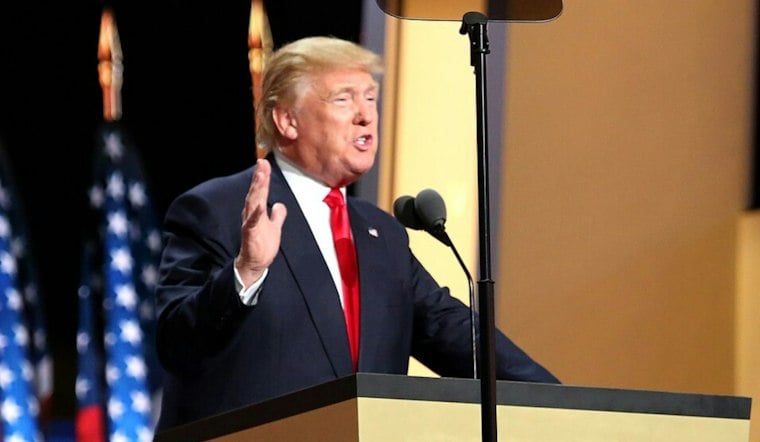
President Trump plans to meet with leaders or foreign ministers from Gulf Cooperation Council countries on the sidelines of the UN General Assembly in New York on September 22, with discussions expected to focus on next steps in the war with Iran and U.S. ideas for a postwar strategy.
The planned session was first reported by Axios, which said the meeting is expected to focus on U.S. ideas for a postwar strategy. The Gulf Cooperation Council includes six countries — Saudi Arabia, the United Arab Emirates, Qatar, Bahrain, Kuwait and Oman — several of which were directly touched by the recent conflict with Iran. According to the same report, one source said the gathering could expand to include other Arab and Muslim leaders beyond the GCC roster.
The timing lines up with a broader effort inside the administration to sketch out what comes next in the region. Axios reports that the Trump administration is drafting a postwar strategy focused on a regional effort to contain Iran and expand normalization between Israel and its neighbors, intended to guide U.S. policy in the Middle East after the Iran war ends and through the final two years of Trump's term.
The Strategy Is Still Just a Draft
That plan remains far from finished. A source briefed on the process told Axios it will take another few weeks to draft the strategy, and the White House declined to comment when asked about it. Possible elements raised so far, per the same report, include a U.S.-guaranteed regional alignment against Iran, Gaza-related arrangements, potential Israel-Syria and Israel-Lebanon agreements, and an expansion of the Abraham Accords that could eventually include Saudi-Israeli normalization.
Politics on the Israeli side add another layer of uncertainty. The administration hopes any new Israeli government formed after the October 27 election will be willing and able to cooperate in the postwar strategy, Axios reports, though some U.S. officials said Trump intends to push forward with implementation regardless of the election results — even if they produce a political stalemate. The Times of Israel reports that the administration does not plan to implement the strategy until after both the October 27 Israeli election and the November 3 U.S. midterms.
Gulf States Weigh Damage and Divided Loyalties
The stakes for Gulf governments go beyond diplomacy. TIME reports that Iranian attacks hit Saudi facilities at Abqaiq and Qatar's Ras Laffan gas complex, that the UAE intercepted barrages for weeks, and that Bahrain and Kuwait were also affected. Despite that damage, TIME notes that most Gulf states have reverted to a previous preference: containing and de-escalating rather than confronting Iran outright.
Officials broadly agree on three points, according to TIME: Iran remains a long-term threat, the U.S. security umbrella is no longer dependable, and regional stability has become an existential priority. Yet the outlet also cautions that competition among the Gulf states, particularly Saudi Arabia and the UAE, means that convergence remains a trend rather than a settled fact. The Hill frames the balancing act bluntly, reporting that Gulf states don't want to get on the wrong side of the Trump administration and don't want to be the target of Iranian attacks either.
A Familiar Playbook From Last Year's Gaza Talks
The choreography echoes a UN sideline meeting Trump held with leaders from eight Arab and Muslim countries in September 2025, according to an Axios flashback cited in this week's report. At that meeting, per the Times of Israel, Trump presented his plan for ending the Gaza war, releasing remaining hostages and rehabilitating the Strip under non-Hamas rule, with senior officials from Saudi Arabia, the UAE, Qatar, Egypt, Jordan, Turkey, Indonesia and Pakistan in attendance. Reports have since differed on the plan's scope — CNN described it as a 21-point peace plan — a discrepancy that underscores how fluid these multilateral proposals can be before they're finalized.
Even now, deep economic entanglements complicate the picture of regional unity. TIME notes that Qatar and Iran still jointly exploit the world's largest gas field, a reminder that de-escalation and dependency can coexist even amid open hostilities. With the State Department having sent initial invitations for next Tuesday's meeting, according to Axios, the coming days will show whether the administration's postwar vision can survive contact with the Gulf's competing interests.





