

























































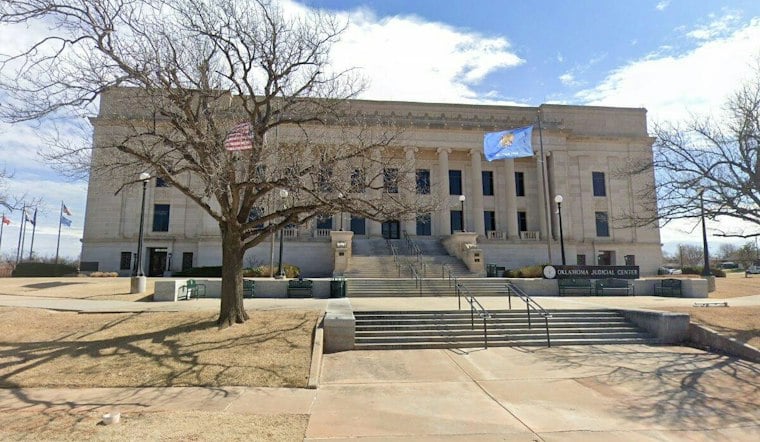
A Tulsa attorney who says he shouldn't have to bankroll the Oklahoma Bar Association's political opinions is taking his fight to a federal appeals court. The U.S. Court of Appeals for the Tenth Circuit will hear arguments over whether Mark Schell must keep paying mandatory bar dues to practice law in Oklahoma, reviving a legal battle that stretches back to 2019.
Schell filed a federal lawsuit against the Oklahoma Bar Association and the Oklahoma Supreme Court, arguing that being forced into association membership and dues payments violates his First Amendment rights, according to Oklahoma Voice. The Oklahoma Supreme Court justices are named as defendants in that 2019 case, and they are the ones who enforce the rules requiring bar membership in the state. Schell is represented by the Goldwater Institute, a Phoenix-based legal advocacy group.
This isn't Schell's first trip through the federal court system. The Tenth Circuit ruled in June 2021 in Schell v. Chief Justice and Justices of Oklahoma Supreme Court that mandatory bar dues themselves didn't violate the First Amendment under existing Supreme Court precedent, but found that a lower court in the Western District of Oklahoma had wrongly dismissed Schell's separate freedom of association claim over non-germane bar conduct, according to Justia. The U.S. Supreme Court then declined to take up the case on April 4, 2022, sending it back to district court for more fact-finding on which specific bar activities actually count as germane to regulating the legal profession, per Ballotpedia.
What Schell Says He's Willing to Pay For
Schell disagrees with some of the Oklahoma Bar Association's political speech, but he's not necessarily trying to escape every financial obligation tied to being a lawyer in the state. Per Oklahoma Voice, Schell would like to not be required to be a bar member at all, though he could accept paying dues that specifically fund the association's regulatory apparatus — the licensing and disciplinary functions that keep the legal profession in check.
The bar association investigates and prosecutes attorneys who commit ethical violations, and it conducts its regular business and dues collection as an arm of the Oklahoma Supreme Court, a structure that predates Oklahoma statehood itself, the outlet's report notes. It's funded by membership dues and other self-generated revenue rather than direct state appropriations. But the association also publishes articles advocating specific public policy positions, and its report notes that member dues contribute to that political advocacy — meaning every dues-paying lawyer in the state is associated with the association's political views by default, whether they agree or not.
Scott Day Freeman, a senior attorney with the Goldwater Institute, said the bar association's advocacy is impermissible under the framework the group is asking courts to enforce. Freeman said Schell's legal challenge seeks clear boundaries for bar conduct unrelated to regulation, and that the association's role should focus narrowly on regulatory functions rather than broader policy advocacy, per the same report. An Oklahoma Bar Association spokesperson declined to comment on Wednesday.
The Legal Standard: Lathrop and Keller
The constitutional test governing cases like Schell's traces back decades. The U.S. Supreme Court established in Lathrop v. Donohue (1961) and Keller v. State Bar of California (1990) that attorneys can be compelled to pay mandatory bar dues only for activities germane to regulating the profession and improving legal services — not for political or ideological advocacy, according to Casemine.
That standard came under new pressure after the U.S. Supreme Court's 2018 ruling in Janus v. AFSCME, which held that compelling public-sector workers to subsidize union political speech violates the First Amendment. The Cato Institute notes that decision triggered a wave of First Amendment lawsuits against mandatory state bars nationwide. Oklahoma Voice reports that similar challenges have also surfaced in Texas, Oregon, Utah, Louisiana and Wisconsin.
A Circuit Split That Could Force the Supreme Court's Hand
The stakes go beyond Oklahoma. Two federal circuit courts have already weighed in on similar bar association issues with different outcomes, per Oklahoma Voice's reporting. In July 2021, the Fifth Circuit ruled in McDonald v. Longley that compelling attorneys to join the State Bar of Texas violated their First Amendment rights because the bar engaged in non-germane political lobbying and substantive law advocacy, according to the Carlton Fields law firm's analysis.
Freeman said federal circuit courts are not uniform on the issue, and that the U.S. Supreme Court may ultimately need to resolve the question. Freeman pointed out that New York attorneys pay required fees that fund regulation but are overseen directly through the state supreme court, with no mandatory bar association membership at all — an alternative model Schell's side points to as evidence that regulation doesn't require compelled association membership.
What's at Stake for Oklahoma's Legal Profession
Under Oklahoma Supreme Court rules amended in September 2024 and effective January 1, 2025, active Oklahoma Bar Association members pay $350 per year in dues, with a reduced $150 rate for attorneys admitted to practice less than three years, according to Westlaw's Oklahoma Statutes database. Total membership in the association reached 19,064 attorneys as of December 31, 2025, up from 18,734 members at the end of 2023, according to the Oklahoma Bar Association's own annual report.
The organization was created in its current mandatory form by an Oklahoma Supreme Court order in 1939, after the state's high court declared inherent constitutional authority over attorney regulation following the legislature's repeal of earlier licensing statutes the prior year, per the bar association's own historical account. State lawmakers have also tried to unwind the mandate directly: Oklahoma state Sen. Nathan Dahm introduced Senate Bill 1404 in February 2020 to make bar membership voluntary, citing First Amendment concerns raised by Janus, though the bill faced opposition from lawmakers who argued that shifting regulatory costs to court fees was a distinction without a difference, according to the Oklahoma Council of Public Affairs. Whatever the Tenth Circuit decides, Schell's case is likely to keep feeding a broader national argument over whether attorneys can be forced to join — and fund — the professional associations that regulate them.




