

























































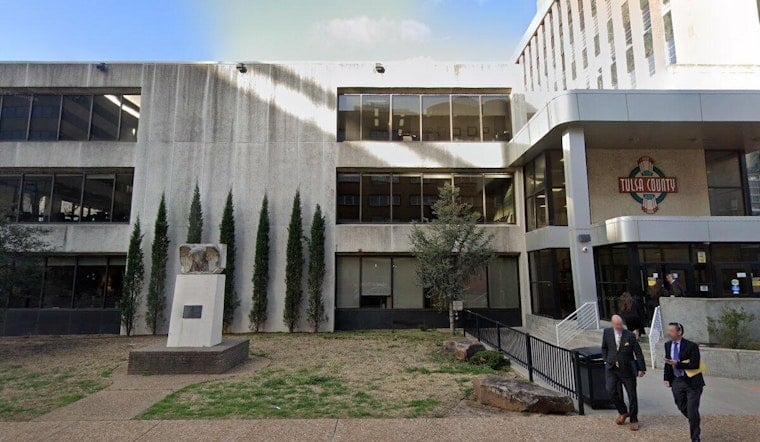
Tulsa City Council members are preparing to vote on a resolution that would commit the city to seeding a new legal-representation program for low-income tenants and landlords facing eviction, an effort that supporters say could reshape a court system where the vast majority of renters currently show up with no lawyer at all. The resolution does not itself commit roughly $500,000 over three years; Councilor Laura Bellis discussed that amount as a possible seed-funding figure for the program, intended to help attract matching philanthropic and corporate dollars.
The resolution comes from District 4 Councilor Laura Bellis, who represents Midtown Tulsa, and was set for a vote earlier this month before the council pulled it from the September 2 agenda, according to Tulsa Flyer. Council members now plan to take it up on September 16, after adding language meant to prioritize mediation and out-of-court resolution over litigation. Bellis said a colleague asked her to add that language specifically, per the outlet's reporting.
The scale of the problem driving the proposal is stark. Bellis has said there are roughly 13,000 evictions filed in Tulsa each year, and only about 3,500 of those cases involve tenants who have any legal representation. The Frontier's available reporting says nearly 70% of Oklahoma eviction cases ended in default judgments because tenants were absent, according to The Frontier, while 100 properties accounted for more than 40% of all filings in Oklahoma County.
How the Program Would Work
If the resolution passes, it would not itself appropriate funding or lock in a specific dollar amount — a resolution states the council's will on a matter but does not carry the force of law within the city, unlike an ordinance. Instead, Mayor Monroe Nichols would designate a city department to explore structuring a public-private partnership, with funding ultimately distributed through a request-for-proposals process to nonprofit legal service organizations and licensed attorneys.
Under the proposal, priority would go to households with school-aged children or other vulnerable populations, and the program would serve Tulsa residents with household incomes at or below 200% of the federal poverty level. The plan would also support low-income landlords pursuing eviction proceedings, not just tenants defending against them. Katie Dilks said Legal Aid Services of Oklahoma would likely undertake some of the casework, while the broader program could open the door to additional legal-service providers expanding access over time.
Why Speed Favors Landlords in Court
Oklahoma's Residential Landlord and Tenant Act gives tenants just five days' written notice to pay overdue rent before a landlord can file suit in district court, according to Nolo. That compressed timeline leaves little room for unrepresented renters to line up legal help before their court date. Katie Dilks said legal representation on both sides of a dispute tends to produce faster and smoother resolutions, less conflict, and a greater likelihood that landlords actually recover money they're owed.
The consequences of an eviction filing can outlast the case itself. ImpactTulsa reported in 2024 that families experiencing eviction filings often see increased chronic absenteeism among their children, an effect that can follow a child for up to a year after the filing. Court records also show that nearly half of all eviction cases filed in Tulsa County in 2025 were eventually dismissed or denied, yet the initial filings remain on public dockets for years and can still hinder renters' ability to secure future housing, per KGOU. According to a 2023 study published through the National Institutes of Health, an eviction order increased the probability of observing a tenant at a new address by 8 percentage points in the first year after the case was filed. According to an Oklahoma State Senate PDF titled CCP and Shelterwell, 56% of landlords said they would not rent to a tenant with a prior eviction filing.
Council Debate Over Landlord Buy-In
Not every councilor is convinced the program will land smoothly. Phil Lakin asked who or what would actually oppose the proposal, while Christian Bengel said he hopes landlords are directly involved in shaping the program. Bellis has acknowledged that some small landlords may be skeptical of the effort at first, and has said some smaller property owners simply cannot afford to resolve eviction-related disputes on their own without help.
Bellis has also argued that philanthropic and corporate organizations are unlikely to commit their own funding until the city demonstrates financial commitment first — a dynamic that puts pressure on the council to approve the seed money even though the resolution itself wouldn't guarantee a specific budget. Lori Decter Wright said the city's 3H task force, which focuses on housing, homelessness and mental health, may have funding for eviction mitigation that could support the program once it's structured.
What the Data Already Shows
Backers of the plan point to Oklahoma's own legal groundwork and track record. In July 2024, Oklahoma Attorney General Gentner Drummond issued a formal opinion clearing the way for municipalities to spend tax dollars on eviction legal representation, finding that mitigating homelessness serves a public purpose under state law, according to the National Coalition for a Civil Right to Counsel. That opinion resolved earlier constitutional questions about whether such spending was permissible.
A Stout study described in a June 2024 update estimated that more than 96% of represented renters stayed in their homes and produced a seven-to-one economic return. Federal HUD eviction-protection funding was largely exhausted, after which the Oklahoma Impact Investing Collaborative stepped in with a $2 million stopgap loan to keep legal defense services running in Tulsa and Oklahoma City while cities searched for a sustainable funding model.
Tulsa's eviction rate has climbed to nearly 13% since the pandemic, up from 7.77% in 2016, while Oklahoma County's rate was 14%, per KGOU. The city's Landlord Tenant Resource Center at Iron Gate operates on Tuesdays and Thursdays and provides legal information and support. Dilks has said a successful proof of concept in Tulsa could demonstrate that the eviction process can be made smoother and more humane for everyone involved, and Bellis's pooled public-private funding model is designed to combine philanthropic, corporate and government dollars behind that goal.
The council's September 16 vote will determine whether Tulsa formally commits to pursuing that funding structure, though the resolution's non-binding nature means the real test comes later — in whether Nichols' administration can turn the RFP process into actual matching dollars, and whether landlord groups ultimately buy into a program some still view with caution.



