

























































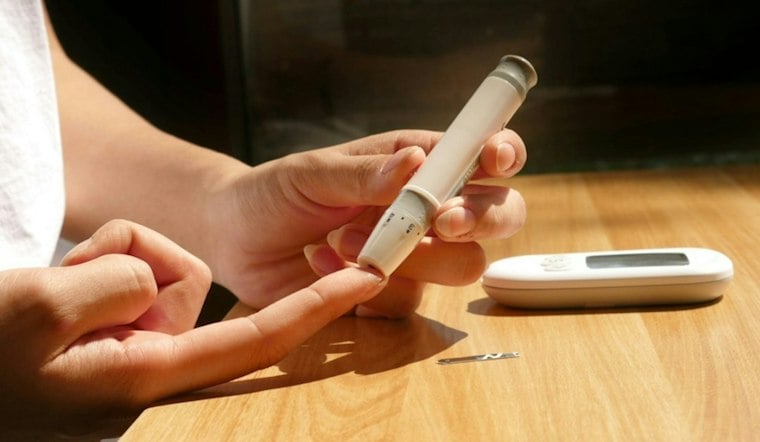
UCHealth is expanding its Diabetes Home and Remote Care program from specialty endocrinology clinics into primary care settings across Colorado, a move that could make remote support available through routine medical visits. The rollout comes as Health First Colorado, the state's Medicaid program, begins covering remote patient monitoring and continuous glucose monitors for outpatient care. One patient, Mary Lee Barton, illustrates the kind of improvement UCHealth says the program can produce.
From a Stroke Scare to a Turnaround
Barton joined UCHealth's Diabetes Home and Remote Care program in February 2024 with HbA1c levels above 9%, according to The Business Journals. She wore a glucose monitor that transmitted readings to UCHealth's Virtual Health Center and spoke weekly with a diabetes educator about lifestyle changes. Barton said the program emphasized good health rather than weight loss and told the outlet that someone was looking after her daily.
The numbers backed up the experience. An initial analysis of more than 100 patients in the program found average HbA1c fell from 10.4% to 7.0%, a level that lines up with what the American Diabetes Association recommends for most non-pregnant adults to reduce the risk of microvascular and macrovascular complications. Those same patients maintained an average HbA1c of 7.4% a full year later. Barton's own numbers held up even after she left the program, sitting at 6.8% about a year out.
Why UCHealth Is Scaling It Up Now
What Independent Evidence Shows
UCHealth's reported results should be considered alongside evidence from other remote diabetes-management efforts. According to AHRQ Digital Healthcare Research, an earlier randomized trial of an online diabetes-management program found statistically significant HbA1c reductions in the intervention group at six and 12 months, but the improvement compared with usual care was statistically significant at six months and not at 12 months. A separate AHRQ-funded online-management project in Palo Alto, California, conducted from 2007 to 2011, similarly found that the intervention group's HbA1c reduction differed significantly from usual care at six months but not at 12 months. The verified research available for this article does not provide a statewide count of Health First Colorado members who have used remote patient monitoring or continuous glucose monitors since the 2025 coverage changes, nor does it establish what utilization data the Colorado Department of Health Care Policy and Financing has published.
UCHealth is now expanding the Diabetes Home and Remote Care program across its Colorado footprint, moving it out of specialty endocrinology settings and into primary care clinics statewide. The expansion means thousands more patients in UCHealth's network can be referred through routine doctor appointments rather than a specialist visit, according to the same Business Journals report. The program has operated for six years, having launched in October 2021 as a pilot partnership between the Virtual Health Center and the endocrinology clinic at the Anschutz Medical Campus, per UCHealth Today.
That Virtual Health Center, established in 2016, now serves as a centralized remote care hub supporting clinical operations across 12 hospitals and roughly 2.7 million patients statewide, according to research published in PubMed Central. Sarah Lewis, an informatics nurse specialist with UCHealth's Virtual Health Center, said diabetes management success happens between office visits, not just during them. Lewis added that remote blood sugar monitoring lets nurses address challenges in real time rather than waiting weeks for the next appointment.
The Financial Case Behind the Rollout
Type 2 diabetes affects about one in eight Americans, according to the CDC, and can lead to heart attack, stroke, kidney failure, blindness and amputation if poorly controlled. Kimberly Vigliotta, a diabetes nurse specialist with UCHealth, said poorly controlled diabetes can lead to devastating health complications — a risk the remote care program is designed to catch early through frequent virtual coaching sessions. UCHealth experts attribute the program's success largely to those frequent patient touchpoints.
The financial stakes are significant on both sides of the equation. People diagnosed with diabetes spend 2.6 times more on medical care than peers without the disease, according to the American Diabetes Association, with individuals incurring average annual medical expenditures of $19,736 nationally, per research cited in PubMed. The Association's broader economic report found the total annual cost of diagnosed diabetes in the U.S. reached $412.9 billion in 2022, with direct medical expenses making up $306.6 billion of that figure.
UCHealth's analysis found that remote monitoring costs patients and insurers less than some alternatives, with larger savings when in-person diabetes specialist care is included. A 2025 UCHealth article reported that Medicare patients saved more than $200 per month compared with initial outpatient or office visits. The analysis also found lower risks of severe type 2 diabetes complications, according to the health system. Those findings provide a financial rationale for expanding the program, but they are based on UCHealth's own analysis rather than an independent evaluation.
A Nonprofit Absorbing Massive Uncompensated Costs
UCHealth provides hundreds of millions of dollars in uncompensated care each year, and the nonprofit health system also offers extensive financial assistance to patients. In fiscal year 2025 alone, UCHealth delivered $762 million in uncompensated and charity care for uninsured and underinsured patients, part of $1.6 billion in total community benefits, according to figures the health system reported through its community benefit disclosures. Keeping diabetes complications in check is one way to blunt those costs before patients end up in emergency rooms.
The expansion also follows a state policy shift that removed a major financial barrier to scaling remote care. Colorado Governor Jared Polis signed Senate Bill 24-168 into law in May 2024, mandating that Health First Colorado, the state's Medicaid program, reimburse remote patient monitoring and continuous glucose monitors for outpatient care beginning July 1, 2025, according to Prevounce. Before that law took effect, Colorado Medicaid did not include remote patient monitoring billing codes on its fee schedule, limiting how many low-income patients could access programs like UCHealth's.
Broader Context in a Low-Prevalence State
Colorado ranks among the states with the lowest adult diabetes prevalence in the nation, with roughly 8% of adults diagnosed, according to 2026 data from America's Health Rankings. Even so, chronic disease management remains a major focal point for the state's largest health systems. UCHealth has continued investing in the underlying technology, having co-led a $45 million investment round in remote-monitoring startup BioIntelliSense back in August 2021 to help integrate wearable medical sensors across its hospital network.
The broader remote-monitoring field continues to evolve. Hoodline reported last month that the FDA authorized the first wearable capable of tracking glucose and ketone levels simultaneously, a development that could eventually help clinicians detect early signs of diabetic ketoacidosis. UCHealth's program is now moving into primary care statewide, while independent research offers a more qualified view of how long improvements from online diabetes-management programs may last.




