

























































Thousands of low-income Los Angeles County patients who relied on UCLA Health specialists for organ transplants, cancer treatment, and high-risk pregnancies are now scrambling to find new doctors after a longtime Medi-Cal contract between UCLA Health and Health Care LA IPA expired on June 30. The termination cut off a relationship that had connected UCLA specialists to Health Care LA's sickest patients since 2009, and it has already forced roughly 9,000 medically frail patients to look elsewhere for specialty care.
Health Care LA is the largest Independent Practice Association in California, anchored by more than 30 Federally Qualified Health Centers and community clinics that serve between 600,000 and 730,000 low-income Medi-Cal members across the county, according to the California Health Care Foundation. Sabra Matovsky, chief executive of Health Care LA, said UCLA declined to renegotiate the contract, as reported by the Los Angeles Times. Matovsky also said UCLA did not ask Health Care LA for a raise, according to the same report.
Phil Hampton, a UCLA university spokesman, said UCLA had offered to extend the contract, per the Los Angeles Times report. Health Care LA rejected that extension offer, the paper notes. Health Care LA said many patients had waited months to see UCLA specialty medicine providers, and the organization said patients were being told they could not receive urgently needed care.
A Tentative Fix, But Only For Some
Health Care LA and UCLA reached a tentative agreement to transition patients to other doctors over one year, the Los Angeles Times reports. Under that arrangement, patients with existing appointments will continue to receive care at UCLA Health facilities, and established UCLA Health patients along with those requiring agreed-upon services will also continue treatment there, per the same account. UCLA canceled a Friday news conference tied to the story, the paper notes.
UCLA's specialists had cared for Health Care LA's most seriously ill patients for more than fifteen years, including those who received major organ transplants, treatment for cancer and infectious diseases, and services for high-risk pregnancies. Patrick Samones, a UCLA Health fellow, said the situation prioritizes profits over patients and said UCLA has a duty to serve all Californians, according to the Los Angeles Times. The article notes that UCLA medical professionals opposed the end of the Medi-Cal contract.
UCLA Cites Capacity And Reimbursement Pressures
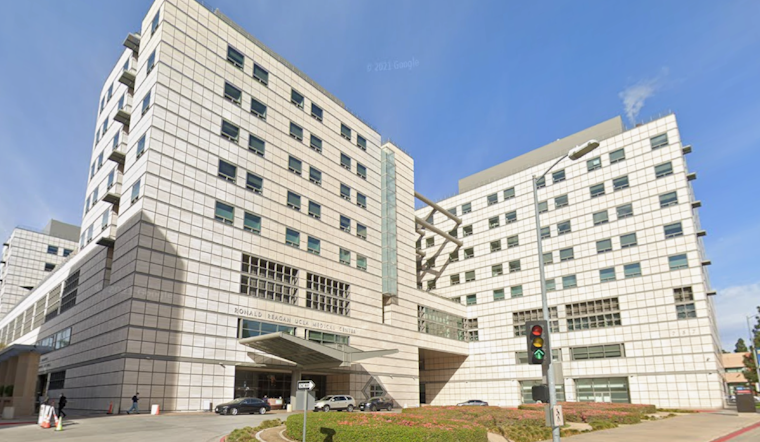
UCLA Health points to capacity constraints at Ronald Reagan UCLA Medical Center in Westwood, which the Los Angeles Times reports has capacity issues in its emergency room and dozens of specialty clinics. UCLA recorded 156,000 emergency department visits and 336,600 inpatient days, with Medi-Cal patients comprising 34% of emergency department visits and 26% of inpatient days, according to the paper's reporting. UCLA Health has also experienced increasing payment denials and delays, and the article notes that Medi-Cal reimbursement has not kept pace with the cost of providing care.
UCLA Health received 15% of net patient service revenue from Medi-Cal last year, while UC Irvine, UC San Diego, UC San Francisco and UC Davis each received about 22% of net patient service revenue from Medi-Cal, per the same Los Angeles Times account. The paper reports that UCLA Health provides less care to Medi-Cal patients than those four sister UC campuses. UCLA Health declined to accept an unlimited number of new referrals, the report notes, even as the system continues other Medi-Cal contracts and other arrangements to serve Medi-Cal patients.
Patients Have Legal Options To Keep Their UCLA Doctors
Under California Health and Safety Code Section 1373.96, Medi-Cal managed care enrollees who are undergoing active treatment for serious chronic conditions, acute illnesses, or high-risk pregnancies have the right to request a Continuity of Care waiver that allows them to keep their existing UCLA physicians for up to 12 months following a contract termination, according to the California Department of Managed Health Care. State regulations also require health plans to notify enrollees at least 75 days before a provider contract termination takes effect, spelling out options to choose a new medical group or request completion of ongoing care, per the same department.
L.A. Care Health Plan, which operates as the nation's largest publicly operated health plan and covers more than 2.6 million residents across Los Angeles County, notified enrollees in July that UCLA Health had formally terminated its contract with Health Care LA for the UCLA Family Practice site effective June 30 and for the UCLA Pediatric Clinic effective September 1, according to L.A. Care Health Plan. Statewide, Medi-Cal enrollment reached nearly 14 million residents in April, or roughly 35% of California's total population, according to the UC Berkeley Labor Center.
A Broader Squeeze On California's Safety Net
The dispute lands amid wider strain on California's low-income health coverage system. A June 2026 study by the UCLA Latino Policy and Politics Institute found that adult enrollment in California's Medi-Cal expansion program fell by nearly 71,000 people between June and December 2025, with researchers attributing about a third of that decline to a chilling effect from heightened federal immigration enforcement. UCLA Health has pointed to its broader footprint as evidence of its safety-net commitment, noting it operates almost 300 locations throughout Southern California, provides more than $270 million in unreimbursed care for low-income patients each year, and offers primary and urgent care for people experiencing homelessness, according to the Los Angeles Times.
UCLA Health has also cited its $500 million investment in a new neuropsychiatric hospital in Mid-Wilshire as part of its contributions to the region's mental health infrastructure, a project Hoodline previously reported would replace the Resnick unit in Westwood with 119 inpatient beds. At the same time, the health system has expanded into wealthier communities including Montecito, Malibu and Westlake Village, the Los Angeles Times reports. The clash echoes tension seen elsewhere in the UC system, where Hoodline has reported that UC Davis and other UC medical centers have faced their own standoffs with insurers over reimbursement rates.
For now, the fate of newly diagnosed, low-income patients seeking UCLA's transplant, oncology, and rare-disease specialists remains unresolved beyond the one-year transition window Health Care LA and UCLA negotiated. UCLA's own primary care panel with L.A. Care was capped at 3,500 members under a 2018 contract that positioned the academic medical center as a tertiary referral hub rather than a high-volume primary care provider, according to the California Health Care Foundation. That structural limit is now colliding with a patient population that, per the Los Angeles Times, has nowhere else in the county positioned to absorb the same volume of complex tertiary care.





