

























































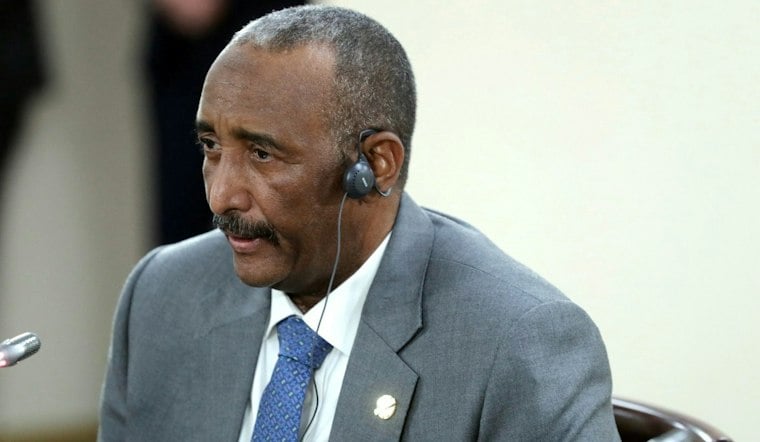
The dispute over Abdel Fattah al-Burhan's planned appearance at the United Nations General Assembly has become a test of both U.S. pressure on Sudan's warring parties and Washington's obligations as the UN's host country. The United States has not issued a visa to Sudan's army chief, who was scheduled to address the assembly in New York this week, while officials have reportedly tied his attendance to a proposed 90-day ceasefire. Burhan postponed his trip, and the latest reporting says he has not received formal notice that his visa was denied outright.
The visa condition was reported by Reuters, citing sources familiar with the matter rather than an announced U.S. policy. The proposal was put forward by Massad Boulos, the U.S. senior advisor for Arab and African affairs, as part of a broader effort to stop the fighting. Burhan had been scheduled to speak on Thursday, but a Sudanese source told Reuters that the country's foreign minister will deliver Sudan's address instead. The U.S. State Department did not immediately respond to the wire service's requests for comment.
Sudan's government has described the U.S. action as a violation of the UN convention and international law while maintaining that it supports a peace process. It asked the UN to intervene and issue the visa, arguing that blocking Burhan from attending the General Assembly would breach the obligations governing access for representatives of member states.
A Legal Obligation Washington Has Bent Before
The legal dispute turns on the 1947 UN Headquarters Agreement. Its text says that U.S. entry rules must not interfere with the privileges of covered representatives and that, when visas are required, they “shall be granted without charge and as promptly as possible,” according to the UN Treaty Series. The New York City Bar Association has characterized the agreement as barring the United States from denying visas to representatives of UN member states. The cited treaty text establishes the obligation but does not, in the provisions referenced here, set out a separate enforcement procedure for a disputed visa.
A documented earlier dispute involved PLO Chairman Yasser Arafat, a different representative and a different set of circumstances. The UN's photo archive records that on 30 November 1988 the General Assembly urged the United States to reverse its decision denying Arafat an entry visa. Contemporary reporting by the Los Angeles Times said the assembly then voted 154 to 2 to temporarily move its session to Geneva so Arafat could speak.
UN spokesperson Stéphane Dujarric said the secretary-general is deeply concerned that Burhan's visa reportedly had not been issued, and that Guterres is engaging with the United States over the matter.
Who Is Burhan, and Why Washington Won't Call Him President
Burhan has been Sudan's de facto leader since 2019 and led the 2021 coup alongside Rapid Support Forces commander Mohamed Hamdan Dagalo, known as Hemedti. The African Union and Western powers withdrew recognition from Burhan's government after the coup. Hemedti has since established a rival Sudanese government, deepening the war that began between the former allies in April 2023.
In an interview broadcast this month, Boulos said Washington maintains contact with the army-aligned authorities as a de facto entity but does not formally recognize them as Sudan's government, according to Radio Tamazuj. Boulos said the U.S. remains opposed to any parallel government or national partition. The United States has also attempted to mediate the conflict through the Quad format, which includes the U.S., United Arab Emirates, Egypt and Saudi Arabia.
Burhan Has Pushed Back on Outside Pressure
Sudan's army voiced reservations about the Boulos-proposed ceasefire in the summer, and Burhan has opposed external directives about the war. He has said, per Foreign Policy, that previous pauses in fighting have simply allowed the RSF and its backers to regroup.
Washington has paired the visa pressure with an economic squeeze on both sides of the war. The United States has proposed a UN Security Council resolution expanding the existing arms embargo from Darfur, an RSF stronghold, to all of Sudan, according to a WION report — a move Burhan's backers say would disproportionately punish the army. In June, the U.S. Treasury Department sanctioned eight individuals and entities accused of supplying weapons, explosives and foreign mercenaries to both the Sudanese Armed Forces and the RSF, alongside State Department measures under the Chemical and Biological Weapons Control Act, per Anadolu Agency.
The Human Toll Behind the Diplomatic Standoff
The United Nations describes Sudan's war as the world's largest humanitarian crisis, with millions forcibly displaced since the fighting began, according to UN News.
The scale of Sudan's displacement
The UN Office for the Coordination of Humanitarian Affairs reported that Sudan had 9.3 million internally displaced people as of 30 October, while 4.4 million people had fled to neighboring countries. Those figures show why ceasefire proposals are being pursued alongside the diplomatic dispute over Burhan's access to the General Assembly.
Abdalla Hamdok, who served as Sudan's civilian prime minister before the 2021 coup, is currently in New York for the General Assembly. The visa dispute over Burhan is not the only one shadowing this year's session: the U.S. has also denied entry to the head of the Palestinian Authority, extending a policy of withholding UN General Assembly visas from Mahmoud Abbas and his delegation, as Hoodline reported in its piece on the Abbas visa standoff. That episode prompted a General Assembly vote allowing Abbas to address the body via pre-recorded video, underscoring that Sudan is not the only delegation facing this kind of host-country leverage during the same UN session.





