

























































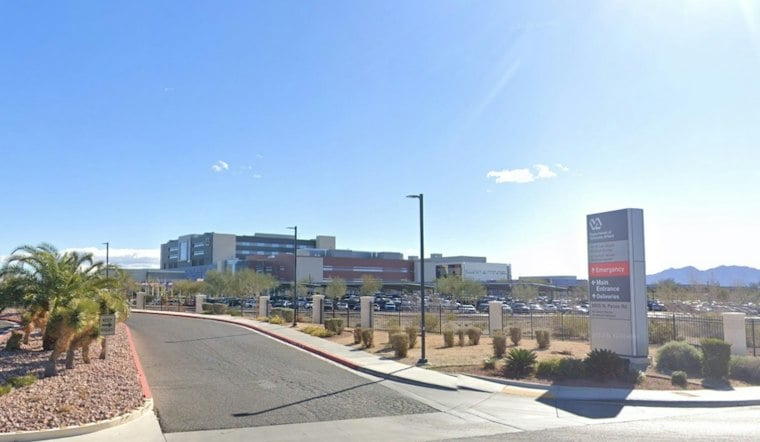
The Department of Veterans Affairs is sending $42.3 million to 11 community organizations across Nevada to fight veteran homelessness, part of a federal push that arrives just as Southern Nevada logs its highest count of unhoused veterans in recent memory. The money will fund emergency rent help, rapid rehousing and transitional housing programs meant to catch veterans before they end up on the street or pull them off it quickly if they already are.
The state award is a slice of a much larger $1.17 billion package the VA distributed nationwide to 680 organizations, according to FOX5 Vegas. Nationally, that funding splits into $855 million for one-year Supportive Services for Veteran Families grants beginning October 1, and $318 million for three-year Grant and Per Diem awards, according to VA News. The Supportive Services grants are designed to prevent the imminent loss of a home, help identify new housing, and rapidly rehouse veterans and their families, while the Grant and Per Diem funds go toward transitional housing, intensive supportive services, and specialized housing for women veterans and those who are chronically mentally ill, frail, or elderly.
Michael Kiefer, executive director of the VA Southern Nevada Healthcare System, said the grants strengthen partnerships with community organizations. He said VA medical centers across Nevada remain committed to ensuring veterans have access to safe, stable housing and supportive services, and that the funding helps the VA reach veterans where they are with meaningful resources. The Nevada total was detailed in a separate regional announcement from Thomas R. Talamante, executive director of the VA Sierra Nevada Health Care System, putting the exact statewide figure at $42,385,192.
Southern Nevada's Growing Need
The federal money lands against a backdrop of worsening conditions in the Las Vegas valley. Clark County's January 2026 Point-in-Time Count identified 605 unhoused veterans among 8,859 total unhoused residents in Southern Nevada, a figure Hoodline covered in its count of 8,859 stories as the county's overall unhoused population jumped 12 percent between 2024 and 2026.
The pressure isn't just about people already on the street. Fixed-income veterans in East Las Vegas launched a petition this month opposing a nearly 25 percent mobile home lot rent increase, telling Hoodline they feared the hikes would leave them unhoused. Nevada law places no caps on mobile home lot rent increases, leaving veterans on fixed incomes with few protections against sudden spikes. That kind of local rent pressure is exactly what the Supportive Services for Veteran Families grants are meant to intercept before an eviction notice turns into a shelter stay.
What The Grants Fund
Part of the Grant and Per Diem money will support what the VA calls transition-in-place housing, which allows veterans to remain in their current housing unit while receiving services rather than moving into temporary shelter first. Those services are aimed at helping veterans move toward permanent, stable housing without the disruption of relocating multiple times. The VA has made a full list of Supportive Services for Veteran Families and Grant and Per Diem awardees available for veterans and case managers seeking specific programs.
National Momentum Behind The Local Grants
The Nevada award comes as the VA touts its best national housing numbers in years. The department permanently housed 51,936 individual unhoused veterans during fiscal year 2025, a 4,011-person increase over the prior year and the highest annual total in seven years. More than 25,000 unsheltered veterans were moved into interim or permanent housing during that same fiscal year through the VA's Getting Veterans Off the Street initiative, a nationwide street outreach surge launched in May 2025.
Some of that momentum traces back to a 2024 policy shift. HUD updated HUD-VASH program regulations that August to raise initial income eligibility thresholds to 80 percent of Area Median Income and to exclude service-connected VA disability benefits from annual income determinations, according to the VA Homeless Programs office. Previously, disability compensation counted as income and could disqualify disabled veterans from receiving housing vouchers altogether. Congress went further this month, formally codifying that exclusion into law through the 21st Century ROAD to Housing Act, according to the National League of Cities.
Those reforms build on a longer national trend. HUD's 2024 Annual Homelessness Assessment Report found veteran homelessness dropped 7.6 percent between January 2023 and January 2024, down to 32,882 veterans nationwide, a 56 percent decline since 2010. Separately, a May 2025 presidential executive order established the National Center for Warrior Independence on the West Los Angeles VA campus, aiming to house and support up to 6,000 unhoused veterans nationwide by 2028.
For now, the Nevada allocation is what's on the table for local organizations serving veterans in Las Vegas and beyond. Veterans experiencing or at risk of homelessness can reach the National Call Center for Homeless Veterans at 877-4AID-VET (877-424-3838), and the VA's homeless programs website lists housing initiatives and other resources for veterans working to exit homelessness.





