

























































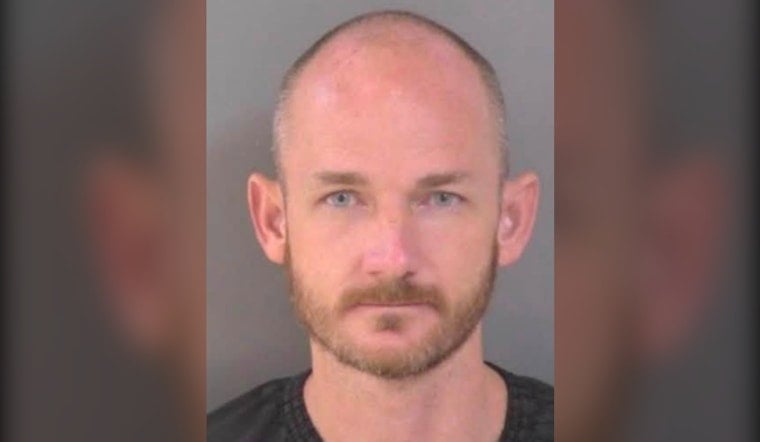
A 37-year-old Vero Beach man is being held on a $1 million bond after investigators say he used photos pulled from social media to create sexually explicit deepfake images of women without their consent. Peter Solomon Ruma faces eight felony and misdemeanor charges connected to conduct police believe occurred between June and August 2026, and detectives say they fear the case could involve victims who don't yet know images of them exist.
According to WPEC, investigators found evidence connecting Ruma to the creation and distribution of AI-generated images on Wednesday and obtained an arrest warrant the same day. Vero Beach police say Ruma used photos from social media and other online sources to alter them into explicit content, and a search of his home and electronic devices followed. He is charged with three counts of creating altered sexual depictions, three counts of promoting altered sexual depictions, one count of sexual cyberharassment, and one count of stalking.
Charges Carry Steep Penalties Under Florida's Deepfake Law
The felony counts against Ruma fall under Florida Statute § 836.13, which makes creating or promoting a nonconsensual altered sexual depiction a third-degree felony punishable by up to five years in prison and a $5,000 fine for each count, according to the Florida Senate. The charges include multiple counts tied to what police describe as one female victim in the charged incidents. Whether a disclaimer provides a legal defense is not addressed in the cited materials.
Ruma's misdemeanor sexual cyberharassment charge stems from Florida Statute § 784.049, which defines the crime as publishing sexually explicit content online along with personal identifying information without consent. A first offense carries up to a year in county jail, though a second or subsequent conviction becomes a third-degree felony, per the Sammis Law Firm. Separately, Florida lawmakers passed House Bill 757 ahead of its October 1, 2025, effective date, making it a third-degree felony to willfully generate or solicit nonconsensual altered sexual depictions, or to possess them with intent to maliciously promote them, a move legal analysts at Pumphrey Law describe as giving police more direct statutory authority over synthetic explicit media.
Police Believe Conduct May Have Spanned Years
Investigators have identified several additional potential victims beyond the one named in the current charges, and police believe Ruma may have engaged in this conduct for years before the search warrant was executed this week. Some of those additional potential victims may not even be aware that images of them were created or shared, according to the report from WPEC. Vero Beach police are urging anyone who believes they may be a victim, or who has information about the images, to contact the department directly, and additional charges could still be filed as the investigation continues.
Ruma is not a stranger to the Indian River County criminal justice system. Records cited in the WPEC report show he was arrested on burglary and sex battery charges involving a physically impaired person in 2007, was sentenced to the Florida Department of Corrections in 2009, and faced a separate burglary arrest that same year.
Federal Portal Offers Victims a Path to Remove Images
Investigators pointed potential victims toward takeitdown.ftc.gov, a federal reporting tool launched by the Federal Trade Commission that lets people report nonconsensual intimate images and push for their removal from online platforms. The FTC began enforcing the federal Take It Down Act in May 2026, and covered platforms now face civil penalties exceeding $50,000 per violation if they fail to remove nonconsensual intimate media within 48 hours of a valid request, according to law firm Orrick.
The underlying technology behind that removal tool, operated by the National Center for Missing & Exploited Children, generates unique digital hashes. Florida also passed legislation, CS/CS/HB 1161, requiring user-generated content platforms to establish formal notification and takedown processes for nonconsensual altered depictions by the end of 2025. Victims additionally have a civil remedy: under state law they can sue perpetrators for injunctive relief and statutory damages of $10,000, or actual damages if higher, independent of any criminal case.
Part of a Wider Pattern Across Central Florida
The Vero Beach arrest lands amid a string of similar cases across the region. In April, Central Florida law enforcement agencies issued public warnings after responding to multiple deepfake incidents, cautioning that creating and circulating AI-altered media can carry serious criminal consequences, as Hoodline previously reported. Florida school districts have also been grappling with the fallout, with Palm Beach County weighing tougher disciplinary measures for AI deepfake bullying among students. The investigation into Ruma remains active, and it is not yet known how many total victims investigators may ultimately identify.


