

























































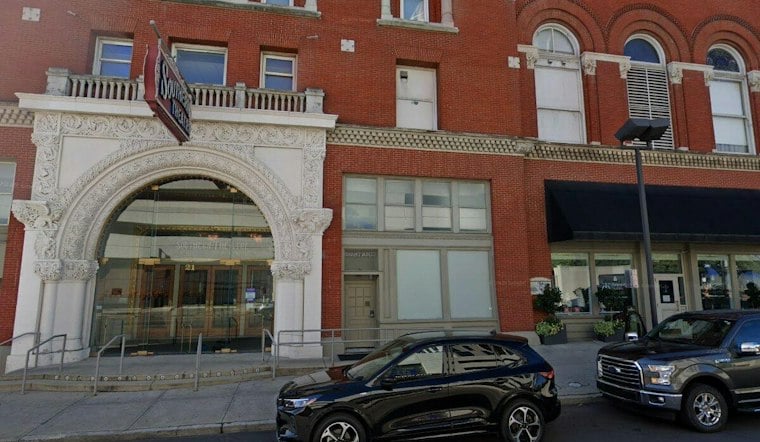
VIVO Music Festival’s 12th season is using chamber music as both a concert format and an outreach tool. The Columbus festival runs Sept. 7-13, with performances at Ohio State University’s Timashev Recital Hall and the Southern Theatre as well as programs at a women’s correctional facility, schools, a hospice house, a food pantry and a retirement community, according to WOSU Public Media and the VIVO Music Festival.
Access is part of the festival’s design
Violist John Stulz and violinist Siwoo Kim, both Columbus natives, founded VIVO in 2015 with a stated goal of making chamber music more accessible throughout central Ohio, the festival says. Its VIVO Next Fellowship, in its second year, places early-career musicians in concerts created with local partners. This season’s fellows—Ethan Cavanac, James Kang and Calvin Ray Shawler—are scheduled to perform at the Ohio Reformatory for Women, two Columbus City Schools high schools and OhioHealth Hospice House, formerly Kobacker House, while clarinetist Gabriel Campos is scheduled to play at Our Lady of Guadalupe Center, according to WOSU.
The Our Lady of Guadalupe Center, operated by Catholic Social Services of the Diocese of Columbus, combines a food pantry with social services for the area’s Hispanic immigrant population and also offers ESL classes, legal aid and family support, according to Catholic Social Services. VIVO is also continuing its relationship with Ohio Living Westminster-Thurber, where residents can attend open rehearsals and spend time with visiting musicians. The outreach program includes a new Shawler work and a meet-the-composer component, WOSU reported.
The season’s premieres put unusual ensembles and new perspectives on the program
Gregory Rowland Evans’s Windflowers receives its world premiere Friday, Sept. 11, at 9 p.m. at Natalie’s Grandview. The work is scored for three violas—Stulz, Cavanac and Kang—and takes its title and inspiration from Mahmoud Darwish’s poem The Beloved Hemorrhaged Anemones. The Palestinian Museum explains that the poem treats red anemones as a sign of blood and connects the flowers with sacrifice and memory. WOSU reported that Evans wanted the commission to prompt attention to differing perspectives on the Middle East.
The Friday 9 p.m. program is separate from Beer and Beethoven, which returns to Natalie’s Grandview at 6 p.m. with jazz, pop and American folk music. Different Trains, Steve Reich’s work for string quartet and prerecorded tape, is also scheduled for the 9 p.m. program. The piece contrasts Reich’s childhood train trips in the United States with the trains used to transport people to the Holocaust in Europe and won a 1990 Grammy Award, according to the supplied background on the work.
The main concerts move between new construction and historic rooms
The opening concert is Thursday, Sept. 10, at Timashev Recital Hall at Ohio State’s School of Music. Its program combines works by Leonard Bernstein and Aaron Copland with Amy Beach’s Piano Quintet and Béla Bartók’s Contrasts, composed after Bartók met clarinetist Benny Goodman, according to WOSU. The hall is part of Ohio State’s 96,000-square-foot Timashev Family Music Building, which opened in August 2022 and includes a 195-seat recital hall; the broader Arts District project was expected to cost more than $165 million, according to the university facilities information cited in the article.
The Sunday finale, VIVO Hope, begins at 1 p.m. at the Southern Theatre in partnership with Chamber Music Columbus. Shawler’s Your Fragile Being receives its official world premiere alongside works by Philip Glass, Gabriela Lena Frank and Copland. The Southern opened in 1896 and, after a $10 million restoration completed in 1998, seats 925 people; CAPA identifies it as the oldest surviving theater in central Ohio. Chamber Music Columbus has presented chamber ensembles in the city since 1948, according to the article’s existing background.
The program ends with Copland’s Appalachian Spring in its smaller chamber scoring and without a conductor. Copland first wrote the piece for a 13-member ensemble for its 1944 Library of Congress premiere before expanding it into the orchestral suite that won the 1945 Pulitzer Prize for Music. WOSU reported that Stulz views the work as an American classical-music masterpiece and that he and Kim see the festival’s conclusion as an expression of hope for the future of American music.





