

























































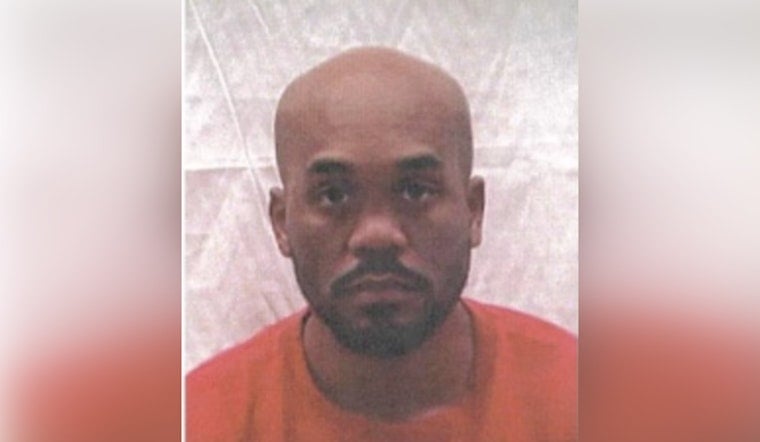
A 28-year-old inmate serving time for robbery, theft and burglary is on the loose after vanishing from Waiawa Correctional Facility in Central Oʻahu before sunrise Tuesday, prompting a search by three state and county agencies. Ikaika Wyatt Scott was reported missing from the minimum-security facility shortly before 6 a.m., and authorities are warning residents not to approach him if spotted.
According to a bulletin from the Honolulu Police, the Department of Corrections and Rehabilitation, and the Department of Law Enforcement are all actively seeking Scott, who is described as an African American male standing six feet tall and weighing approximately 215 pounds, with brown eyes and black hair. Anyone with information on his whereabouts is asked to call 911, the Sheriff Division at (808) 586-1352, or Crimestoppers at (808) 955-8300. Members of the public should not attempt to apprehend him themselves.
An Open Facility Built for Inmates Nearing Release
Waiawa Correctional Facility is a 334-bed minimum-security work camp roughly three miles from Mililani Memorial Park, and it operates without perimeter bars or traditional cell blocks, according to Honolulu Civil Beat. Sitting on 197 acres in Central Oʻahu, the facility primarily houses male felons approaching their release or parole dates and lets inmates take part in education and substance abuse treatment programs. That open layout, without security barriers, is what makes walkaways like Scott's possible in the first place.
DCR Director Tommy Johnson has acknowledged that walkaways at open facilities like Waiawa are possible but generally rare, since inmates so close to release have strong incentive to stay put, the outlet's report noted. Johnson made those comments while announcing plans to convert a Waiawa dormitory to house roughly 40 minimum-security inmates with mental health needs transferred from Hālawa prison, a move that has drawn questions from some lawmakers about whether a facility without bars is equipped for specialized populations. It is not the first time inmates have slipped away from the camp — four men escaped during an overnight bed check in June 2011 and were later spotted near the Mililani Golf Course, per Corrections1.
Legal Stakes for Scott's Recapture
Under Hawaii Revised Statutes § 710-1021, escaping from custody without force or a weapon is charged as escape in the second degree, a Class C felony, according to Justia Law. If force or a dangerous weapon is involved, the charge escalates to escape in the first degree under a separate statute, a Class B felony. Scott already faces sentences for robbery, theft and burglary, meaning a new escape conviction would add to his time behind bars.
A Pattern of Oahu Escapes and Strained Staffing
Scott's disappearance comes about a month after another inmate, 20-year-old Joseph Tauilemua, escaped from the Oʻahu Community Correctional Center, triggering an 11-hour manhunt during which Honolulu police deployed a first-responder drone program to help track him down, as Hoodline previously reported. In the aftermath of that case, Honolulu police officials publicly raised concerns that corrections officials failed to respond for hours over whether police assistance was needed for public notification, a friction point that has recurred during Oahu escape incidents.
Broader reporting has pointed to hundreds of correctional staff vacancies statewide and officers routinely working 16- to 24-hour shifts, systemic strain that critics say heightens security risks across the system. Compounding the picture, an April report by the Hawaiʻi Correctional System Oversight Commission found Waiawa was operating at under 60% capacity, leaving roughly half of its beds unfilled while eligible minimum-custody inmates remained housed in higher-security facilities elsewhere.
Three Agencies, One Search
The multi-agency response to Scott's escape reflects Hawaii's January 2024 restructuring of its public safety system, when the former Department of Public Safety was split into the Department of Corrections and Rehabilitation, which oversees facility custody and rehabilitation, and the Department of Law Enforcement, which absorbed specialized state law enforcement functions including state sheriffs. That division, enacted under Act 278, is why HPD, DCR and DLE are now coordinating separately in the search for Scott rather than operating under a single public safety agency.
The state has also grappled with high recidivism, with research cited by the Hawaii Attorney General's Office indicating more than half of felons released from state custody on probation, parole or after completing full sentences are rearrested or face supervision revocation within three years. That statistic has underpinned Hawaii's push toward a rehabilitation-first corrections model, the same philosophy behind minimum-security camps like Waiawa. For now, police say the priority is locating Scott, and they are asking anyone with information to come forward rather than intervene directly.



