

























































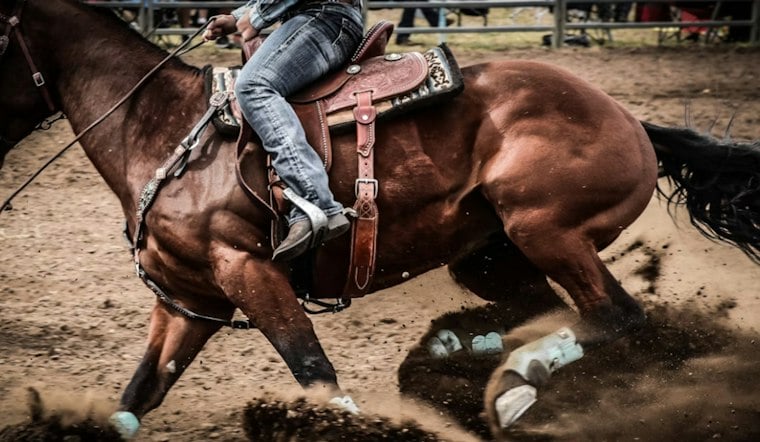
Waimea kicks off a week of Hawaiian cowboy heritage celebrations Monday, September 14, running through Saturday, September 19, when the 74th Annual Waimea Paniolo Parade closes out the festivities under this year's theme, “Aloha i ka Hawaiian Cowboy!” The celebration folds in equestrian performances, paniolo games, arts and crafts, local food, and Hawaiian music across the week, building toward the signature parade and hoʻolauleʻa.
According to KITV, this year's festival celebrates ʻike kūpuna, ancestral trails, and legacy, with Executive Director Kumu Micah Kamohoaliʻi sharing details on what's planned for the 74th annual event. The Aloha Festivals Island of Hawaii notes that the festival is organized as more than a regional rodeo — it's a formal effort to perpetuate Native Hawaiian agricultural identity, music, and ancestral knowledge passed down through generations.
A Parade Rooted in 1952
The Paniolo Parade traces back to 1952, when it was established by the Waimea Hawaiian Homesteaders Association, which still operates the Paniolo Festival Committee through its cultural division, per the same organization's account. That 74-year lineage transitioned through local civic groups before eventually integrating into the statewide Aloha Festivals framework.
Kamohoaliʻi, who directs the committee on behalf of the Homesteaders Association, brings a distinctive resume to the role. She is a kumu hula, traditional kapa artist, and fashion designer whose label, Dezigns by Kamohoaliʻi, debuted at New York Fashion Week in 2021, according to Hawaii Magazine.
Honoring Four Living Treasures
This year's program specifically honors four Waimea Living Treasures — Naalei Liana, Manny Veincent, June Coleho, and Mabel Tolentino — for their lifelong contributions to upcountry ranching community life, the festival organization says. The Living Treasures recognition is awarded annually to community members who pass down ʻike kūpuna, or ancestral knowledge, to younger generations.
The Hawaii County Council backed the tradition financially last year, approving Resolution 300 in August 2025 to fund staging, tent, and sound equipment for the parade, according to Hawaii County Council records. The council cited the parade's more than 70-year role in preserving Native Hawaiian ranching customs when it approved the funding.
Roots Stretching Back to 1832
The paniolo tradition itself dates to 1832, when King Kamehameha III brought Spanish-Mexican vaqueros from California to teach Native Hawaiians cattle management — and the vaqueros' arrival is where the word “paniolo” comes from, derived from “español,” according to the National Park Service. Waimea grew into the geographic heart of that ranching culture in part because of Parker Ranch, founded there in 1847 by Massachusetts sailor John Palmer Parker and Chiefess Kipikane. At its peak the ranch spanned more than 500,000 acres, and it remains one of the largest cattle ranches in the country today at 130,000 acres, per Parker Ranch.
That same ranching culture produced a moment of global recognition in 1908, when Waimea paniolo Ikua Purdy won the World Steer Roping Championship at the Cheyenne Frontier Days Rodeo in Wyoming in 56 seconds. His Hawaiian teammates, Archie Kaʻauʻa and Jack Low, placed third and sixth in the same competition, according to the National Rodeo Hall of Fame. That legacy is documented today at the Paniolo Hall of Fame, which maintains a permanent portrait exhibit and 72 completed oral history archives at Pukalani Stables in Waimea, honoring 175 living and deceased members from across the islands, according to the Hawaii Cattlemen's Council.
The vaqueros' influence reached beyond ranching into music as well. As Hoodline reported last month, Hawaiian cowboy culture directly birthed kī hōʻalu, or slack key guitar, in the 1830s, after vaqueros introduced acoustic guitars that local cowboys retuned to open tunings around evening campfires to match traditional Hawaiian vocal styles.





