

























































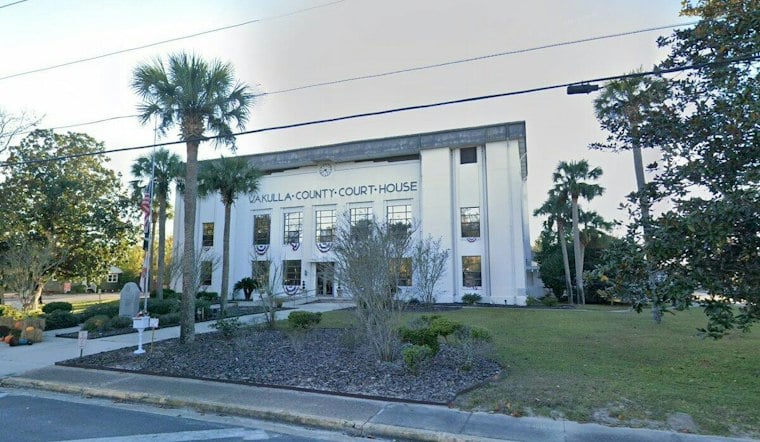
A Florida circuit judge who told a courtroom full of attorneys that he wished a deputy would shoot them has been ordered to appear before the state's highest court for a public reprimand. Judge J. Layne Smith of the Second Judicial Circuit made the remark during a September 23, 2025 hearing in Wakulla County, and the Florida Supreme Court has ordered him to appear before the justices to answer for it.
The Florida Supreme Court issued its opinion on September 24, accepting the Judicial Qualifications Commission's recommendation for a public reprimand and finding that Smith's conduct “fell far below the standard of professionalism” owed by judges, according to News From The States. The court left it to its clerk to schedule Smith's appearance. As the Orlando Sentinel reported, Smith remarked during the hearing that he would like a deputy to shoot all three lawyers appearing before him.
The hearing had been called as an order to show cause after attorneys could not confirm that a party had been properly served in the underlying lawsuit, Raker v. Vause. Transcripts from that day show Smith's outburst went well beyond the shooting comment: he called the attorneys the “Keystone Cops and the Apple Dumpling Gang,” per the Sentinel's reporting, and separately referred to counsel as “the gang who cannot shoot straight” while complaining about spending time “sweeping up the dung that the elephant dropped in this parade,” according to Florida Politics.
A Courtroom Reporter Feared She Was in the Line of Fire
An October 2025 recusal motion filed by defense attorneys revealed just how real the moment felt inside the courtroom. Immediately after Smith voiced his wish that a deputy shoot the attorneys, the court reporter physically motioned to indicate she was in the potential line of fire and wished not to be shot, according to the ABA Journal. That motion for recusal was granted shortly after the hearing, and per the Sentinel's reporting, Smith stepped away from the case on October 2, 2025.
Smith self-reported his own behavior to the Judicial Qualifications Commission on October 21, 2025, and later issued a public apology, according to the Sentinel. He clarified, per the same reporting, that he really did not want the deputy to shoot the lawyers.
Disciplinary Panel Cited Cooperation, Clean Record
The Judicial Qualifications Commission's formal panel issued a seven-page report on March 23, 2026, finding that Smith's remarks violated judicial canons and joining a stipulation with the Supreme Court recommending a public reprimand as the appropriate sanction, according to Florida Politics' Sunburn newsletter. The panel found Smith violated the Florida Code of Judicial Conduct. The court also found that his remarks were not patient, dignified, or courteous, according to sunEthics. The Sentinel also reported that the code requires judges to perform their duties without bias or prejudice.
Per the commission's findings, Smith had no prior disciplinary history and had been remorseful and cooperative throughout the process. The commission cited those factors in recommending a public reprimand.
Political Appointee With a Public Ethics Profile
Smith's path to the bench traces back to 2015, when then-Governor Rick Scott first appointed him to the Leon County Court. Governor Ron DeSantis elevated him to the Second Judicial Circuit bench in June 2020, according to News From The States. The Sentinel additionally reported that Smith previously served as general counsel for the Department of Lottery and the Department of Business and Professional Regulation.
Before his disciplinary reprimand, Smith had built something of a public profile as an author on legal ethics, writing a weekly civics and legal advice column titled “Ask the Judge” that ran in North Florida newspapers, according to records in the University of Florida Digital Collections. The Second Judicial Circuit covers a six-county stretch of the Florida Panhandle spanning Leon, Gadsden, Liberty, Franklin, Wakulla, and Jefferson counties. Smith remains on the bench in the Second Judicial Circuit while he awaits an appearance before the Florida Supreme Court; the clerk will schedule it.
In Smith's case, the commission cited his cooperation and remorse as mitigating factors in recommending a public reprimand.



