

























































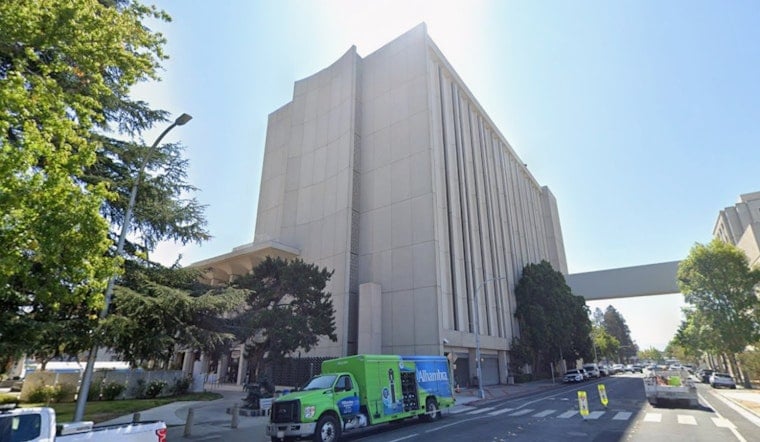
A 29-year-old Walnut Creek man will spend 180 days in jail after admitting he took a hatchet to a Peninsula middle school, a parked Tesla and a gas station window within hours of each other last year, causing more than $80,000 in damage. Enkhbilig Tengis was also placed on two years of supervised probation following his sentencing, and a restitution hearing to determine how much he owes his victims is set for November 9.
Tengis pleaded no contest to two counts of felony vandalism, according to prosecutors, while a third felony vandalism charge was dismissed as part of the negotiated plea, as reported by KRON4. The spree unfolded on August 24, 2025, when Tengis drove to Ben Franklin Intermediate School in Broadmoor and smashed 41 school windows with a hatchet, per prosecutors, causing roughly $80,000 in damage according to the San Mateo County District Attorney's Office.
A Trail of Broken Glass Across Two Towns
From the school, Tengis drove to the 600 block of Lake Merced Drive in Daly City, where he damaged a parked Tesla with the hatchet, per the DA's office. He then continued to a Valero gas station in Daly City and smashed a business window there, causing an additional $800 in damage, also per the DA's office. Investigators later found the hatchet inside Tengis's car, and surveillance video helped them identify his license plate, leading to his arrest five days after the incidents, on August 29, 2025.
Ben Franklin Intermediate School sits in Broadmoor, an unincorporated, 0.43-square-mile enclave in northern San Mateo County that is entirely surrounded by Daly City and maintains its own independent police protection district, established in 1948, according to the Broadmoor Police Department. The school itself is operated by the Jefferson Elementary School District, a K-8 district established in 1866 that oversees 10 elementary schools and four intermediate schools serving more than 5,000 students across Daly City, Colma, Broadmoor and northern San Mateo County, per the Jefferson Elementary School District.
How the Charges Reached Felony Level
Vandalism in California is a wobbler offense under Penal Code Section 594, meaning it can be charged as a felony whenever property damage totals $400 or more, while lesser damage is treated as a misdemeanor, according to the Esfandi Law Group. Felony vandalism convictions can carry up to three years in custody and fines as high as $10,000 to $50,000 when damages exceed $10,000, the firm notes. Tengis's roughly $80,000 in school damage alone put the case far beyond that threshold, clearing the way for prosecutors to pursue felony charges rather than a misdemeanor.
The upcoming November hearing stems from a separate legal requirement: under Penal Code Section 1202.4, judges must order convicted defendants to pay direct victim restitution covering the full economic losses tied to their crimes, including repair and replacement costs, according to Eisner Gorin LLP. That mandatory restitution is distinct from any state fines imposed as part of sentencing, and it will determine what Tengis ultimately owes for the damage to the school, the Tesla and the gas station.
A Prior Arrest and a County's Enforcement Stance
Tengis was previously arrested by Berkeley Police in April 2018, then 20 years old, alongside two other men following an armed home-invasion robbery of UC Berkeley students, according to Berkeleyside. Officers in that case seized a loaded semi-automatic handgun with an extended magazine along with stolen property, and bail was set at $490,000. The dossier does not indicate whether Tengis fulfilled any obligations from that earlier case.
San Mateo County District Attorney Steve Wagstaffe, who has served as the county's elected chief prosecutor since January 2011 after 19 years as chief deputy district attorney, has publicly emphasized strict prosecution and mandatory jail time for property crimes in past Bay Area cases, according to KQED. That posture aligns with countywide trends: San Mateo County Probation Department data from late 2025 shows property crimes have historically represented the single largest category of offenses among people under county criminal supervision, with property and drug offenses making up the majority of supervision revocations in the third quarter of 2025, according to the County of San Mateo.





