

























































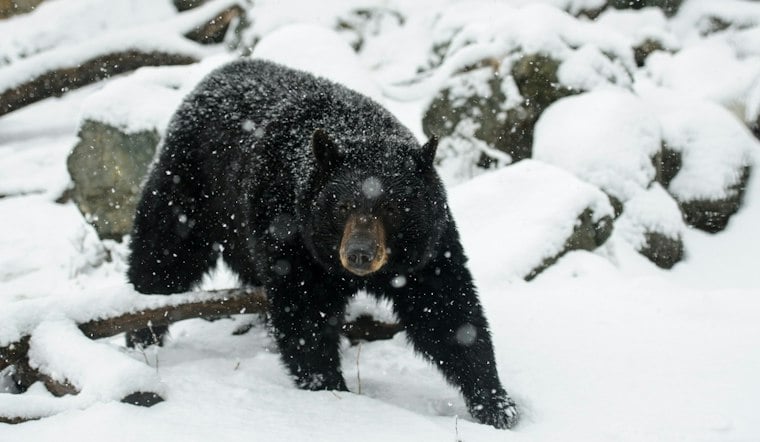
A Carlisle homeowner got quite the surprise this week when he looked up and found a black bear perched squarely on the roof of his house. The man told local reporters he was shocked to see the animal lounging above his home in the semi-rural Middlesex County town, a jarring but increasingly familiar sight for suburban Massachusetts residents this fall.
Rooftop Encounter Caught on Camera
The sighting, first reported by CBS News Boston, shows the bear settled on the roofline of the residence as the homeowner looks on in disbelief. Carlisle itself is a semi-rural community of roughly 5,200 residents about 20 miles northwest of Boston, where roughly a quarter of the town's 15.5 square miles is protected conservation land and state park space, according to research compiled by Scanlon Sells Homes. That kind of forested landscape creates natural corridors that make wildlife encounters like this one increasingly common as bears push further into eastern Massachusetts.
Massachusetts is now home to an estimated 4,500 black bears, and state wildlife officials say the population has been growing and steadily expanding its range eastward toward the Interstate 95 corridor. Bears showing up on rooftops in towns like Carlisle are no longer a rare curiosity; they are becoming a seasonal pattern tied to the animals' search for food and territory ahead of winter.
Why Young Male Bears End Up So Far East
According to MassWildlife black bear biologist Dave Wattles, the established breeding range for female black bears in Massachusetts largely ends at Interstate 190 and Interstate 495, meaning bears spotted further east in Middlesex County are almost exclusively wandering young males in search of food and new territory. Wildlife management research shows that two-year-old male bears typically separate from their mothers in late spring and summer and then travel dozens of miles through unfamiliar developed areas to establish their own home ranges, a pattern that helps explain why an animal might end up exploring a residential neighborhood like Carlisle's.
Seasonal food shortages compound the problem. MassWildlife researchers note that dry summer weather and localized drought conditions have reduced natural food supplies such as acorns and wild berries this year, pushing bears further into residential areas in search of calorie-dense meals as autumn approaches. State officials issued public notices in September reminding suburban homeowners that backyard bird feeders remain the single largest attractant drawing bears into yards, alongside unsecured trash and chicken coops, according to a report from HOT 96.9 Boston.
What Happens Next for a Bear Like This
Official MassWildlife guidance is clear about how to handle a bear spotted on a building, tree, or yard: residents should stay calm, avoid cornering or chasing the animal, and make sure it has a clear escape route, since bears typically climb down and move on once human activity dies down. MassWildlife biologists rarely immobilize or relocate black bears, reserving chemical tranquilization for cases where an animal becomes trapped in a high-density urban area or near a major highway, per reporting from ThisWeekinWorcester.com. Bears that become conditioned to human food sources can face euthanasia if they pose a persistent public safety threat, though there is no indication that applies to the Carlisle bear.
The Carlisle sighting arrives amid a broader run of bear activity across eastern Massachusetts this year. In July, Environmental Police captured and relocated a young male black bear on the mainland side of Bourne near Cape Cod, according to the Cape Cod Times. Hoodline has also tracked a similar Avon encounter that shut down a local park, and reported earlier this month on a Petersham motorcyclist who was airlifted after colliding with a 160-pound bear. For 2026, MassWildlife has also consolidated its statewide black bear hunting regulations into a single continuous open season running from September 7 through December 12, with a limit of one bear per hunter per calendar year, part of the state's ongoing effort to manage a population that keeps pushing further into suburban backyards.




