

























































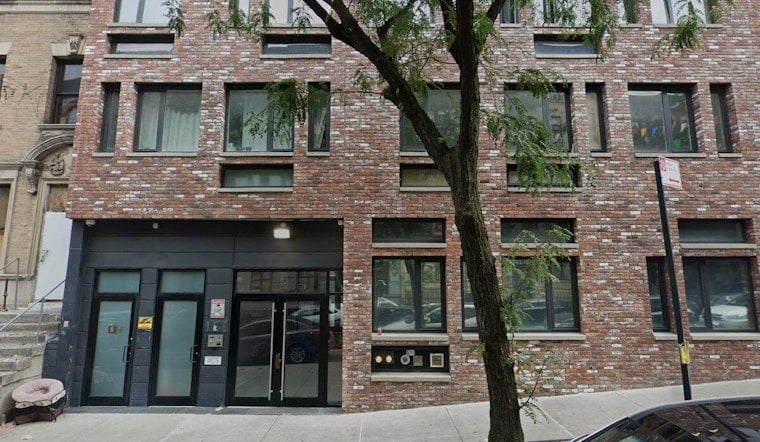
A 39-year-old New York woman pleaded guilty Tuesday to killing three men by feeding them fentanyl-laced drugs during a string of robberies that stretched from Washington Heights to Upper Manhattan, prosecutors announced. Tabitha Bundrick admitted to three counts of second-degree murder and one count of second-degree assault, closing out a case built around a pattern investigators say ran from April 2023 to February 2024.
Manhattan District Attorney Alvin Bragg announced the plea, saying Bundrick “knowingly killed three people by providing them fentanyl-laced drugs,” according to a statement from the Manhattan District Attorney's Office. Bundrick had provided the drugs to her victims while claiming the substance was cocaine, prosecutors said, then robbed them of phones, cash, watches, clothes and sneakers once they were incapacitated. She was originally arraigned in September 2025 on a 10-count indictment that included murder, robbery, burglary and assault charges before Tuesday's plea resolved the case ahead of an October 6 sentencing.
How the Scheme Unfolded in Washington Heights
Prosecutors say the pattern began on April 30, 2023, when Bundrick approached two men on the street in Washington Heights under the guise of selling them soap, then led them to an empty apartment on West 159th Street. One of those men, 42-year-old Mario Paullan, died on May 1, 2023, after being given the fentanyl-laced drugs; Bundrick later used his stolen cellphone to make personal calls, according to the DA's office.
Months later, on September 27, 2023, Bundrick gave 39-year-old Miguel Navez fentanyl-laced drugs in Washington Heights. Navez was found dead by his brother three days later, on September 30, 2023. Prosecutors say Bundrick also used Navez's stolen phone for her own calls, mirroring what investigators described happening with Paullan's device.
The February 2024 Attack That Led to Her Arrest
The final attack prosecutors detailed took place February 25, 2024, in Upper Manhattan, when Bundrick provided 34-year-old Abrihan Fernandez fentanyl-laced drugs. According to the DA's office, she rigged the apartment building's entrance door so she could enter and exit more easily while hauling away Fernandez's belongings, including his backpack, before fleeing in a taxi with the stolen items. Fernandez's credit card was used multiple times over the following several days, prosecutors said.
Investigators arrested Bundrick on March 5, 2024, while executing a search warrant at her apartment. That search recovered four pairs of sneakers belonging to the victims, physical evidence prosecutors say tied her directly to the separate robberies. She was ultimately charged with three counts of second-degree murder, four counts of first-degree robbery, two counts of second-degree burglary and one count of second-degree assault.
A Defense Built on Trauma and Mental Illness
During Bundrick's September 2025 court appearance, her defense attorney pushed back on prosecutors' portrayal of a calculated killer, arguing instead that she suffered from mental health issues and was a survivor of child sexual abuse, according to The Independent. The defense framing stands in contrast to prosecutors' description of a deliberate, repeated pattern of drugging and robbing victims for financial gain.
Bundrick was already serving time in federal custody when her state case reached its conclusion. She was sentenced to 13 years in federal prison after accepting a plea agreement on federal drug charges tied to the same fentanyl robbery scheme, per CBS New York. That federal sentence resolved narcotics distribution charges before the state murder case moved to its conclusion this week.
Bundrick is expected to be sentenced to 27 years to life in state prison on October 6. Lisa DelPizzo, executive assistant district attorney and chief of the trial division, along with assistant district attorneys Dafna Yoran, Arielle Evans and Julia Hooks worked on the prosecution. Bragg's office also thanked former detective Manuel Cordova, along with detectives Raymond Low and Keisha Lawhorne of the 30th Precinct squad, for their work on the investigation.
Part of a Broader Pattern of Fentanyl Robbery Prosecutions
Bundrick's case fits into a wider effort by Bragg's office to bring homicide charges against people accused of using fentanyl to incapacitate and rob victims. That approach previously included Kenwood Allen, who was charged with two counts of murder.
In February 2025, a Manhattan jury convicted three men — Jayqwan Hamilton, Robert DeMaio and Jacob Barroso — of murder, robbery and conspiracy in a scheme that involved lacing clubgoers' drinks with fentanyl to drain their bank accounts, resulting in two fatal overdoses. Hoodline reported on a related conviction stemming from a separate nightclub drugging ring prosecuted by Bragg's office. Under New York Penal Law § 125.25(2), prosecutors can bring second-degree murder charges under a depraved indifference theory when a defendant recklessly creates a grave risk of death, without needing to prove specific intent to kill — a charge that carries a mandatory minimum of 15 to 25 years to life in state prison.
Official data shows 3,046 overdose deaths in New York City in 2023, with fentanyl present in 80 percent of fatal drug poisonings citywide. Provisional 2024 city health records also track overdose deaths, though the total and year-over-year change were not verified. The available information does not establish whether Upper Manhattan and the Bronx had disproportionately high overdose rates.




