

























































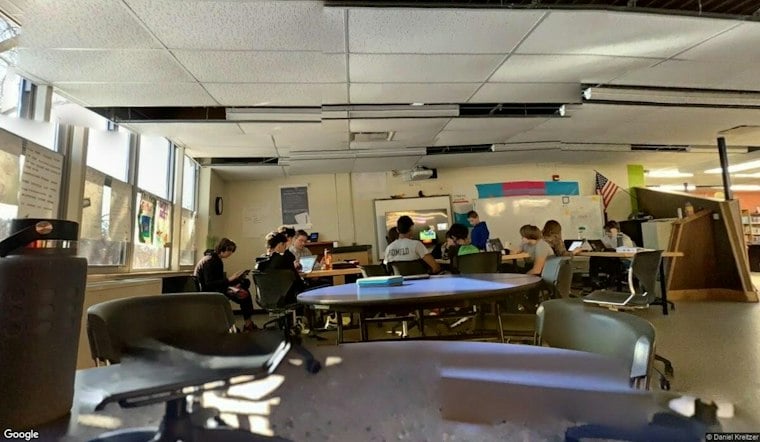
Wisconsin's recovery-school model is gaining another campus in Waukesha, where Crosspoint Academy has opened for teenagers navigating substance use while working toward a diploma. Operated by the Waukesha School District, the new recovery high school combines standard coursework with recovery support during the school day.
A School Designed Around Recovery, Not Just Academics
Crosspoint Academy opened earlier this month as a recovery high school in Waukesha, Wisconsin, according to the Milwaukee Journal Sentinel. The school is designed for students affected by substance use and offers conventional secondary coursework alongside dedicated recovery support. Its approach reflects a broader recovery-school model in which academic progress and students' efforts to remain in recovery are addressed within the same school setting.
That structure lines up with how recovery high schools function nationally. The Association of Recovery Schools describes these campuses as secondary schools designed specifically for students recovering from substance use disorder or co-occurring disorders, offering credits that lead to a state-recognized diploma just like any other high school. Staffing at these schools typically includes administrators, teachers, substance-misuse counselors and mental health professionals working together under one roof, per the Association of Recovery Schools.
Weaving Treatment Into the School Day
What Support Exists Beyond Crosspoint?
The available county data measures school prevention programming rather than the number of students receiving treatment. According to a 2024–2025 Waukesha County Department of Health and Human Services environmental scan, 61% of responding schools reported implementing substance use prevention education, while 26% reported no programming and 13% were unsure. Separate from Crosspoint's school-based recovery model, Waukesha County Health and Human Services offers weekday walk-in mental health and substance use assessments through its outpatient behavioral health clinic. The county's published information describes the service as first come, first served.
Recovery high schools often blend elements of treatment directly into academic life, according to Wisconsin Watch, incorporating recovery meetings, wellness electives and peer support alongside standard coursework. It's a model meant to address a problem that traditional schools often aren't equipped to handle: keeping students both sober and enrolled at the same time.
A 2021 national survey reported that some high school students currently drank alcohol or used marijuana and that some had been offered, sold or given illegal drugs or alcohol on school property. By 2022, national data reported illicit-drug use among some 12th and 10th graders during the previous year.
State Funding Has Been Building Toward This Moment
Crosspoint Academy's opening arrives amid a broader state push to expand recovery-focused education. Under 2023 Wisconsin Act 72, the state established a Recovery High School Planning Grant Program, and the Wisconsin Department of Public Instruction announced its first four recipients in March 2025. The School District of Ashland, School District of Beloit, Manitowoc Public School District and Norris School District each received $75,000 in grant funding, with the performance period running from March 1, 2025, through June 30, 2025, according to the Wisconsin Department of Public Instruction. State officials framed the funding as a way to build dedicated environments where students in recovery can thrive academically and personally.
The department's separate Act 72 grant program provides funding for the ongoing operation of recovery high schools, which it defines broadly as public, private or tribal schools, according to the Wisconsin Department of Public Instruction.
Wisconsin's Model: Horizon High School in Dane County
Wisconsin's most established comparison point is Horizon High School, described on its own website as the state's oldest operating recovery high school, located in Dane County. Horizon serves students recovering from substance use disorders, including those with co-occurring mental health conditions, in an alcohol- and drug-free environment, the school says. Its student population typically ranges between 10 and 18 students, with a student-to-teacher and counselor ratio of 5:1.
Horizon's daily structure includes small staff-to-student ratios, random weekly drug testing of all students, twice-weekly group therapy sessions and immediate attention to mental health crises, Wisconsin Public Radio reported. Established in 2005, Horizon has served more than 200 students to date. Among 52 students who attended the school from 2017 through spring 2021, the school reported almost perfect attendance, a sharp drop in suspensions compared with students' previous schools, and a 62% graduation rate, per the same outlet's reporting.
What the Research Says About Outcomes
National data suggests the model can move the needle on long-term outcomes. A 2017 study found graduation rates for recovery high school students at least 20 percentage points higher than those of similar students who didn't attend such a school for a prolonged period, Wisconsin Public Radio reported. Wisconsin Watch has separately noted findings that recovery-school students show better attendance, a greater likelihood of remaining sober, and graduation rates at least 21% higher than comparable students who returned to regular schools after treatment.
These schools aren't cheap to run. In Denver, 5280 High School opened in 2018 as a public charter school and now enrolls more than 100 students annually, but its per-pupil cost runs about $25,000 while it receives only around $15,000 per student in public funding, according to Wisconsin Watch. Horizon faces a similar gap: instruction, counseling, drug testing and out-of-class experiences there cost about $30,000 per student, with state funding covering less than half of that total, the outlet reported.
The Journal Sentinel's report provides an early look at Crosspoint Academy as the Waukesha School District's newest school begins its first weeks of classes.





