

























































Jayden Zurlinden was just 18 months old when doctors in Ohio diagnosed him with a form of pediatric cancer so rare that fewer than 88 cases have ever been documented worldwide. He survived it, along with the radiation treatment that came with it. But sixteen years later, that same radiation triggered a second, more aggressive cancer that would take his life at age 20 on June 9. His family's yearslong fight to navigate that diagnosis is now shaping how Ohio helps other families facing the same nightmare.
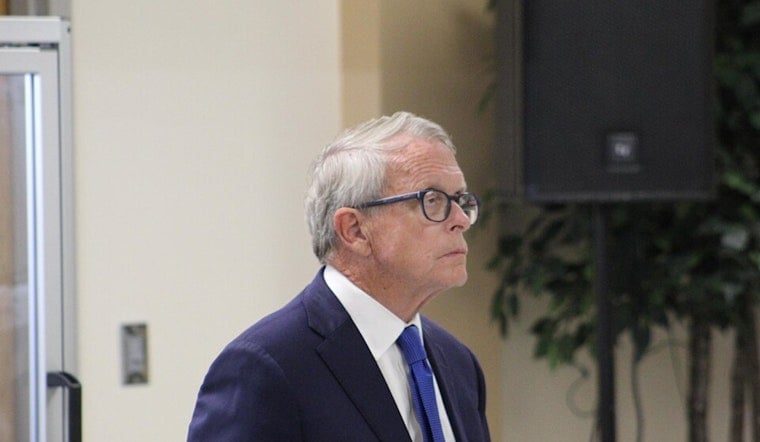
Governor Mike DeWine announced Tuesday that the state will expand a preexisting group of state employees into a formal Pediatric Complex Care and Navigation Program, giving families dedicated navigators to help them work through health insurance, financial assistance, and local resources, regardless of income. According to the Cincinnati Enquirer, the program will be housed within the Ohio Department of Health, and pediatric hospital staff will connect families directly with those state resources. State Health Director Dr. Bruce Vanderhoff said the program is designed, in the words of the Toledo Blade, to guide families through a fragmented system.
DeWine framed the effort in plain terms, saying government's job is to simplify complex systems for people facing tragic circumstances, per the Enquirer's report. Jayden's mother, Cassie Zurlinden, told the paper that DeWine and his team helped the family navigate what she called an impossible system, and said every family should have that kind of hope.
A Rare Cancer's Return, Years Later
Jayden, who lived in West Chester, was diagnosed as a toddler with perianal rhabdomyosarcoma, a cancer with fewer than 88 documented cases globally, according to a GoFundMe campaign created for his family. He received radiation treatment as a toddler and survived, but at 17 he developed stage 4 chondroblastic osteosarcoma, a late-effect complication linked to that earlier radiation and one that occurs in less than 0.04% of cases, the GoFundMe account states. Research published in the International Journal of Radiation Oncology and cited by CancerConnect shows these radiation-induced osteosarcomas typically emerge eight to 10 years after treatment and carry roughly a 40% five-year survival rate.
As Jayden's family searched for options, they considered a promising treatment in California and, according to the Enquirer, faced a maze of complex insurance rules and treatment logistics along the way. That search eventually led the Zurlindens to ask Governor DeWine and his staff for help directly. Jayden graduated from Lakota West High School in 2024, and according to his obituary posted by Hodapp Funeral Home, he won two Ohio state wrestling championships and studied at the School of Rock in pursuit of a music career before his death at 20.
A Budget Fight Over Research Dollars
The new navigation program follows a separate, harder-fought battle over pediatric cancer research funding in the state budget. DeWine initially asked for $10 million for pediatric cancer research, but Ohio lawmakers approved just $5 million as part of House Bill 96, the state's FY 2026–2027 operating budget passed in June 2025, according to the Ohio Senate. That $5 million was formally awarded in December 2025 across five recipients: Cincinnati Children's Hospital Medical Center, Nationwide Children's Hospital Research Institute, Cleveland Clinic, Dayton Children's Hospital, and Maple Tree Cancer Alliance, per the Ohio governor's office.
DeWine has said $10 million is merely a place to start for future pediatric cancer investment, and he hopes his successor will continue funding both research and care-navigation efforts, the Enquirer reports. That funding gap matters nationally, too: pediatric cancer research receives only about 4% of total federal cancer research funding in the United States, according to the National Cancer Institute, leaving state budgets and philanthropy to fill much of the void.
Progress and Persistent Need Across Ohio
The state has made real gains even as the disease remains stubbornly common. More than 80% of Ohio children diagnosed with cancer now survive five years or more, up from roughly 20% in the 1970s, according to the Ohio Department of Health in late 2025. Yet over 500 Ohio children are still diagnosed with cancer every year, and nationally the American Cancer Society projects about 9,680 children under 15 and 5,660 adolescents ages 15 to 19 will be diagnosed with cancer in 2026, with cancer remaining the leading disease-related killer of young people.
Whether these programs expand or stall now rests with whoever wins the November 2026 governor's race, since DeWine is term-limited and cannot seek reelection. Voters will choose between Republican entrepreneur Vivek Ramaswamy and Democratic doctor Amy Acton, who previously served as DeWine's state health director during the COVID-19 pandemic, according to the Statehouse News Bureau. DeWine's successor will inherit the decision of whether to fund the navigation program and research grants beyond his term, leaving families like the Zurlindens hoping the next administration keeps the door open that DeWine's office helped pry ajar for them.





