

























































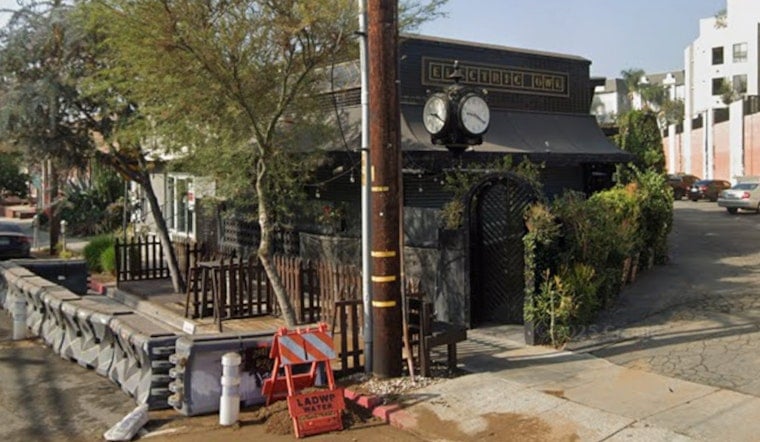
Electric Owl, the train station-themed restaurant and cocktail bar that has anchored a triangular lot near Sunset Boulevard for almost a decade, has closed its doors. The West Hollywood spot at 1451 N. Gardner St. announced its closure on social media, telling longtime patrons: “After almost 10 incredible years, Electric Owl has closed its doors.”
The restaurant did not provide a reason for the closure, according to WhatNow, which first reported the shutdown. In its farewell message, Electric Owl expressed gratitude to everyone who visited, worked at, and helped build the restaurant into what it became, and longtime customers responded by sharing memories and disappointment while wishing the team well. Chef Ernesto Uchimura created Electric Owl, which officially opened in April 2017 on a site previously occupied by a short-lived restaurant called Gardner Junction that had closed after just a few months in 2015, according to the Los Angeles Times.
A Name Rooted in Real Rail History
Electric Owl's name came from a nickname for nighttime train conductors in the early 1900s, and the connection to trains wasn't just decorative. The Gardner Street address sits on the historic site of Gardner Junction, where Pacific Electric Railway Red Cars ran along Sunset Boulevard and turned onto Gardner Street from roughly 1909 until 1954, according to Calisphere. The junction also served as the hub for the railway's Laurel Canyon line, which shuttled Sunset Boulevard streetcar riders up into Laurel Canyon until that branch stopped running in 1924, per the Sunset Square Hollywood historical group.
That transit history spurred early commercial and residential growth in the surrounding Sunset Square neighborhood, the group notes. Electric Owl's 1920s-inspired design, built by design firm Spacecraft, leaned into that legacy with a vaulted dining room ceiling modeled after luxury rail cars of the era, Carrara marble bathrooms, and an outdoor bar with a fireplace fashioned from an old LAX airstrip tank, the Los Angeles Times reported. The restaurant also featured outdoor patio seating and an old Hollywood feel that fit its triangular lot.
From Cal-Med Comfort Food to Smash Burgers
Uchimura arrived at Electric Owl with serious burger credentials, having served as founding corporate executive chef of Umami Burger in 2009 and co-founder and opening chef of Plan Check Kitchen + Bar in 2012, per the Los Angeles Times. At Plan Check, he drew national attention for inventing “ketchup leather,” a dehydrated square of house-made ketchup engineered to melt over warm beef without turning the bun soggy, a technique that helped Plan Check win LA Weekly's Best Burger in Los Angeles title in 2014, according to DIGS Magazine.
Despite that pedigree, Uchimura deliberately left burgers off Electric Owl's opening menu, choosing instead to spotlight Cal-Med comfort dishes like long-fermented pizza and cacio e pepe ranch potatoes when the restaurant debuted in April 2017. Burgers eventually found their way back onto the menu, and by the time Electric Owl closed, it served signature items including the L.A. Smash Burger, the Grill Daddy Burger, fried chicken, and the Dynamite! Krabby Patty, alongside martinis, cocktails, and other signature drinks.
Part of a Wider West Hollywood Shakeout
Electric Owl's exit adds to a string of closures rattling West Hollywood and the surrounding Sunset corridor. Seafood institution Connie & Ted's on Santa Monica Boulevard closed in July after 13 years, citing rising labor and supply costs, as Hoodline reported. Just last week, neighborhood staple The Belmont on La Cienega Boulevard shut down after 26 years, a spot long known for weekend brunch and late-night drinks.
Further down the Sunset Strip, longtime Chinese restaurant Chin Chin closed its West Hollywood location in 2025 after 42 years, pointing to rising overhead costs and declining nighttime foot traffic. Together, the closures reflect a pattern of thin margins, elevated post-pandemic debt, and shifting late-night habits squeezing independent restaurateurs across the area, even as venues like Electric Owl leave without spelling out exactly why they couldn't hang on.





