

























































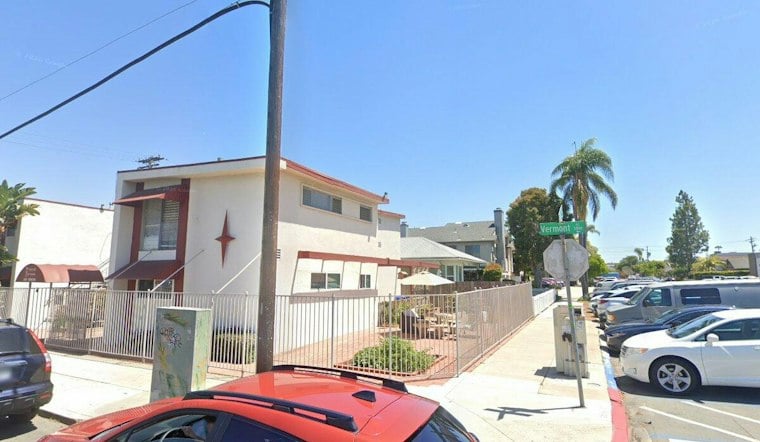
A group of San Diego residents says the city's fast-track housing rules let a seven-story, 74-unit apartment complex get proposed at 3554 and 3560 Front Street with zero advance warning to the people living next door. The project would replace a single-family residence, and neighbors say they only pieced together what was happening through word of mouth and by checking the city's development services portal themselves.
The residents have since organized as West Uptown United, a nonprofit formed in direct response to the proposal, according to Times of San Diego. Ransom Hamrick, who helped form the group, said neighbors could have learned about the project only when crews began demolishing the house next door — and that neighbors had no idea a developer and a neighboring property owner were already working together to combine the two parcels into one project.
The group, which says it has more than 50 supporters, isn't arguing against new housing itself. “We're not opposed to housing,” Hamrick said, according to the same report, while stressing that West Uptown United wants development that better fits into the established neighborhood and greater community scrutiny before projects like this move forward.
How Complete Communities Cuts Neighbors Out of the Process
The root of the frustration is San Diego's Complete Communities Housing Solutions program, which allows larger, denser projects near transit corridors and does not require public notification or hearings before they're approved. The program was designed to expedite permitting and grow the city's housing stock, and it has done exactly that: projects reviewed under Complete Communities go through purely ministerial review, meaning city staff check them against objective code standards only, with no discretionary hearings, environmental review, or advisory votes from local Community Planning Groups, according to the University Heights Historical Society.
That legal structure traces back to November 2020, when the City Council under then-Mayor Kevin Faulconer first enacted Complete Communities, swapping out traditional units-per-acre density caps for floor area ratio bonuses awarded in exchange for deed-restricted affordable units, per Times of San Diego. The program's reach expanded further in February 2023, when the City Council voted 5-4 to redefine transit-adjacent eligibility zones — replacing a half-mile, as-the-crow-flies radius with a one-mile walkable distance to transit, per KPBS. That single change opened more than 5,000 additional acres citywide to by-right high-density projects.
Approvals have also gotten faster. In January 2024, Mayor Todd Gloria issued an executive order requiring city departments to process Complete Communities project reviews and building permits within 30 days, according to the city's Complete Communities program. Previously, that review could stretch up to 12 months — a compression that helps explain why residents in neighborhoods like West Uptown feel projects materialize almost overnight, with construction crews arriving before anyone outside the immediate transaction even knew a proposal existed.
Hamrick Says the Program Tilts Too Far Toward Developers
Hamrick argued the program hands developers too much freedom without requiring any community input, according to the reporting from Times of San Diego. He said he believes community organizations like West Uptown United will be necessary going forward to help offset the impacts of development the city's own process doesn't require developers to mitigate through public review.
Residents have raised specific concerns about the Front Street proposal, including parking impacts, added traffic, fire hazards, loss of sunlight for adjacent homes, and encroachments into nearby canyon terrain. Hamrick also said the Complete Communities framework will usher in more high-density projects across Bankers Hill, Hillcrest and North Park — areas where similar proposals have surfaced with little warning.
A similar fight played out on the nearby 3600 block of Columbia Street in Bankers Hill, where residents organized in October 2024 against a proposed 8-to-10-story Complete Communities complex on a hillside lot, citing canyon stability, the loss of historic homes, and parking strain, according to OB Rag. And in University Heights, KPBS reported in September 2025 on a developer's application to build a 5-story, 19-unit building on a 3,920-square-foot lot that base zoning would have limited to just two units — a stark illustration of how far Complete Communities can stretch beyond a parcel's underlying zoning.
Fees and an Unanswered Developer
Developers using Complete Communities aren't entirely off the hook financially. Under city guidelines updated in December 2023, they must pay a Neighborhood Enhancement In-Lieu Fee of between $10.36 and $12.68 per square foot of lot area, with half of that money reserved for affordable housing preservation and half dedicated to parks and active transportation improvements in transit areas, according to city council documentation.
Times of San Diego reported that it reached out to developer John Citrigno and to the office of Councilmember Stephen Whitburn for comment on the Front Street project, and neither had responded as of publication.



