

























































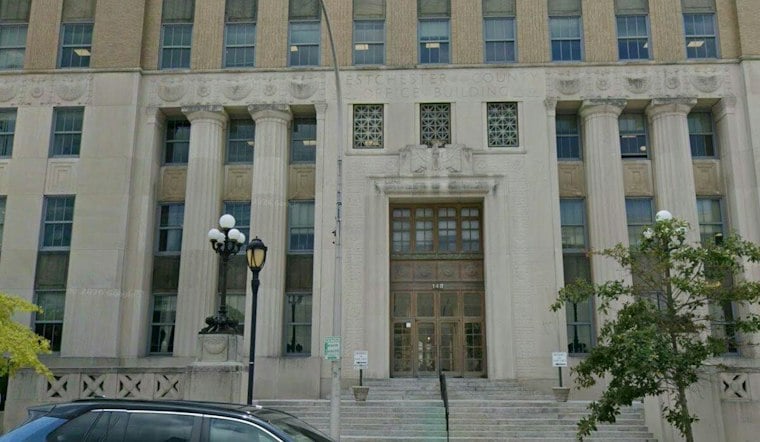
Westchester County retailers caught holding a stash of flavored or disguised vapes can now face scrutiny based on a presumption that the products were intended for illegal sale, even without evidence of a clerk making an illegal sale. The county's Board of Legislators voted unanimously to close that exact loophole, giving health inspectors a new tool to cite smoke shops without having to catch a clerk in the act of making an illegal sale.
The amendment establishes a presumption that four or more e-cigarettes disguised as everyday objects, or four or more flavored vapes banned under New York law, are intended for illegal sale. As reported by Daily Voice, the presumption concerns the products' intended use, not a determination that retailers are legally guilty.
That shift matters because it gives health officials another enforcement tool. The Westchester County Department of Health can now use the presumption when taking enforcement action, without having to prove that a sale occurred, according to the same report.
A Year in the Making
The amendment was designed to stop retailers from keeping illicit stock on-site under the cover of an online-sales excuse. The proposal eventually reached the board floor for its unanimous vote this month.
Board Chairman Vedat Gashi framed the change as a matter of accountability. “No one should be able to sidestep the law,” Gashi said, according to Daily Voice. “This measure closes an enforcement gap and gives our public health officials another tool to hold retailers accountable.”
Building on July's Disguised-Device Ban
The presumption-of-sale amendment pairs with a separate law Westchester County Executive Ken Jenkins signed in July 2026 banning the sale or transfer of vaping devices designed to look like common objects, including highlighters, USB drives, pens, smartphone cases, smartwatches, toys, drink containers and backpacks. Businesses caught violating that disguised-vape law face civil penalties of $300 to $1,500 for a first offense and steeper fines for repeat violations, according to details from Westfair Communications, which also authorized the county Board of Health as the primary local enforcement body.
Together, the two measures give county health inspectors a pair of complementary tools: one targets vapes disguised to look innocuous, the other targets the flavored products New York has restricted since 2020. The state's flavored nicotine vapor product ban took effect on May 18, 2020, under Public Health Law § 1399-mm-1, limiting legal retail sales to tobacco-flavored products only, per the New York State Department of Health.
Why Regulators Keep Chasing This Market
The urgency behind these local rules traces back to youth vaping data that has alarmed state health officials for years. According to 2022 New York State Youth Tobacco Survey figures, 18.7% of high school students statewide reported using e-cigarettes, compared with a historic low of just 2.1% who reported smoking traditional cigarettes, per data cited by Broome County, which noted that statewide high school e-cigarette use had surged 160% between 2014 and 2018.
Enforcement has escalated well beyond Westchester's borders. In February 2025, New York Attorney General Letitia James filed a federal lawsuit against 13 e-cigarette manufacturers and distributors, including Puff Bar and Elf Bar, alleging widespread illegal distribution of flavored disposable vapes across the state, according to the Office of the New York State Attorney General. That suit claimed distributors used illegal shipping methods and targeted retail shops near public schools.
Hoodline previously reported on a related case in upstate New York, where James sued an Otsego County smoke shop that had racked up more than $195,000 in state fines and citations before repeatedly reopening under new business names to dodge flavor-ban enforcement. The state and the Department of Health launched joint litigation in October 2025 to permanently close that store.
A Supply Chain Regulators Can't Fully Choke Off
Part of what makes these loopholes so persistent is a federal marketplace that offers limited legal options. Unauthorized, often internationally sourced disposable vapes continue to fill stores across New York.
Federal regulators have separately targeted unauthorized flavored disposable e-cigarettes sold online. The FDA has warned firms about illegal sales of such products, according to the U.S. Food and Drug Administration.
New York also regulates the legal side of the vapor market, per the Public Health Law Center.
Attorney General James has also pushed enforcement into the financial system. In April 2026, she led a 25-jurisdiction coalition of state attorneys general urging major credit card companies to block payment processing for illegal online and brick-and-mortar vape retailers, according to the Office of the New York State Attorney General, as officials increasingly seek private-sector cooperation to choke off payment channels feeding the illicit trade.



