

























































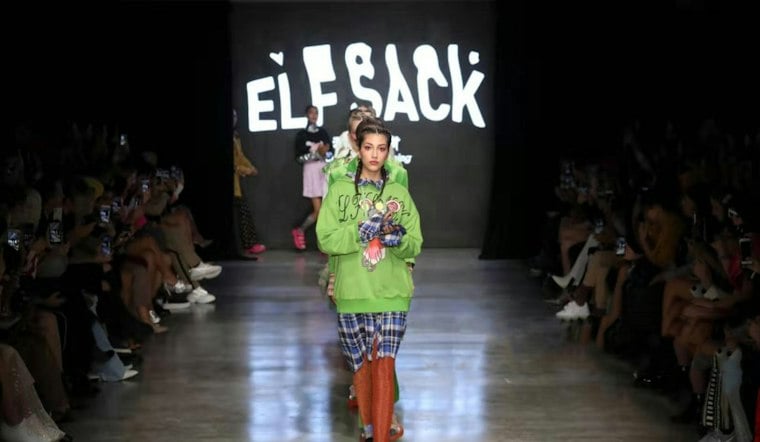
New York Fashion Week’s archive economy took a charitable turn on Sept. 9, 2026, when eBay and the Council of Fashion Designers of America presented Endless Runway: The Archive, a live eBay Live auction of more than 150 pieces by American designers. Curated by Carlos Nazario and hosted by Jenna Lyons, the event directed proceeds to the CFDA, according to eBay and the CFDA.
The sale is one small point of contact between New York’s fashion history and its current systems for making, circulating and preserving clothing. The city remains connected to a statewide fashion industry cluster that the New York State Department of Labor describes as employing approximately 312,000 people and generating more than $24 billion in annual wages. That figure is statewide and does not measure the auction’s economic effect.
An archive sale, not a uniform snapshot of the past
The lots came from the archives of Calvin Klein Collection, Diane von Furstenberg, Michael Kors Collection, Proenza Schouler, Tommy Hilfiger, Vera Wang and Willy Chavarria. They included a Calvin Klein Collection Spring/Summer 1996 dress, a Michael Kors Collection Resort 1990 slip dress, a Vera Wang Spring/Summer 2024 ballgown and a Willy Chavarria Spring/Summer 2025 gown, the CFDA reported. The dates matter: the selection mixed older pieces with recent work rather than presenting every lot as a decades-old artifact.
The event also linked several periods of American fashion, including 1970s glamour and liberation, the rise of American sportswear, 1990s minimalism and grunge, and work by designers active in New York today, according to the CFDA. That historical range is the curatorial frame for this auction, not a comprehensive account of American fashion.
The format has shifted from shopping to bidding
The Archive builds on eBay’s earlier Endless Runway format. The Charlotte Observer reported that the original presentation used a live, shoppable display of pre-owned designer clothing and accessories, including pieces from Ralph Lauren, Brandon Maxwell, Khaite and Off-White. The News & Observer reported that the CFDA described that show as the first entirely pre-loved runway presentation at New York Fashion Week.
The 2026 edition changed the transaction. Instead of making the displayed pieces immediately available for conventional purchase, it put selected archival garments into a live auction while combining garment discussion with real-time bidding. eBay has also worked with the CFDA and the British Fashion Council on live, shoppable secondhand-fashion events, according to Vogue.
New York already has systems for reuse and production
The auction does not establish how much textile waste it prevents, but it arrives in a city with formal reuse and recycling pathways. The New York City Department of Sanitation says items collected through its textile program are diverted from landfills and sorted for reuse, resale or reprocessing into products such as cleaning rags, seat padding and insulation. For businesses, the department says textiles making up more than 10% of waste during any month must be separated and recycled or repurposed, according to its business guidance.
The city’s fashion infrastructure also extends beyond Midtown. The New York City Economic Development Corporation says the Made in New York Garment Hub in Sunset Park is intended to expand jobs and workforce training in garment manufacturing, fashion design and related businesses. Meanwhile, on Aug. 12, 2025, the New York City Landmarks Preservation Commission designated five Midtown South buildings as individual landmarks tied to the Garment District’s early-20th-century development and economic history.
Auction access differs from institutional preservation
An auction gives selected garments a new owner through bidding; it does not preserve every piece for continuing public study. The Museum at FIT says its permanent collection includes more than 50,000 garments and accessories dating from the 18th century to the present. That collection offers a different model of access from a time-limited sale: institutional stewardship, conservation and ongoing research rather than transfer to individual buyers.
The national waste figures provide scale but not a scorecard for this event. The U.S. Environmental Protection Agency estimated that textiles accounted for 17 million tons, or 5.8% of municipal solid-waste generation, in 2018. The Government Accountability Office, summarizing the EPA’s last reported data, said that 66% of textile waste was landfilled, 19% was combusted with energy recovery and 15% was recycled that year. Those figures are national, date to 2018 and cannot be used to measure the auction’s environmental performance.
The available eBay and CFDA announcements say only that proceeds benefit the CFDA; they do not name a specific CFDA program or individual designer as a recipient. The auction therefore supports the organization in the terms announced, while its eventual allocation and measurable effects remain unspecified.




