

























































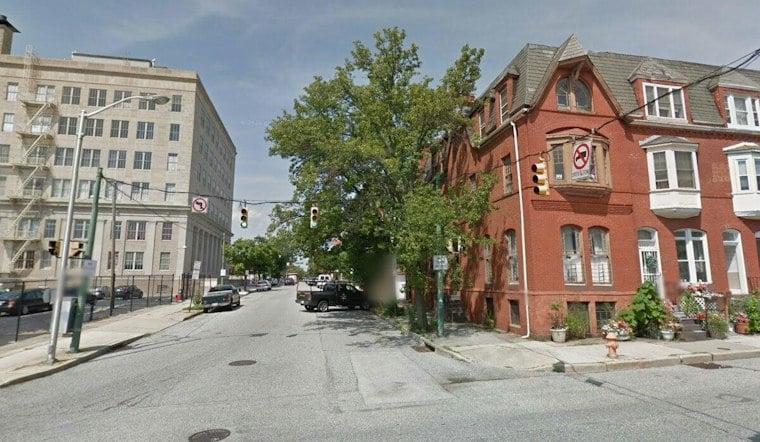
Baltimore police are investigating the fatal shooting of Sophie Lee, a 27-year-old Black transgender woman who was born and raised in the city. Officers responding at 1:16 a.m. on September 11 found Lee at North Calvert and East 24th streets in the Barclay neighborhood. She was pronounced dead at the scene. More than a week later, police had not publicly identified a suspect, announced an arrest or determined a motive.
Police sources told Metro Weekly that Lee appeared to have been shot in a nearby alley before reaching the street. Her purse was found two blocks away, and detectives were seeking security footage and information from residents. Police have not said whether robbery was being considered.
Police have not said whether Lee’s gender identity played a role in the shooting.
Baltimore Police Department spokesperson Lindsey Eldridge said September 14 that investigators had not determined whether Lee’s gender identity played a role in the shooting, the Washington Blade reported. That statement leaves a central question unresolved: Lee’s identity is part of the circumstances surrounding the case, but it is not evidence by itself that the killing was motivated by anti-transgender bias.
The distinction matters legally and statistically. A homicide can remain under investigation without a publicly established motive, while a bias classification generally depends on evidence gathered by investigators and prosecutors. Until Baltimore police release more information, it is not possible to say whether Lee’s death will be treated as a hate crime.
A vigil brought the investigation back to the Barclay corner
Nearly 100 community members and LGBTQ+ advocates gathered at the intersection where Lee was found on September 13, according to the Washington Blade. Lee’s mother, Denise Johnson, attended the vigil. Baltimore Safe Haven’s founder spoke after the vigil.
Friends and advocates also remembered Lee’s connection to Baltimore’s ballroom community and her attendance at the Baltimore School of the Arts, according to Metro Weekly. Those accounts describe the community’s grief and Lee’s place in it; they do not resolve who killed her or why.
Baltimore has investigated a similar question before
The city has previously examined whether a transgender woman’s killing involved anti-transgender bias. In a case reported by The Associated Press via The Afro, police arrested and charged Shawn Oliver in the July 16, 2014, stabbing death of 26-year-old Mia Henderson. Police were still assessing whether hate-crime charges were warranted.
Henderson’s case is a historical precedent, not proof of a connection to Lee’s death. The cases occurred years apart and involved different known circumstances.
Hate-crime data has reporting limits
Official totals also require caution. The U.S. Department of Justice says Maryland’s hate-crime statistics have been reported entirely through the National Incident-Based Reporting System since 2021, and that law-enforcement participation fell significantly after the shift to NIBRS-only reporting. That limitation does not establish a bias classification for Lee’s case.
For now, the confirmed public record is limited: Lee was found fatally shot in Barclay, police are seeking information and footage, and no suspect, arrest or motive has been publicly announced. Anyone with information is asked to call Baltimore Police at 410-396-2100 or Metro Crime Stoppers at 1-866-7-LOCKUP (756-2587).





