

























































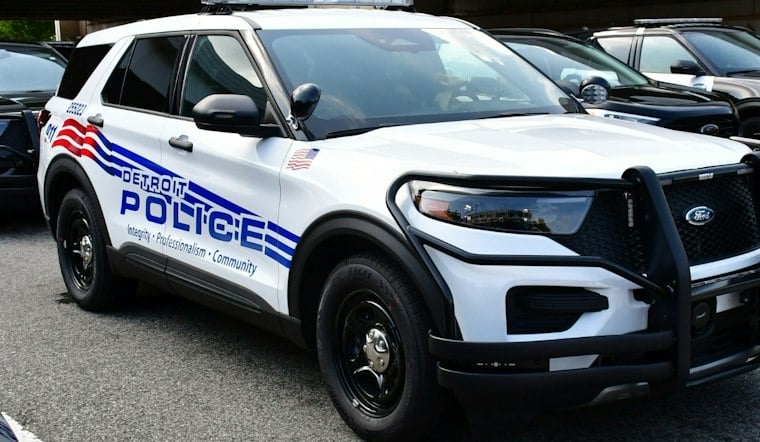
A three-month federal-local enforcement effort in Michigan ended with reported gains in arrests and weapons seizures, but those figures do not yet show whether violence declined because of the operation. The Metro Detroit News reported that Operation Summer Heat 2.0 produced 120 arrests and recovered 57 weapons during a June-through-September campaign led by FBI Detroit and law-enforcement partners.
According to the report, 28 federal, state and local agencies worked across Metro Detroit, Flint, Bay City and western Michigan. Investigators concentrated resources during evenings and weekends and in locations associated with increased violence, with an emphasis on criminal networks and repeat offenders rather than only responding to individual crimes.
The numbers are activity measures, not outcome measures
The reported totals document what participating agencies did: made arrests and took weapons into custody. They do not, by themselves, establish how many violent crimes were prevented, whether violence fell in the targeted places, or whether activity shifted to nearby communities. The National Institute of Justice has warned that simplistic measures such as arrest totals can be misleading when used to judge policing effectiveness.
A separate Bureau of Justice Assistance research review noted that place-based policing is widely used, but few agencies make advance commitments to rigorous evaluations. For Summer Heat 2.0, a stronger assessment would require comparable crime data before, during and after the operation, information about places that were not targeted, and measures of whether any change lasted after the campaign ended.
What research says about concentrating police resources
The strategy used in Summer Heat 2.0 has support in the broader research literature. A U.S. Department of Justice Office of Justice Programs systematic review found robust evidence that hot-spots policing can reduce crime. The review also found no apparent displacement into immediately surrounding areas. It did not evaluate Summer Heat 2.0, however, so its findings support the general approach—not a conclusion about this Michigan operation.
That distinction matters because the operation combined several elements: federal investigative resources, local partnerships, geographic targeting, attention to high-risk hours and an emphasis on networks. Even if violence changed during the same period, the available reporting does not identify which component mattered or rule out other explanations.
Michigan’s reported decline remains a limited comparison
The Metro Detroit News also reported, citing an FBI report, that Michigan violent crime fell nearly 20% when January through August of one year was compared with the same period in 2025. The comparison included homicide, robbery, rape and aggravated assault. The available account does not provide the underlying counts, explain the methodology, identify which category drove the change or show how the result varied by county.
That statewide comparison therefore cannot establish that Summer Heat 2.0 caused the decline. It also covers a period that does not precisely match the operation’s June-through-September schedule. Michigan State Police says annual-report data from 2023 onward is presented through its Crime in Michigan dashboard, but the figures needed for a full offense-by-offense and county-level assessment are not included in the available reporting.
National context offers a benchmark, not an explanation
National crime data point in the same broad direction but cannot explain Michigan’s results. The FBI’s 2025 national report put the estimated U.S. murder rate at 4.1 offenses per 100,000 inhabitants, the lowest recorded in 20 years, and said the robbery rate was also the lowest in that period. Those national measures do not show what caused Michigan’s reported change or which local offenses were affected.
What remains to be learned
The operation’s reported arrests and seizures are relevant indicators of enforcement activity, but the public account does not provide names, charges, case outcomes or a breakdown of the 57 weapons by type and location. It also does not provide a sustained post-operation crime analysis. Until those measures are available, Summer Heat 2.0 is best understood as a large coordinated enforcement effort whose longer-term effect on violence remains unresolved.





