

























































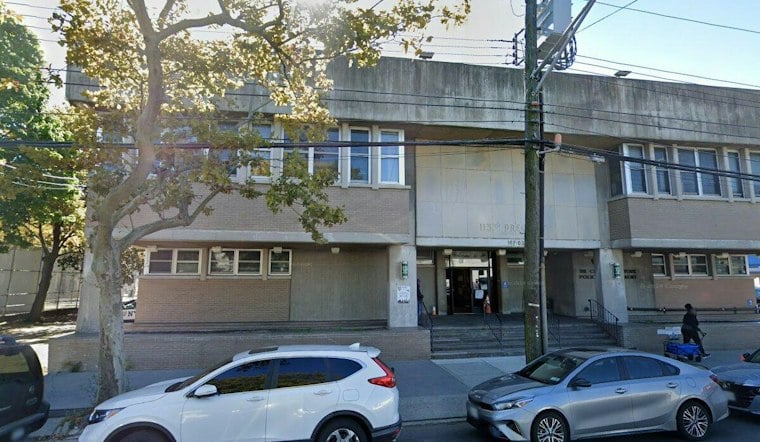
New York City taxpayers paid $53.5 million to resolve 493 NYPD misconduct lawsuits from Jan. 1 through July 31, 2026, according to a Legal Aid Society tally reported by amNewYork. The figure provides a seven-month snapshot of civil cases resolved during the first part of Mayor Zohran Mamdani’s administration, but it is not a complete measure of all police-related claims paid by the city.
The tally also linked 11 payout cases totaling more than $400,000 to Queens Lt. Howard Roth, according to amNewYork. Those case totals describe lawsuits and payments associated with an officer; they do not, by themselves, establish that the officer committed misconduct. The article’s account included allegations and disciplinary information from a public accountability database whose records can include complaints that were unfounded or resulted in exoneration.
A snapshot, not a single citywide measure
The Legal Aid Society’s number is best understood as a count of civil lawsuits resolved during a defined period. It is not interchangeable with the New York City Comptroller’s broader claims data, which use different reporting periods and categories. The Comptroller reported that NYPD claims settled in fiscal year 2023 cost the city $266.7 million, compared with $239.1 million in fiscal year 2022, according to its annual claims report.
The Comptroller’s separate fiscal year 2025 analysis found that “Police Action” claims—often alleging excessive force—were the city’s most common tort claims, with 6,082 claims filed and more than $113 million in settlements. That measure includes tort claims and should not be treated as a direct comparison with the Legal Aid Society’s lawsuit-only tally, the Comptroller said.
What a payment can—and cannot—show
Under the Comptroller’s definition, a settled claim or lawsuit is one resolved by settlement or judgment that resulted in a monetary payment. That definition records a financial resolution; it does not alone prove individual wrongdoing, according to the Comptroller. The same limitation applies when totals are attached to a particular officer: a payout can identify the existence and financial outcome of a case without resolving every factual or disciplinary question.
Civil litigation and police-discipline records also measure different things. The Civilian Complaint Review Board says its member-history database covers CCRB complaints only and excludes allegations outside the board’s jurisdiction, as explained on the agency’s records page. Separately, the CCRB reported that the rate of officers disciplined in the relevant cases fell to 53% in fiscal year 2025 from 55% in fiscal year 2024, a discipline measure that cannot be converted into a lawsuit-payout rate.
The longer financial pattern
The current tally follows two high-cost years in the Legal Aid Society’s accounting. The organization reported that the city paid $117.25 million to resolve 1,044 police-misconduct lawsuits in 2025, while its figures put 2024 payments at $206.3 million across 973 lawsuits, according to the Society’s 2025 analysis. Those figures show substantial litigation costs, but comparisons remain sensitive to the cases included, the periods covered and whether the count concerns lawsuits, claims, settlements or judgments.
The Comptroller has argued that city agencies, including the NYPD, should be financially responsible for settlement costs rather than having those costs borne entirely by the general fund. The office said agency-level liability could create stronger incentives for prevention, according to its report on police-action claims. That is a policy recommendation, not evidence that the current seven-month total resulted from any particular departmental practice.
The clearest conclusion from the $53.5 million figure is therefore limited but significant: hundreds of NYPD-related civil lawsuits reached monetary resolution during the first seven months of 2026. Determining how many involved substantiated misconduct, how many produced discipline, and how the total compares with all claims paid by the city requires records beyond this single tally.



