

























































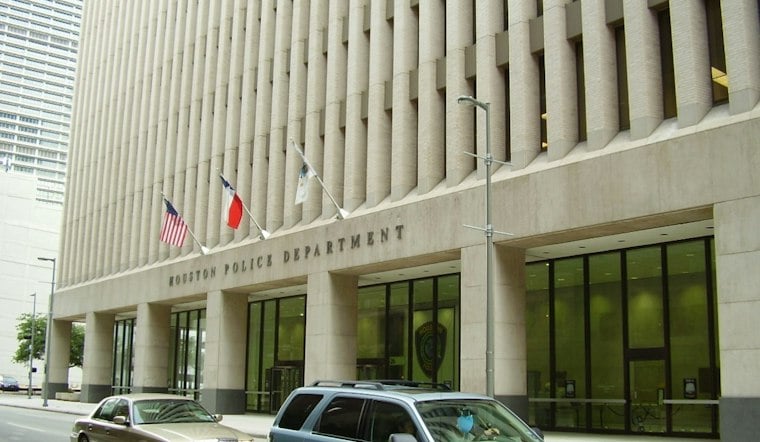
Public records leave the central question in Kelle Renee Fernstrom’s disappearance unresolved: Was she last seen in Houston around 1980, or on Sept. 1, 1983? The uncertainty persists even though she was not formally reported missing until 2008, according to KHOU.
The two dates come from different publicly available sources. Crime Solvers Central lists Sept. 1, 1983, as the last-seen date in Houston, while a case discussion at Websleuths describes her as last seen approximately in 1980 and reported missing in 2008. The available dossier does not explain the discrepancy.
A thin record, with one later legal reference
Fernstrom is described in case records as a white woman, about 5 feet 6 inches tall and approximately 135 pounds, with brown hair and brown eyes. Records also list the names Kelle Scott-Fernstrom, Kelle Scott Allen and Kelle Gillispie, according to KHOU.
The most specific documented reference after the disputed last-seen period is an Illinois divorce filing dated Oct. 1, 1984. Ronald Dale Fernstrom filed the case and named Kelle Renee Fernstrom as a party; the publicly cited account of the filing gives her Houston address as 1455 Lakeside Estates. That reference may help establish part of her legal and residential history, but it does not show where she was, who last saw her, or what happened afterward.
Other basic investigative details remain unavailable in the public record reviewed for this account. No clothing description or vehicle has been publicly identified, and the circumstances of Fernstrom’s disappearance and the identity of her last known contact have not been documented in the available reporting. DNA is available for comparison, and Houston police ask anyone with information to call 832-394-1872, according to KHOU.
Why older cases can still generate leads
Texas has had a formal resource for this kind of comparison for decades. The Texas Department of Public Safety says the Legislature established the state’s Missing Persons DNA Database at the University of North Texas Health Science Center in 2001 to help link missing people with unidentified human remains.
The national National Missing and Unidentified Persons System, or NamUs, likewise helps investigators compare long-term missing-person cases with unidentified remains and provides forensic and investigative support. NamUs says up to 90,000 people may be reported missing in the United States at any given time, with more than 500,000 missing-person records reported annually. Those figures describe the scale of the system, not Fernstrom’s prospects for resolution.
Examples show possibility, not a prediction
A separate Houston case illustrates how a DNA comparison can remain unresolved: police said in a Jan. 8, 2007, update that DNA from unidentified remains found in the 2000 block of Lamar had not produced a match in the Texas Missing Person’s Database. The case demonstrates the limits of available databases, but there is no public evidence connecting those remains to Fernstrom.
Another Texas case produced a different outcome. CBS Texas reported that Tina Gail Linn Clouse, whose body was found in Houston in 1981, was identified through genetic genealogy in 2021; her daughter was located alive in 2022. The comparison is limited: Clouse’s case involved unidentified remains and later forensic identification, while no publicly documented remains have been linked to Fernstrom.
The available evidence therefore supports a narrow conclusion. Fernstrom’s case remains open, but the record does not establish whether her disappearance dates to 1980 or 1983, why the report was delayed until 2008, or what happened after her last known presence in Houston. Those unanswered points—not a confirmed timeline or identified remains—remain the focus for investigators and anyone who may have known her.





