

























































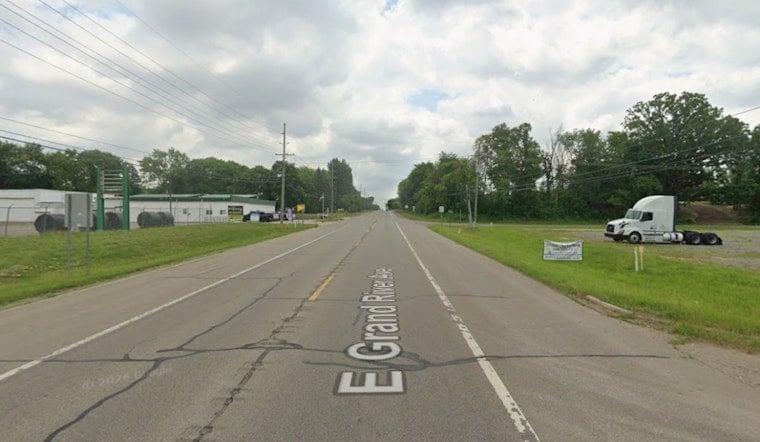
A 12-year-old Williamston boy died at the scene after being struck while riding his bicycle on Grand River Avenue near North Meech Road in Leroy Township this past Saturday, around 11:35 a.m. His 13-year-old sister was riding on the shoulder alongside him and was hospitalized with life-threatening injuries. A nearby mail carrier stopped to perform CPR at the scene until first responders arrived.
The boy, identified as Calvin Shepard, and his sister Karalee were struck by a westbound Ford Explorer SUV driven by a 64-year-old Williamston woman, according to WLNS 6 News. The driver was not hurt and stayed at the scene, and the investigation into the crash remains ongoing. Both children were wearing helmets at the time, the station reported.
A fundraiser organized by a local Latter-day Saints church leader raised more than $40,000 within its first six hours on Saturday to help the Shepard family cover medical and funeral expenses, according to the Michigan Legal Center. The family was described as active volunteers and adoptive parents in the area, and neighbors, the school, and local churches have provided immediate and widespread support, per WLNS. A classmate of Calvin's, Sophia Rost, has since returned to school and the classroom the two shared.
A Road Built for Speed, Not Safety
Grand River Avenue carries a residential speed limit inside Williamston but a higher posted limit outside the village limits, where the crash occurred. Andy Rohrer, executive director of the League of Michigan Bicyclists, told WLNS that roads designed for maximum throughput and speed can remain dangerous regardless of the posted limit, and that modern vehicle design makes occupants safer while increasing danger for people outside the vehicle, since tall, flat vehicle front ends can push a struck person under the vehicle rather than over the hood.
Lauren Rost, Sophia's mother, said she keeps five feet of distance from cyclists when she passes them in her own car, wider than what state law requires. She told the station the road where her family lives has no shoulder, and that she does not let her children ride bicycles along it because she considers it too dangerous. She noted that a paved sidewalk 10 to 14 feet wide would move people off the main road and would cost only a fraction of what the road itself costs to build.
Michigan's Widening Gap Between Falling Traffic Deaths and Rising Cyclist Deaths
The Leroy Township crash lands amid a stark statewide trend. Michigan State Police data compiled by the Office of Highway Safety Planning and released in August showed total roadway fatalities fell 3% in 2025 to 1,065 deaths statewide, even as bicyclist fatalities surged 21%, climbing from 29 deaths in 2024 to 35 in 2025, according to WSJM. Pedestrian fatalities rose 18% over the same period, even as overall vehicle crashes ticked up only slightly, from 288,880 in 2024 to 290,221 in 2025, the station reported.
State police officials have said a significant share of fatal bicycle crashes happen on rural township roads, where higher driver speeds, unpaved or narrow shoulders and a lack of painted road markings elevate risk for cyclists, per the same account. Ingham County, where Leroy Township sits, ranks among the higher-tier Michigan counties for bicycle crash density, with bicycle incidents making up 0.8% of all recorded traffic crashes there, according to Michigan Traffic Crash Facts, a share that exceeds the statewide average.
Michigan Law Requires Only Three Feet of Passing Room
Under Michigan Vehicle Code Section 257.636(2), drivers overtaking a cyclist must maintain at least three feet of clearance to the left, a rule violation that carries three driving-record points and fines typically between $99 and $130, per the League of Michigan Bicyclists. Drivers are legally permitted to cross double yellow lines in no-passing zones in order to give cyclists that berth. At least nine Michigan municipalities, including Ann Arbor, Grand Rapids, Dearborn and Kalamazoo, have already gone further, adopting local ordinances that raise the minimum passing distance to five feet.
Rohrer told WLNS that cyclists and pedestrians are legal users of Michigan roadways, but that the state's roads rarely reflect that legal status in their design. He said a lower posted speed limit alone would do little to change how fast people actually drive, and that engineering, not signage, is what solves roadway safety problems.
Complete Streets Remains a Planning Tool, Not a Mandate
The Michigan Department of Transportation's Complete Streets program is described in the WLNS report as a long-term planning process aimed at redesigning roads to accommodate public transit, bicycles and walking rather than subordinating those users to car traffic. The framework, codified under Public Act 135 of 2010, directs MDOT and local road agencies to consider non-motorized infrastructure such as bike lanes and wide shoulders during project planning, but it does not require local governments to actually spend money on it, according to the Michigan Municipal League.
Rohrer said road design remains the greatest tool available for reducing roadway deaths. Whether Leroy Township, Ingham County or state agencies will commit funding toward paved shoulders or a dedicated multi-use path along Grand River Avenue remains an open question, one this tragedy has thrust back into public view.
The crash adds to a string of similar incidents Hoodline has tracked across Michigan this year, including a Redford e-bike crash involving siblings and a fatal nighttime crash that killed a cyclist in Muskegon Township. Police have not announced any arrest in the Leroy Township case, and WLNS reports the investigation continues.





