

























































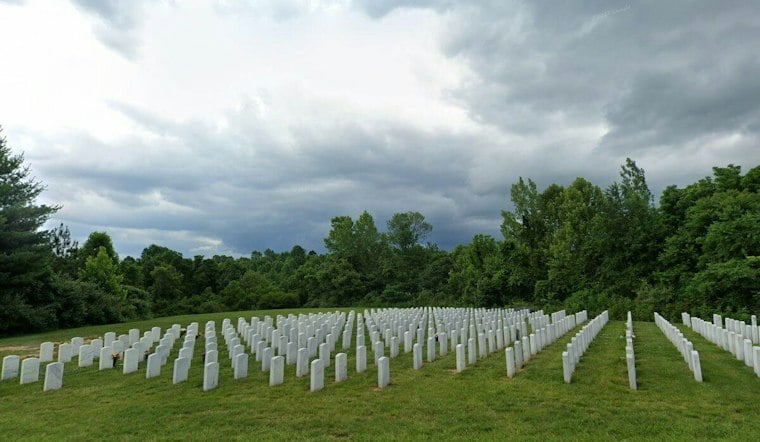
Technician Fifth Grade Robert W. Hirst will be laid to rest with full military honors on Thursday at Kentucky Veterans Cemetery Central in Radcliff, more than eight decades after he died as a prisoner of war in the Philippines. A noon funeral service will precede the burial at Schoppenhorst, Underwood & Brooks Funeral Home in Shepherdsville, bringing an end to a search for answers that spanned generations of his family.
Hirst served as a medic with the Medical Detachment of the 194th Tank Battalion in the Philippines before American forces surrendered the Bataan Peninsula on April 9, 1942, according to DVIDS. He entered the U.S. Army Air Corps from Washington state, and after the surrender he was forced onto the Bataan Death March, a brutal, roughly 65-mile forced march involving tens of thousands of Filipino and U.S. troops, as reported by WLKY. Thousands of prisoners died along the way from violence, starvation, disease, and exhaustion.
Hirst survived the march but was later transferred to Cabanatuan Prison Camp, one of the largest POW camps the Japanese operated in the Philippines. He was born September 27, 1920, in Spokane, Washington, to parents Thomas C. and Roxana Hirst, making him just 22 years old when he succumbed to malaria at the camp on July 5, 1942, per Dignity Memorial.
Grim Conditions at the Philippines' Largest POW Camp
Cabanatuan held roughly 8,000 American and Filipino prisoners at its peak. Approximately 2,800 Americans died before the camp's liberation in early 1945, according to K105. WLKY's reporting adds that the camp held thousands of American and Filipino prisoners under poor conditions with limited food and water.
Hirst was buried in a common grave at the camp. After the war, the American Graves Registration Service exhumed the remains and moved them to a temporary U.S. military mausoleum near Manila, where officials examined them in 1947, the station's report states. Some remains from that grave were identified at the time, but others were declared unidentifiable and buried as unknowns at the Manila American Cemetery and Memorial.
Hirst's remains specifically were exhumed from Common Grave 409 at the Cabanatuan Camp Cemetery and buried as an unknown in Manila. They stayed there until they were disinterred again for forensic laboratory testing in November 2019 and January 2020 under the Defense POW/MIA Accounting Agency's Cabanatuan Project, according to the same DVIDS account. That renewed identification effort, launched decades after the war, ultimately used forensic analysis to confirm his identity, and DPAA officially accounted for and positively identified Hirst on April 6, 2026.
Fort Knox Unit Tracked Down the Family
Hirst's remains were returned to Kentucky for burial, and he is survived by three grandchildren — Jeff Browne, Myrna Albrecht, and Brian Browne — along with extended family, while a fourth grandchild, Marie Annette Browne, died before having the opportunity to know her grandfather, according to Dignity Memorial.
For his service and sacrifice, Hirst was posthumously awarded the Bronze Star Medal, Purple Heart Medal, Prisoner of War Medal, Asiatic-Pacific Campaign Medal with one Bronze Service Star, and the Philippine Defense Ribbon, per the same Dignity Memorial listing. Services for Hirst begin Wednesday, with burial and full military honors following Thursday at Kentucky Veterans Cemetery Central.
In lieu of flowers, Hirst's family has asked that memorial contributions be directed toward Veterans Suicide Prevention in honor of Robert and all fallen service members, Dignity Memorial notes. It's a gesture that ties an 84-year-old wartime loss to the welfare of veterans living today.
Hirst's return underscores how families are still receiving closure from DPAA's ongoing identification work decades after World War II ended.





