

























































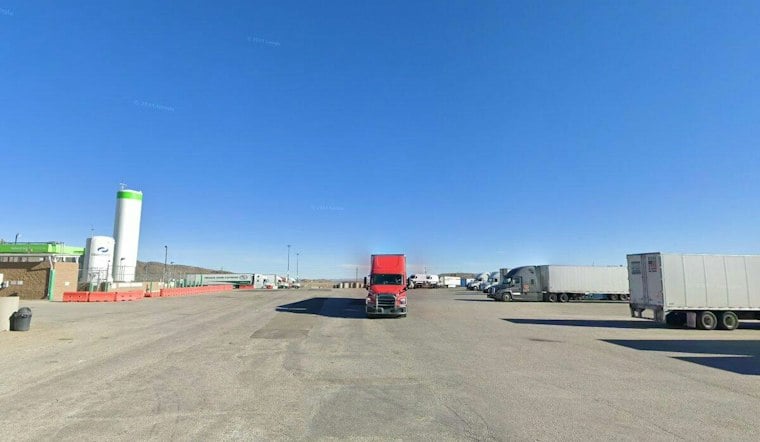
A 28-year-old Sacramento truck driver is recovering after authorities say he was stabbed 17 times in a restroom at the Bitter Creek rest area along Interstate 80 in southwestern Wyoming early Sunday. The suspect, Andrew Kris Bzdak, was arrested near Rawlins less than 90 minutes after the victim’s 911 call and was charged Sept. 14 with attempted first-degree murder, according to The Sacramento Bee and CDLife.
The reported facts establish the severity of the attack but not its motive. Singh suffered wounds to his arms, neck and chest and was airlifted to a trauma facility in Casper, Cowboy State Daily reported. A nearby family helped him and provided investigators with information about the suspect’s truck, while video from a parked semitrailer showed the two men entering the restroom shortly apart. Sweetwater County authorities have said there is no known motive and that they do not believe the attack represents a continuing threat to the public, according to The Sacramento Bee.
The charge turns on an alleged intent to kill
The prosecution’s theory is separate from the question of whether the attack was bias-motivated. Bzdak is charged with an attempt rather than a completed murder, and the reported court allegations say prosecutors contend he took action with premeditated intent to kill. Those allegations remain unproven unless established in court.
Sikh advocates are asking authorities to examine whether race or religion played a role. The American Sikh Council linked its call for an investigation to a now-deleted Department of Homeland Security social-media post that used a “Mr. Singh” caricature and criticized Sikh truck drivers, while DHS said the post referred to a different driver and denied responsibility for the Wyoming attack, according to Sikh Siyasat and The Sacramento Bee. No source cited here establishes that the post caused or motivated the stabbing.
A prior case shows why comparisons require caution
There is a documented precedent for an anti-Sikh assault involving a transportation worker, but it differs materially from the Wyoming case. The Sikh Coalition says that on Nov. 6, 2015, a passenger attacked Los Angeles County bus operator Balwinder Jit Singh while using anti-Sikh slurs; a felony hate-crime enhancement was later filed. In the Wyoming case, authorities have said the motive is unknown. The earlier incident therefore provides context for the community’s concern, not proof of what happened in the rest-area attack.
The U.S. Justice Department separately lists a Texas case in which a man pleaded guilty to a federal hate crime in an announcement dated January 31, 2025, based on threats made in September 2022 and March 2024. That case involved reported threats rather than a stabbing and is not evidence of a national pattern or a connection to Wyoming, Justice Department case examples show.
The data has limitations
The Sikh Coalition cautions that many anti-Sikh hate crimes go unreported and that law-enforcement agencies underreport data to federal authorities. That limitation can make the broader record incomplete, but it cannot resolve the motive in Singh’s case, which investigators have described as unknown, according to the coalition’s hate-crime reporting guidance.
The setting also supplies logistical context without establishing a general safety trend. The presence of a rest area does not show how often violent incidents occur or whether Bitter Creek had a specific security problem.
Singh remains hospitalized while the criminal case proceeds in Sweetwater County. The central unanswered questions are whether prosecutors can prove the alleged premeditation and whether investigators will find evidence supporting the Sikh community’s request for a bias inquiry.





