

























































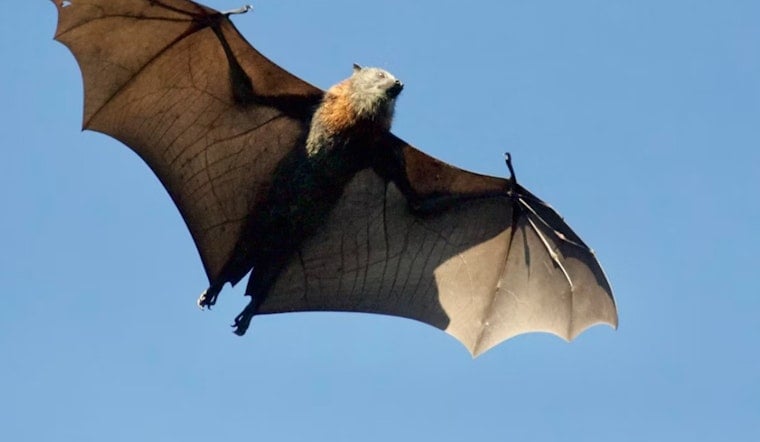
A dead bat found outside a shower house near Curry Village in Yosemite National Park on May 18 tested positive for rabies, but park officials didn't warn the public until this week — more than three months after the discovery. The delay has left some visitors asking why they weren't told sooner about a fatal disease that requires treatment before symptoms appear.
The National Park Service said it found no known human contact with the bat, and it announced the positive rabies test only this month, according to the Los Angeles Times. Anyone who had direct contact with a bat near Curry Village around May 18 is being urged to contact the California Department of Public Health and a healthcare provider promptly. The park service says rabies is a fatal viral disease that is preventable with prompt medical care, but only if treatment begins before symptoms develop.
The gap between discovery and disclosure wasn't unique to Yosemite, per the Los Angeles Times report. Wind Cave National Park officials waited 42 days to notify the public after discovering the first of three rabies-positive bats, while Jewel Cave National Monument released its alert about two weeks after a bat tested positive there on July 29. By contrast, when a rabid bat became tangled in a woman's hair in Washington on August 9, park officials in that state notified the public within three days.
Why the Timeline Varies So Widely
The three-month gap traces back to how wildlife agencies triage rabies testing. An unsigned National Park Service statement reported by the Los Angeles Times clarified that bats found inside occupied structures, where human contact is likely, undergo expedited testing, while bats found outdoors without known human contact are processed through routine wildlife surveillance schedules instead. That distinction explains why an indoor bat encounter, like the one that sent three Snohomish County, Washington residents to post-exposure treatment within days, moves faster through the system than a carcass found near a public shower house.
Still, the lag has raised concerns among visitors, some of whom have asked why park officials delayed notifying the public at all given the stakes involved. Rabies incubation can last weeks or months, meaning someone exposed near Curry Village in May could still be within the window for effective treatment even now. Bat bites and scratches are frequently painless or unnoticed altogether, according to a January 2026 CDC report on two U.S. rabies deaths in late 2024 — including one in California — where victims recognized they'd had bat contact but never sought evaluation before symptoms began.
A Rare But Always-Fatal Disease
Human rabies remains extraordinarily rare in California. State data cited by CBS Sacramento shows just 17 human rabies cases recorded statewide since 1980, with the most recent confirmed infection in 2024. But the disease is virtually 100% fatal once clinical symptoms appear, which is why health officials treat any known exposure as urgent regardless of how low the statistical odds may be.
Bats are responsible for most rabies-related deaths in the United States, and the park service notes that direct contact with a bat, alive or dead, should always be discussed with a healthcare provider. Yosemite is home to 17 distinct bat species, and officials say less than 1% of bats in nature are infected with rabies, even as the animals provide significant insect-control benefits within the park. This isn't the first such case at Yosemite — a previous bat rabies incident there occurred in July 2025.
The Cost of Waiting Too Long
For anyone who suspects they may have been exposed, post-exposure prophylaxis is the only effective defense, and it must begin before symptoms onset. Current CDC protocols require four rabies vaccine doses combined with human rabies immune globulin, with total medical costs typically running between $3,000 and $8,000 or more before insurance, according to guidance compiled by SafeRabies.
The Yosemite case also fits into a broader statewide pattern. A California Department of Public Health spokesperson reported in June that animal rabies detections surged statewide during the first five months of 2026 compared with recent years, though officials said the animals involved remained limited to traditional host species like bats and skunks, and that public risk stayed low despite the increase in testing. San Joaquin County, near Yosemite, recorded three rabid bats in just the first half of 2026, already surpassing its entire 2025 total, according to Stocktonia. Farther south, Los Angeles County recorded 61 rabid bats in 2025, its second-highest annual tally on record.
Similar warnings have played out at national parks and public spaces elsewhere in recent months. Grand Canyon National Park confirmed a rabies exposure near Kanab Creek Canyon last year that led to successful treatment and recovery, a case Hoodline covered in its hantavirus and rabies report. The pattern underscores a recurring reality for park visitors: bat encounters, whether in a shower house, a bedroom, or tangled in someone's hair, can carry the same fatal risk no matter how routine the setting seems.




