

























































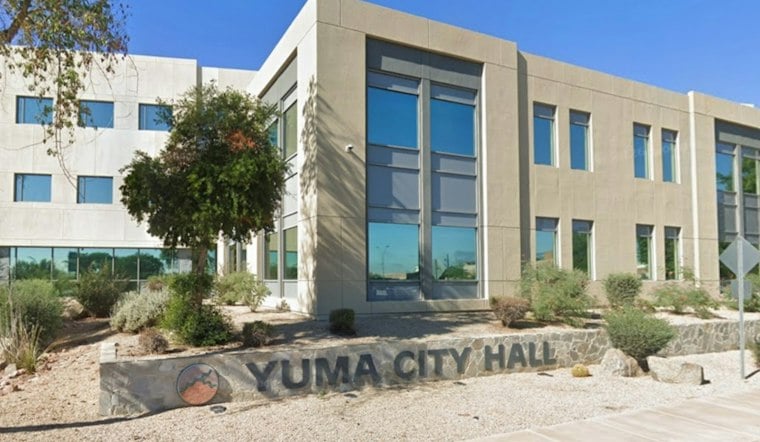
On Dec. 21, 2022, Yuma's City Council authorized joining a legal fight aimed at blocking a permanent transfer of Colorado River water from rural La Paz County to the fast-growing Phoenix suburb of Queen Creek. The same night, council members separately authorized potential legal action against the U.S. Department of the Interior over a federal decision that could slash water allocations across the desert Southwest.
The council's authorization adds Yuma to a coalition already made up of Mohave, La Paz, and Yuma counties, all pushing to enforce a 2024 federal court ruling that requires a full environmental review before the water transfer can move forward, according to the City of Yuma. As reported by AZ Family, the action reflects growing frustration among rural, river-dependent communities over water moving away from their region to feed suburban growth near Phoenix.
At the center of the dispute is a 2019 ADWR application involving approximately 500 acres at GSC Farm LLC in La Paz County's Cibola Valley and a purported $20 million transaction for 2,033.01 acre-feet per year of fourth-priority Colorado River water, according to the Town of Queen Creek. GSC Farm retired its irrigated crops as part of the deal, freeing up the water rights for permanent export to central Arizona.
A Court Fight That Already Slowed the Deal Once
The transfer hit its first major roadblock in February 2024, when a U.S. District Court judge sided with western Arizona river communities, setting aside the Bureau of Reclamation's initial finding that the project would have no significant environmental impact. Per the Town of Queen Creek, the judge ordered federal officials to conduct a full Environmental Impact Statement, though the court allowed Queen Creek to keep receiving interim water deliveries while that review plays out.
The Bureau of Reclamation responded by publishing a Notice of Intent in September 2025 to prepare the required environmental review, examining how the water would be wheeled through the Central Arizona Project canal system, per the Federal Register. That study is what Yuma and its co-plaintiffs are now moving to enforce, arguing the deal cannot proceed until the deeper federal analysis is complete.
Why Rural River Communities See a Dangerous Precedent
The GSC Farm-Queen Creek deal uses an unusual non-CAP structure for transferring Colorado River water to a central Arizona municipality, according to D2MAD News. That unusual structure is part of why river communities view the deal as precedent-setting.
Yuma has particular reason to worry: the city is proposing a new groundwater well, per the City of Yuma. Upstream transfers or federal cutbacks could squeeze the system further.
Yuma isn't alone in its opposition. La Paz and Mohave counties, and later Yuma County, joined litigation against the transfer, citing concerns about long-term harm to rural agricultural economies and reduced return flows, the same D2MAD News report states.
Queen Creek's Side of the Water Wars
Queen Creek's population exploded from roughly 2,500 residents in 1990 to more than 83,000 by 2024, per D2MAD News. That has included a separate $244 million deal for 12,000 acre-feet per year of Harquahala Valley groundwater, part of the town's broader effort to satisfy Arizona's Assured Water Supply rules, which require developers and towns to prove they have a 100-year water supply before building, as Hoodline previously reported.
The town has sought to become less reliant on groundwater, according to the Town of Queen Creek. Yuma and neighboring river counties counter that off-river transfers undermine the Colorado River's priority system, threaten local agricultural economies, and set a dangerous precedent for future deals, per the City of Yuma.
A Bigger Fight Looms Over Federal Cutbacks
In August, the U.S. Bureau of Reclamation released its Final Environmental Impact Statement for post-2026 Colorado River operations, proposing Lower Basin supply cuts of up to 40% for Arizona, California, and Nevada once the existing 2007 guidelines expire in the fall, according to KJZZ. Arizona state officials have warned the federal proposal could inflict severe economic harm on the state.
That looming threat is why Yuma's council did not stop at the Queen Creek transfer. Council members also authorized potential legal action against the Department of the Interior over its August operating-guidelines decision, effectively preparing a second legal front in case federal officials move to slash the state's river allocations, per the City of Yuma. Together, the two authorizations show a city trying to defend its water on two fronts at once, one against a rural-to-suburban transfer it says threatens the priority system, and another against a federal framework that could cut deep into what's left.





